Bassai – Storming the Fortress in Wadō-Ryū Karate
· by Roger Vickerman Renshi (7th Dan) · Kata
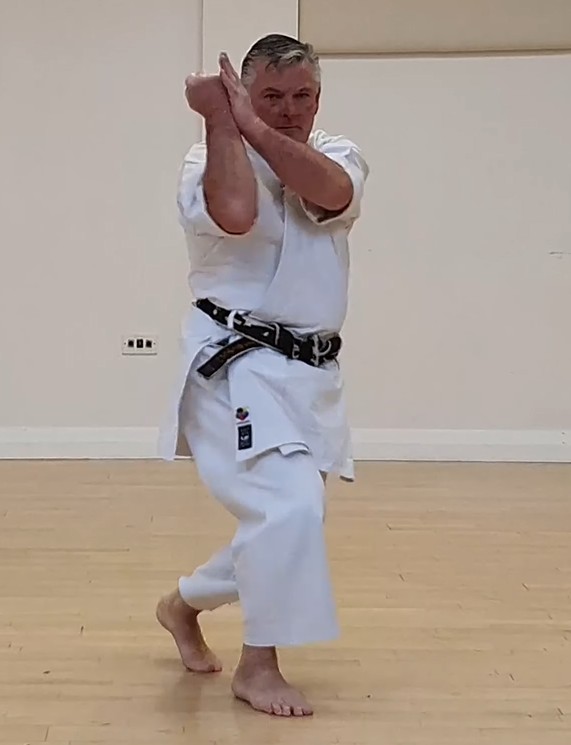
Bassai (抜塞) is one of the most powerful, conceptually rich kata in the Wado-Ryu curriculum. Often translated as “to storm a fortress” or “to penetrate a stronghold,” it embodies dynamic entry, structural breaking, angular redirection, and overwhelming intent. More than technical sharpness, Bassai demands spirit, strategy, and adaptability—qualities that grow each time we revisit this formidable form.
In this week’s breakdown, Sensei Kerry Moore joins me once again, with Simon bravely stepping in as uke throughout nearly 51 minutes of analysis. Together we explore the kata’s history, technical depth, practical applications, and the strategic mindset woven into every transition.
The Name and the Metaphor
The metaphor of “storming a fortress” offers immediate insight into Bassai’s character. The kata presents attacks from multiple lines, testing our posture, balance, and awareness as we adapt rapidly to shifting threats. Many of its turns are not mere choreography but purposeful redirections—absorbing force, changing angle, and overwhelming the opponent’s structure.
Strategic Entry – Breaking the Gate
Bassai opens with a distinctive gesture drawn from Chinese martial symbolism—one hand representing the “sun,” the other the “moon.” Beyond aesthetics, these opening movements embody kuzushi, subtle centreline shifts, and empi variations that challenge the practitioner to think beyond blocking into controlling, unbalancing, and crashing through defensive lines.
Where Kata Echoes Kata
Bassai is rich in transferable skills. Movements familiar from Pinan Sandan (such as meotode-style double-hand actions) or awareness concepts from Kushanku and Naihanchi reappear in new configurations. The uke-waza in Bassai may look like blocks, but partnered exploration reveals them as dynamic entries—strikes, covers, shoulders, elbows, or off-balancing mechanisms depending on context.
Keeping Opponents in Your Vision
A recurring lesson in our bunkai work is the importance of managing your cone of awareness. Rather than “turning your back,” we reframe many directional changes as intelligent pivots within your field of vision. Bassai trains the practitioner to avoid blind spots, buy time, manage spacing, and remain tactically informed even during fast transitions.
Insights from Kerry Moore Sensei
Pretty vs Practical
Kerry Sensei emphasises the tension between performance and application. A crisp line may look great in grading, but a messy crashing shoulder or elbow may be what works in chaos. Bassai becomes a laboratory where “pretty” form and raw practicality meet, helping practitioners bridge the gap between aesthetic kata and functional technique.
Timing, Flam, and Rhythm
Drawing on his background as a drummer, Kerry introduces the idea of a “flam”—a deliberate micro-separation in timing. This tiny pause allows you to feel whether your initial contact has unbalanced the opponent, and whether the next strike can be delivered effectively. It is a moment of clarity inside the storm.
Kyo and Jitsu – Empty and Full
We examine Kyo-Jitsu, the interplay of vulnerability and intent. When an attacker commits fully, they become “full”—and therefore easier to exploit. By moving off the line or redirecting, we render them “empty”—unbalanced and exposed. Bassai embodies this principle again and again in its angles, shifts, and counterpressure.
Vital Targets and Hidden Depth
The kata’s double punch sequence opens a discussion on vital targets—from Ginjō beneath the nose to points along the conception vessel and liver meridian. Whether understood through Eastern medicine or Western anatomy, these strike zones represent real vulnerabilities. We welcome continued discussion from practitioners with knowledge in these areas.
Bassai as a Training Method
Like all kata, Bassai is greater than its fighting applications. It can be practised as:
- a solo technical study—stances, transitions, structure
- a partner-based bunkai laboratory—pressure testing, resistance, kuzushi
- a Mushin (no-mind) kata—slowed down for breath and awareness
- a dynamic warm-up—opening hips, shifting centre, energising movement
Your kata becomes a mirror, a teacher, and a method for refining body, mind, and intention.
Closing Thoughts
Bassai is not simply a wall to break down—it is a profound study of timing, posture, intent, and adaptability. The more we explore it, the more it reveals itself not as choreography but as a living tradition, a transmission system refined across generations. For beginners and seniors alike, Bassai continues to offer new insights to those willing to train deeply.
Thank you to Kerry Sensei, Simon, and Tanya for your invaluable contributions, and to everyone following this kata series. Oss, and thank you for your continued support.
Watch the video on YouTube or join the conversation on Facebook.
What insights has Bassai revealed to you in your Wado-Ryu practice? Share your reflections and keep the conversation alive within our community of martial artists.