Jitte Kata – The Final Temple Kata
· by Roger Vickerman Renshi (7th Dan) · Kata
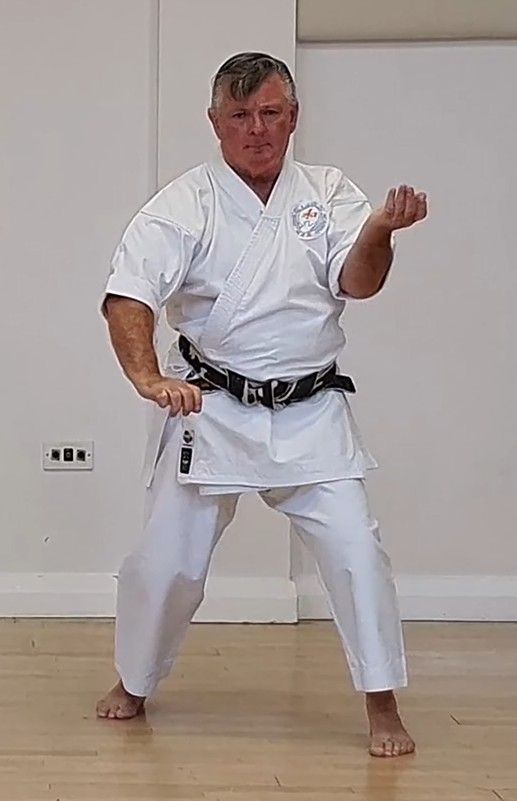
Jitte (十手) is a fascinating and historically rich kata in the Wadō-Ryū syllabus, and it feels like a fitting culmination of our “Temple Kata” journey. Not just because of what it is technically, but because it encourages us to reflect on everything we’ve explored so far—structure, posture, strategy, distance, and the subtle integration of grappling ideas hidden within formal movement.
As always, what I share here reflects how I’ve been taught and how I understand the kata. If your instructor teaches it differently, follow their guidance. That respect and consistency within your lineage is essential.
What is Jitte?
The name Jitte is layered with meaning. It is commonly translated as “Ten Hands,” suggesting a method so versatile it could deal with multiple attackers or varied threats. Interestingly, jitte is also the name of a traditional Japanese weapon used by Edo-period police officers—designed not to kill, but to control and disarm. That spirit of restraint, control, and adaptability seems deeply embedded in the kata itself.
In some traditions, Jitte is counted as one of the “Temple Kata,” alongside Jion and Ji’in. Wadō dropped Ji’in, leaving Jion and Jitte—and the more you explore them, the more you feel how they complement one another, as though one kata finishes a sentence that the other continues.
Structure and Strategic Movement
Viewed from above, Jitte’s embusen forms a cross: forward and back, with intersecting side lines. This may relate to the “ten” concept, as the kanji for ten (十) is itself a cross. It may also hint at the breadth of methods within the kata—striking, locking, throwing, controlling—spread across multiple angles and tactical situations.
Technically, Jitte is a beautiful blend of karate and jujutsu ideas. Strong stances and decisive actions sit alongside softer transitions, circular responses, and movements that adapt readily into takedowns or joint manipulation. The shifts from hard to soft—linear to circular—are particularly rewarding to explore.
Kaisetsu and Jujutsu Integration
One of the standout features of Jitte is just how smoothly the movements can be interpreted through a jujutsu lens. In one section, for example, we cover and step through with taishō—and with subtle adjustment that same motion becomes a throw, a lock, or a takedown.
We also spend time on the importance of the hips, and the power of hikite (the pulling hand). Whether striking, redirecting, or controlling, it is never just about the arm; it is about what the whole body is doing behind the technique.
In another sequence, we work through a striking combination coming from a beautiful kake uke. It is here the kata begins to echo weapon-based drills: hip rotation, shoulder engagement, and the sense of holding an implement. It becomes a valuable moment to reflect on the possibility that Jitte may retain structural clues from earlier weapon practices, even if it is trained today as an unarmed kata.
Historical Curiosities
Researching Jitte is an education in itself. Some sources suggest it came via Matsumora, others attribute it to Itosu. The truth is likely lost to time—but there is broad agreement that it arrived from China, was transmitted through Okinawa, and was shaped along the way.
There is also an intriguing theory that Jitte and Ji’in were once weapon kata, and that Itosu created Jion by combining and modifying them into a strictly unarmed form. If that is true, then Jitte, as we have it, may still carry fingerprints of those earlier weapon-oriented structures.
Recapping Key Principles
As this may be the final kata in our Temple Kata series (for now), it feels appropriate to revisit some of the foundational principles that sit underneath all kata practice:
- Shin–Gi–Tai — spirit, technique, and body. Without all three, kata has no life.
- Pretty vs Practical — polished kata matters, but so does understanding how to make it work.
- Maai — distance and timing: the difference between technique and mere movement.
- Tegumi — Okinawan grappling, hidden in plain sight.
- Ibuki breathing — control your breath, control your technique.
We also touch on kamae, closing distance, balance recovery, and even the symbolism of the opening salutation—sometimes interpreted as “sun and moon,” or the “good emperor, bad emperor” gesture depending on the source.
Final Thoughts
Jitte is powerful, precise, and deeply layered. And whilst some of its movements may appear formal or mysterious at first glance, the deeper you dig, the more practical sense it makes. Whether it’s the twisting hips, the seamless shift between hard and soft, or the strategic off-lining from attacks—everything serves a purpose.
Thank you to Sensei Kerry and Kash for helping with filming, and thank you to everyone who has followed this journey through the kata. This isn’t the end of our exploration—but it is a good point to pause and reflect. If Jion is about power and posture, Jitte is about control and adaptability. Together they form a fitting pair within the Wadō-Ryū canon.
Watch the video on YouTube or join the conversation on Facebook.
What has Jitte revealed to you in your Wadō-Ryū practice? Share your thoughts and training experiences—let’s continue learning together as a community of martial artists.