Ippon Kumite No.10 – Jūponme
A study in dropping, sliding, vector pressure, elbow control, short kicking, and maintaining pressure through the finish
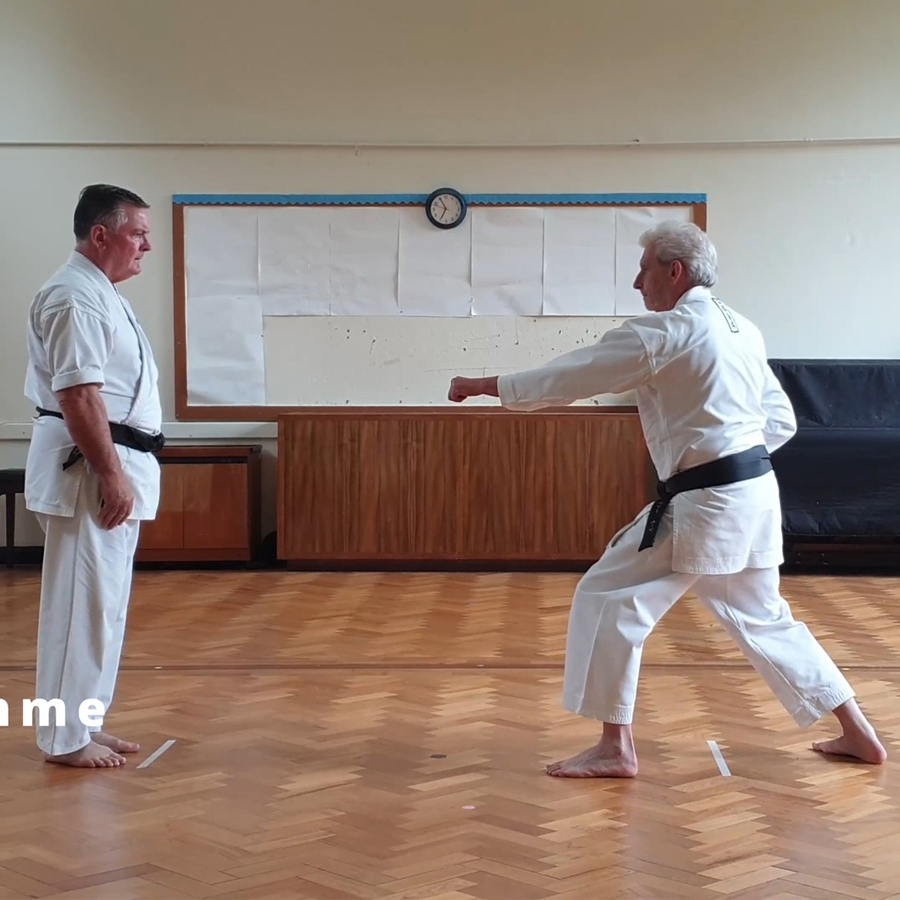
Ippon Kumite No.10 – Jūponme concludes the Ippon Kumite series with a sophisticated study of body movement, direction, pressure, and control.
Where some earlier waza focus on clear striking or direct structural collapse, Jūponme asks the practitioner to manage two lines of force at the same time. Tori must drop and slide to move the centre, turn the body out of danger, apply pressure through the arm, and then maintain that pressure while delivering a short, efficient kick.
The result is compact, directional, and precise. Uke should feel drawn into a weak line, controlled through the elbow, and unable to recover or counter.
Opening Position – Hidari Junzuki Dachi
Uke begins in Hidari Junzuki Dachi. The initial shape gives Tori a clear attacking line to work with, but the response must not be static.
The first lesson is that Tori must move the centre. This is not simply stepping the feet or moving the hands. The body must drop, lift, slide, and turn as one connected action.
“Make sure you drop and you lift and slide, to move your centre.”
Initial Entry – Drop, Lift, Slide
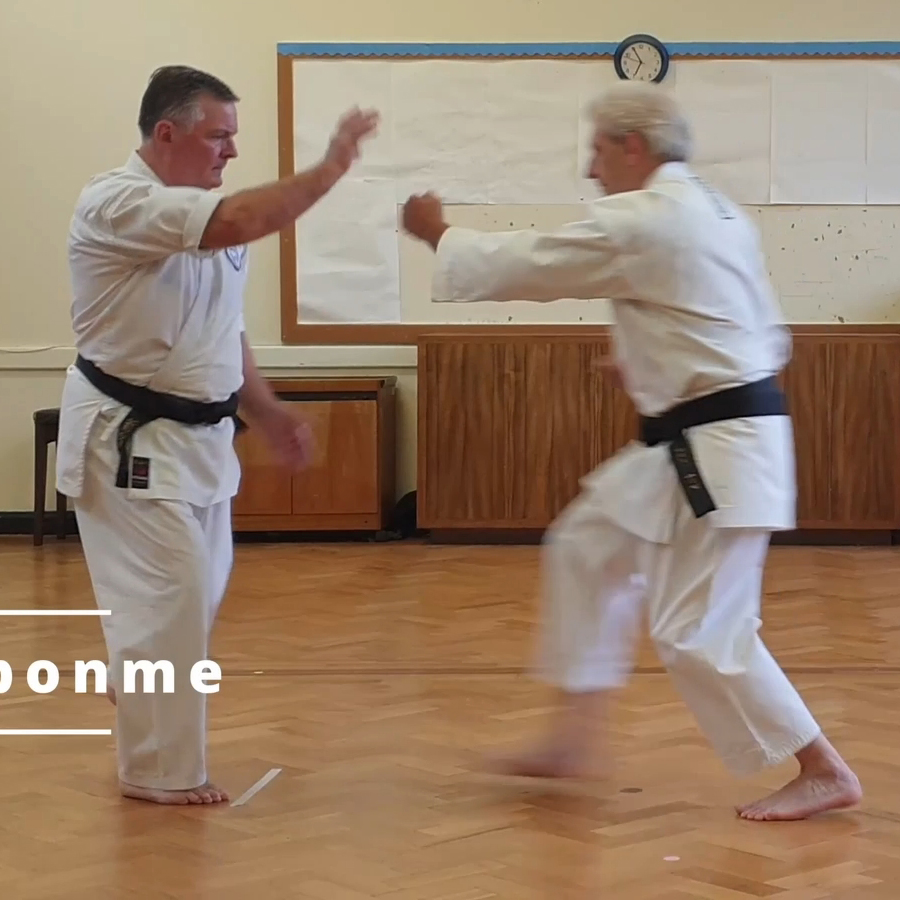
As Uke attacks, Tori begins by dropping and sliding the centre. This takes the body away from the direct line while keeping pressure available.
The turn is essential. Tori does not merely evade with the upper body. The whole body turns so that the rest of the body is removed from danger while the hands begin to apply control.
“Then you turn to get the rest of the body out of the way.”
This is Wadō movement: not escape first and technique second, but repositioning and application together.
One Movement, Two Applications
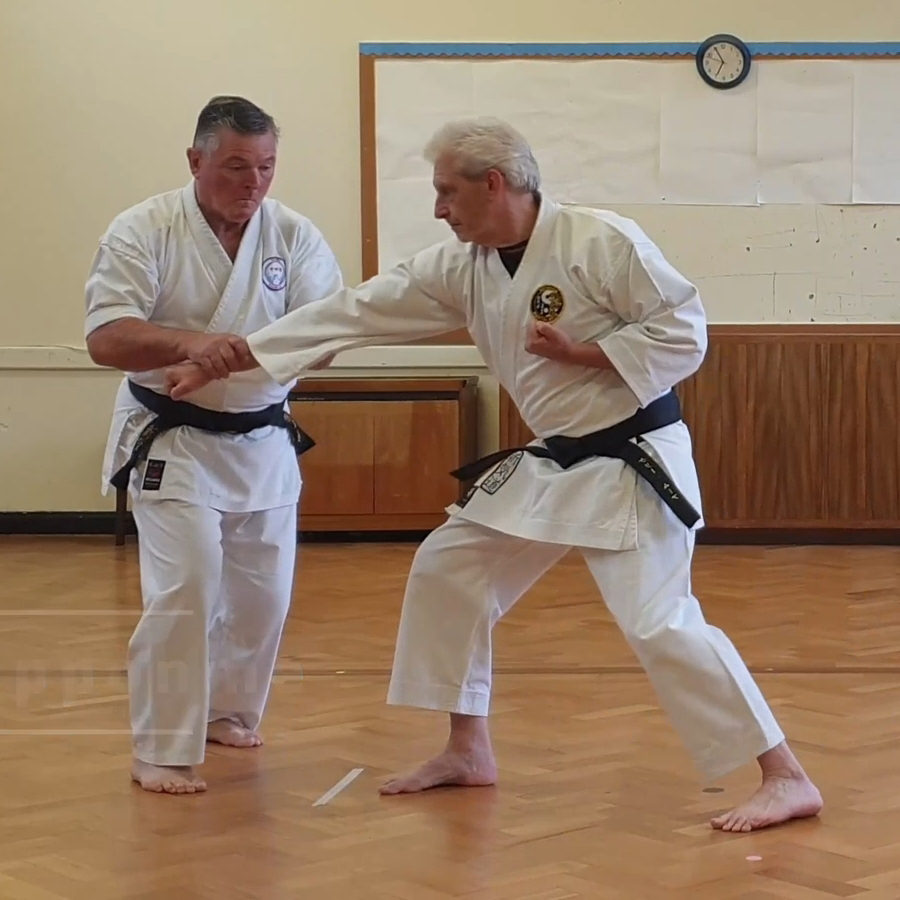
When Tori turns in, both hands have a job. One action redirects while the other applies pressure. The body rotation feeds both lines at the same time.
This creates a powerful but subtle effect. Uke is not simply pulled in one direction. Their structure is affected by two different forces, creating a combined angle of imbalance.
“When you turn in, you apply one move and you also apply the other move.”
The lesson is not to think of separate techniques. The whole action must be one coordinated body movement.
Vector Pressure – Two Directions Becoming One
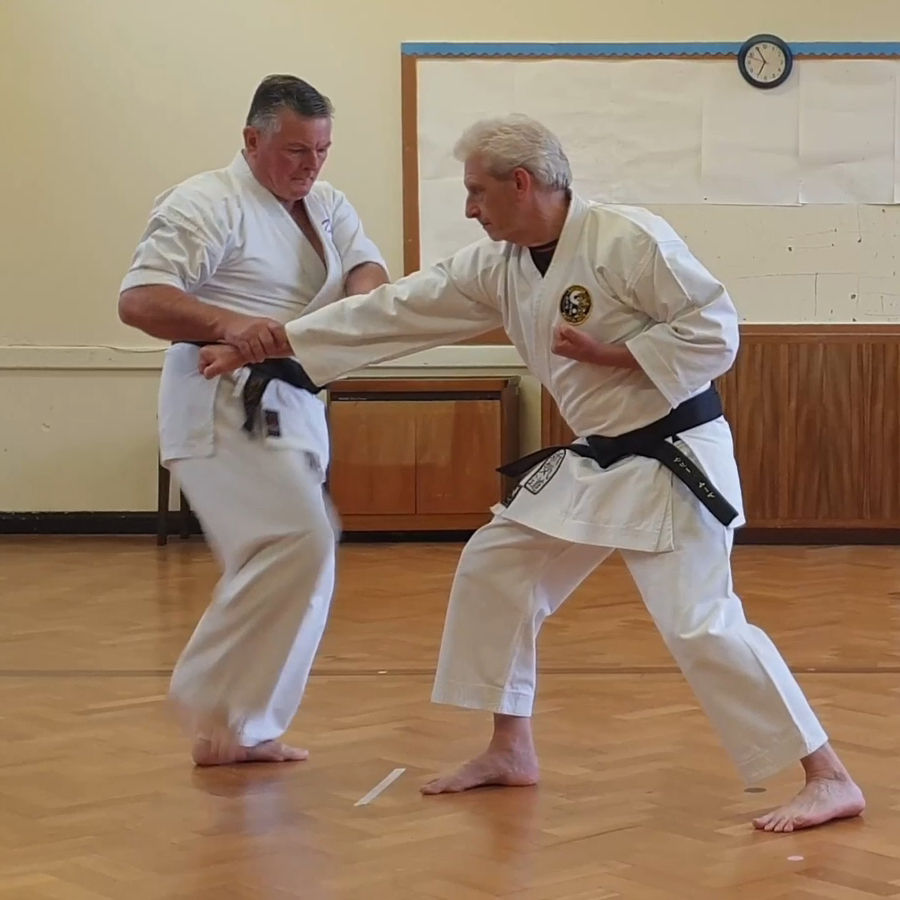
A major teaching point in Jūponme is the use of vector pressure. Tori uses one line of force through the hip and hand, and another through the knee and opposite hand. When these forces combine correctly, Uke is drawn off balance on a diagonal line.
It is not exclusively one direction or the other. The desired effect is a forty-five degree plane away from Uke’s attacking line.
“If we have the same force, can you see the vector? That’s the way that we want the force to go.”
This is a particularly important principle. The body does not overpower Uke by strength. It chooses the direction in which Uke’s structure cannot remain strong.
Hip, Hand, Knee – Connected Direction
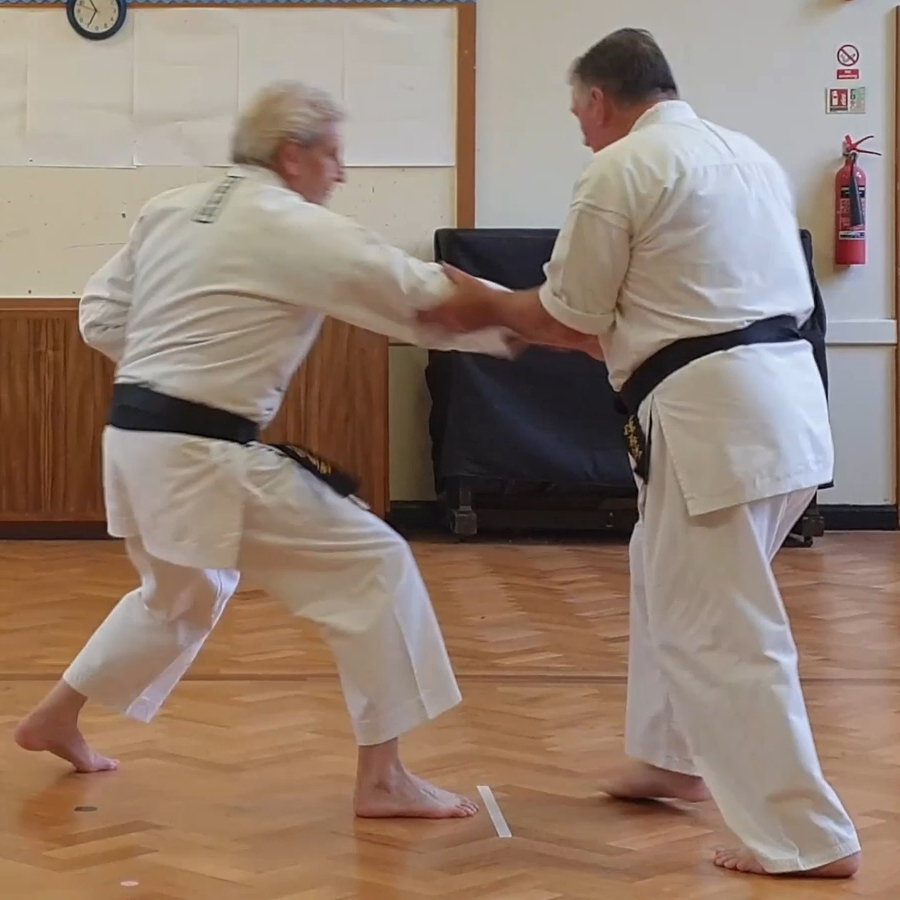
The two-directional pressure is created by the relationship between the hip, hand, and knee.
One hip and hand come back while the other side moves forward. This creates a connected line through the body rather than an isolated pull from the arms.
“I need this hip and this hand coming back; this hip and this hand going forward at the same time.”
The shape may look small, but the effect on Uke’s balance is significant.
Elbow Pressure and Safety in Practice
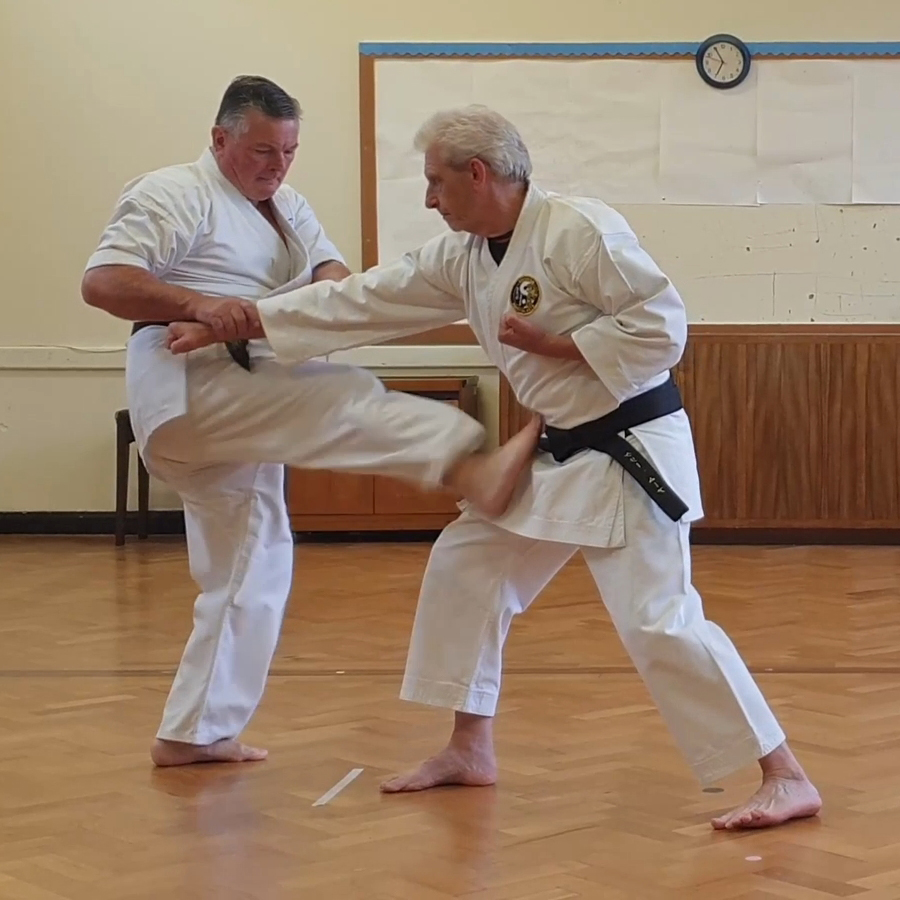
As the pressure develops, Tori applies a lock through Uke’s arm. This can be used to attack the elbow, but in training it must be practised carefully.
The aim is to apply enough pressure to teach the direction and control, without injuring the partner. The lock should be present, but the practice must remain safe and controlled.
“You need to apply just enough pressure.”
From Uke’s perspective, there should be a clear sense that the elbow is being controlled and that the body is being guided into a weak diagonal line.
Maintaining Pressure Before the Kick
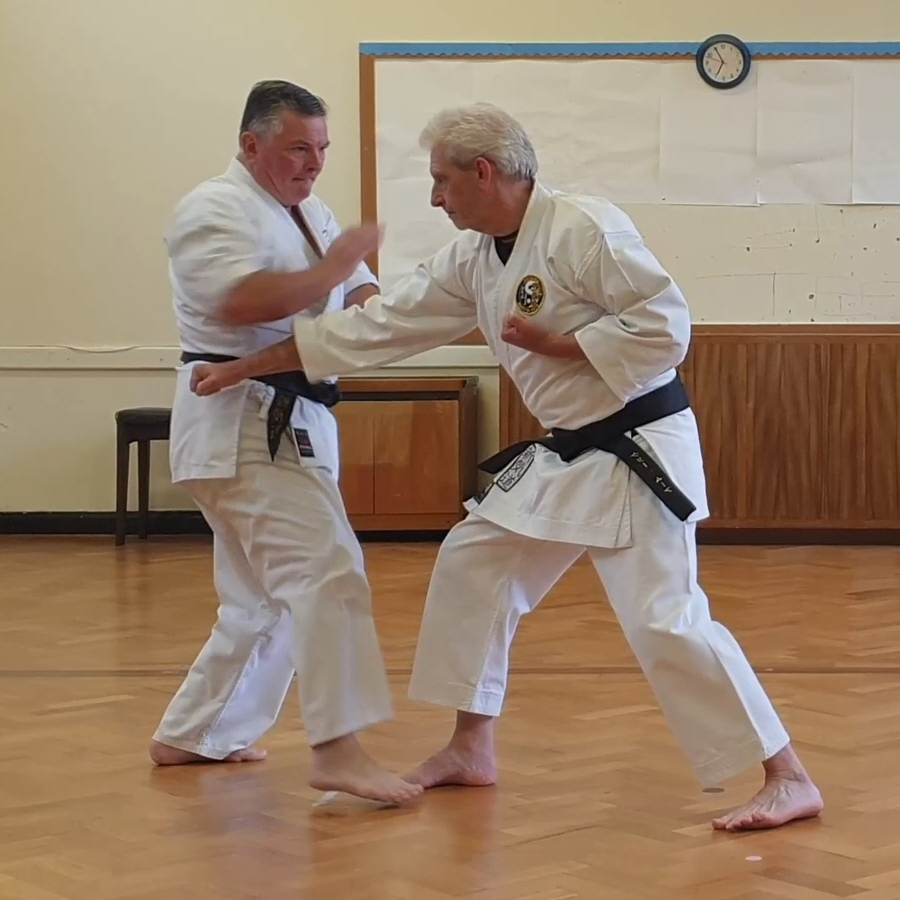
A common mistake is to release the pressure before kicking. In Jūponme, the pressure must continue while the hip comes back to prepare the kick.
If the elbow pressure is lost, Uke can begin to recover and may be able to counter. The control must stay active throughout the transition.
“Hold that pressure while you are bringing your hip back to kick.”
The Kick – Short, Direct, and Off-Line
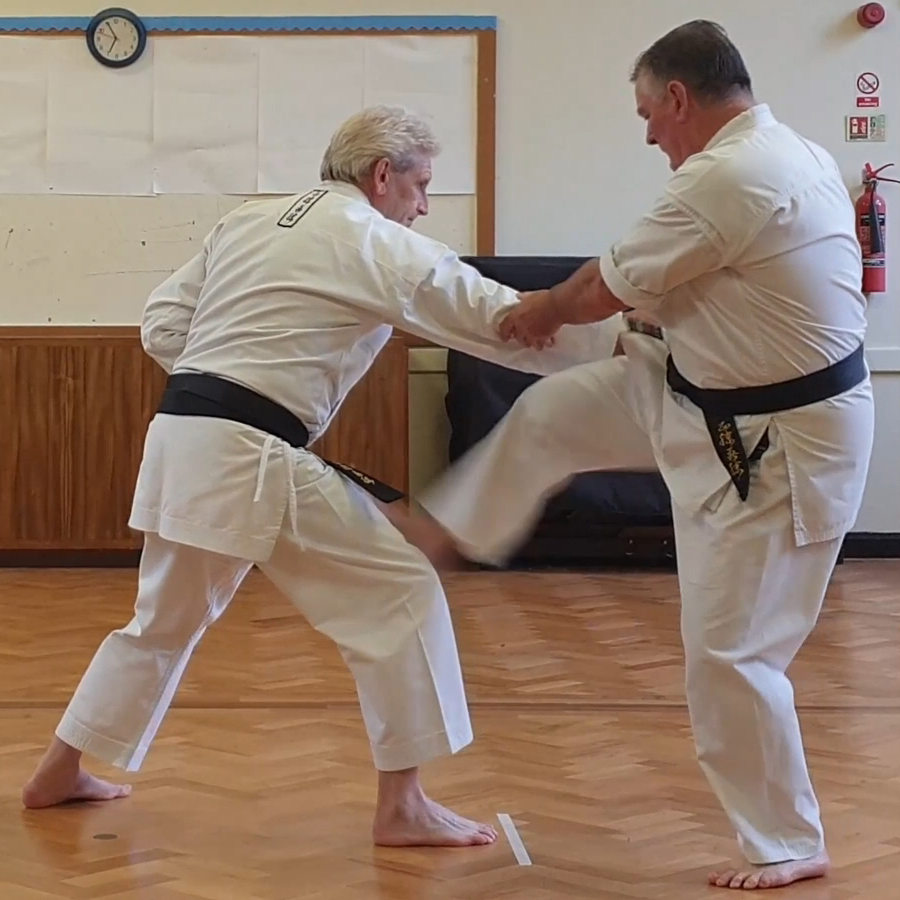
The kick is not a large sweeping mawashi geri, nor is it a simple straight mae geri. It sits just off the mae geri line and follows the shortest route to the target.
The movement should be compact. A big kick gives Uke time and space. A short kick maintains pressure and keeps the body connected.
“Not a big mawashi geri, not a mae geri, but short.”
Rear View – Direction and Control
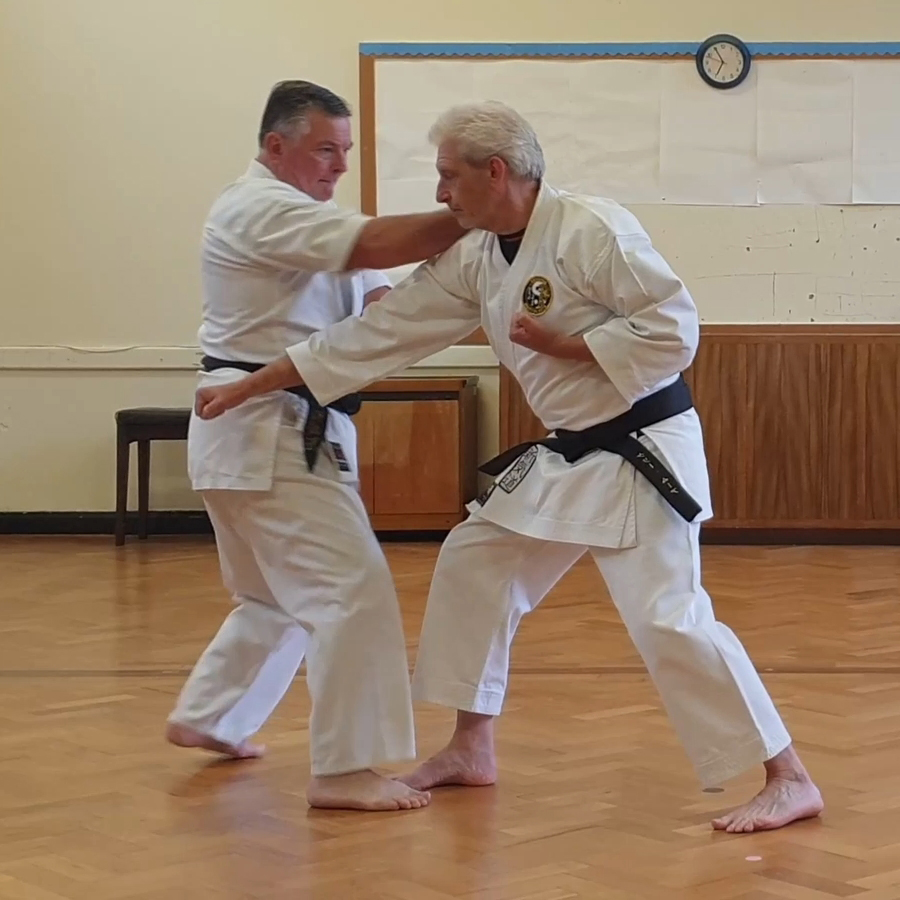
The rear view makes the directional pressure easier to see. Uke is being moved neither straight backwards nor purely sideways, but into a diagonal line that weakens posture.
This angle also shows how Tori’s body stays close enough to control, but not so square that it becomes vulnerable.
The body has turned, the elbow remains controlled, and the kick lands without losing the original pressure.
Moving Forward After the Kick
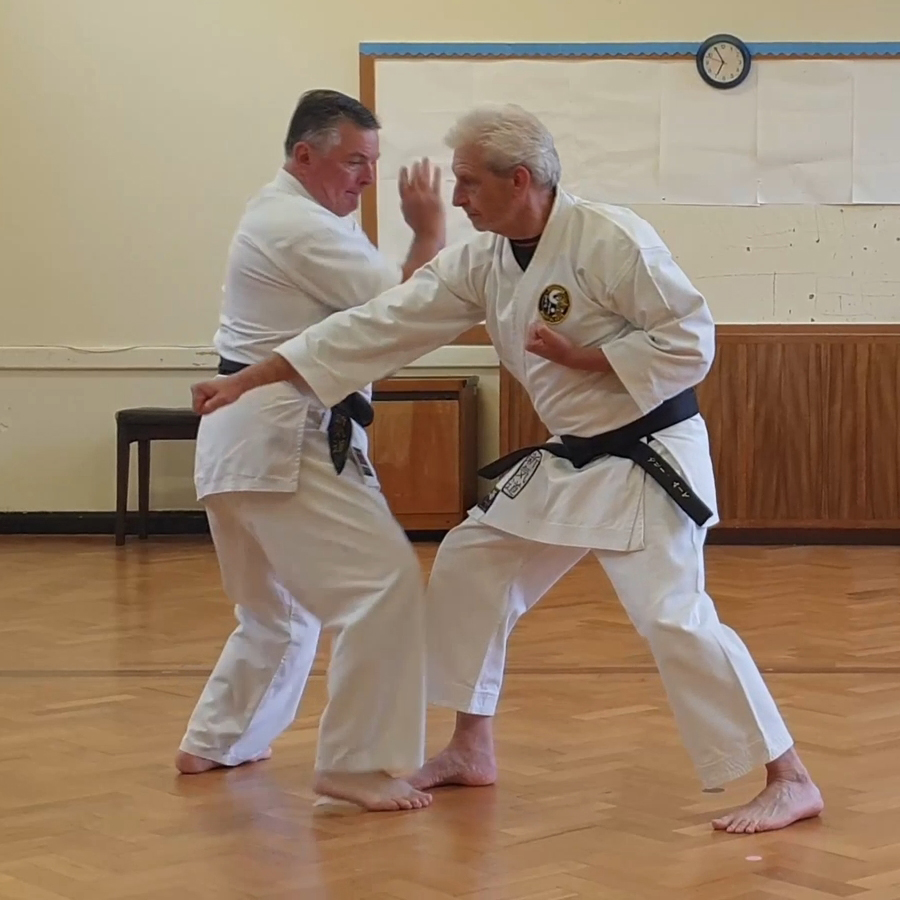
After the kick, Tori must continue to move forward. This is not the point at which the technique relaxes.
The arm continues to move and press, helping bring Uke down and stopping them from returning to a strong position.
“When you move forward, you need to move this arm as well.”
This continuation is what makes the technique complete. The strike has meaning because the pressure remains.
Pressure Downward After the Kick
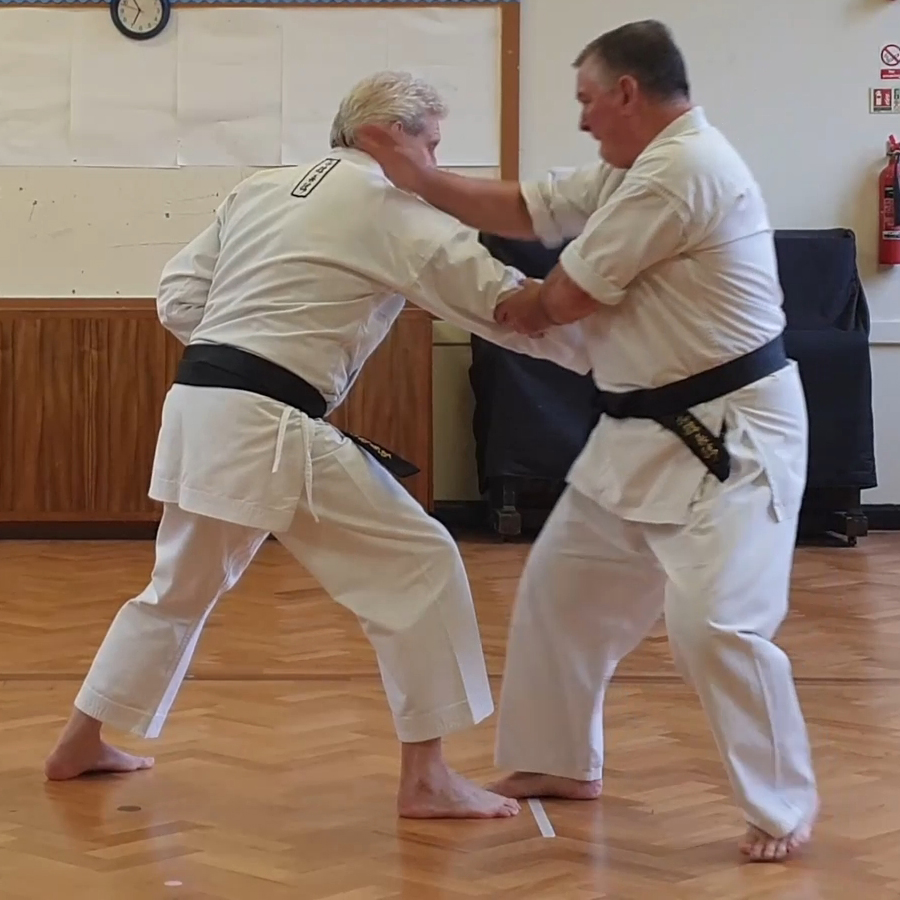
After the kick, the pressure moves downward through the arm. This prevents Uke from standing up, re-establishing posture, or launching a counterattack.
The important point is that the elbow pressure has not disappeared. It continues through the transition and only releases when the final control is established.
Done strongly, this type of pressure could damage the elbow, so the practice must be measured and respectful.
Final Control and Close Pressure
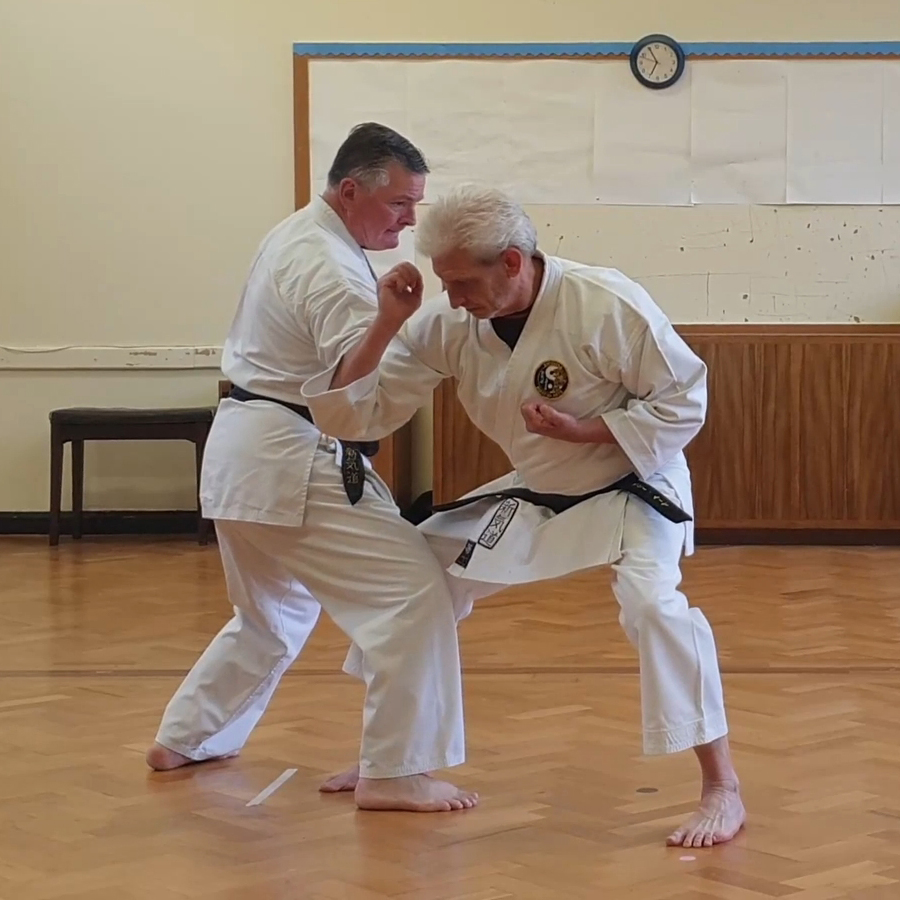
The final control position shows Uke crowded, bent, and unable to stand freely. Tori’s body remains close, the elbow line is still controlled, and the posture has been taken.
This is not simply an ending shape. It is the result of maintaining continuous pressure from the first movement through to the final control.
Alternative Angle – Final Structure
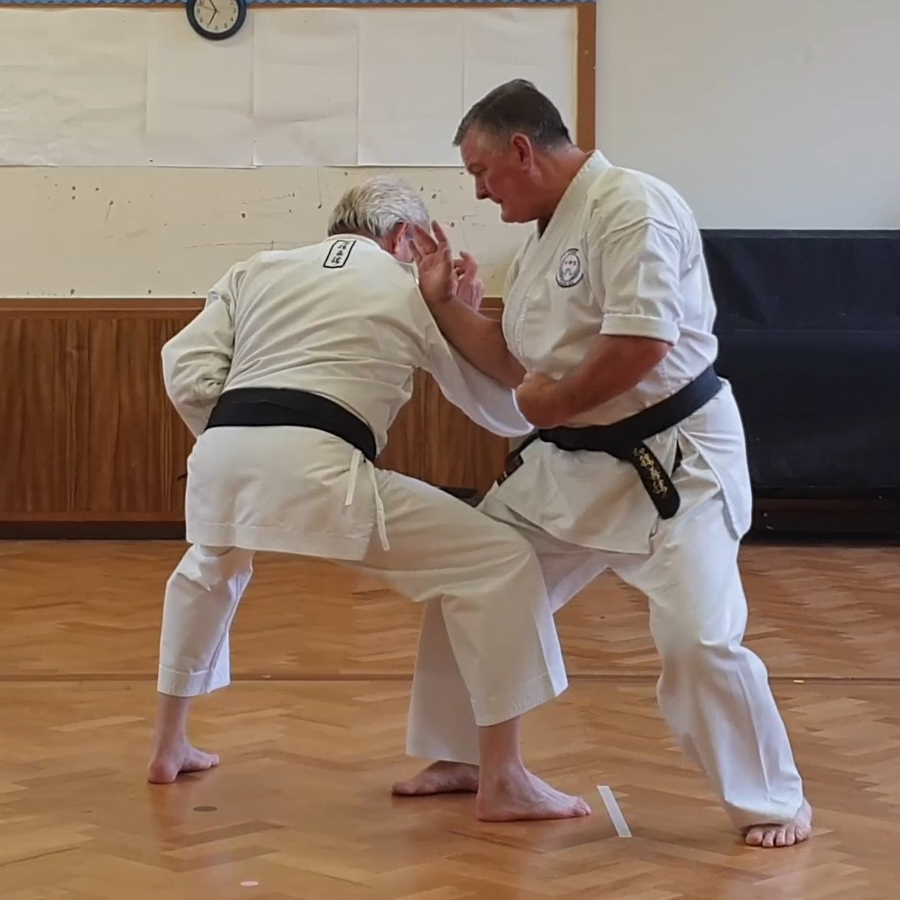
From the alternative angle, the diagonal line of pressure is clear. Tori has used body rotation, the arm line, and leg action to direct Uke into a compromised posture.
The technique finishes with Tori in control of both the space and the direction of Uke’s balance.
Return to Kamae
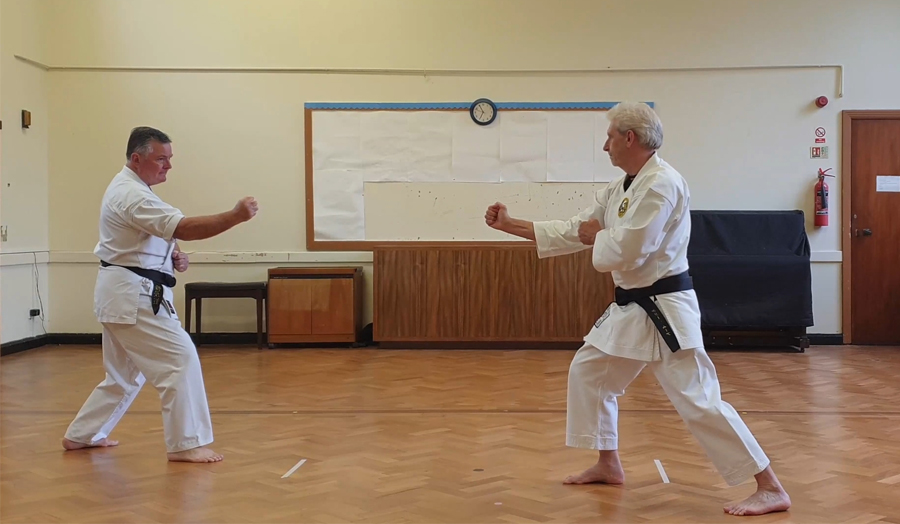
After the technique is complete, both partners return to kamae. This final reset is important: the form ends with control, awareness, and readiness, not collapse or loss of posture.
What Uke Should Experience
- a diagonal loss of balance rather than being pulled straight back or sideways
- continuous pressure on the elbow line
- the feeling that Tori’s hip, hand, and knee are all connected
- a short kick delivered while the arm pressure remains active
- downward pressure after the kick preventing recovery
- crowding and control through the final position
Key Principles
- Centre movement — dropping, lifting, and sliding before turning
- Rotation — using the body turn to remove danger and apply control
- Vector pressure — combining two directions into one effective line
- Elbow control — applying pressure carefully and continuously
- Short kicking — using the most direct route rather than a large swing
- Continuous pressure — maintaining control before, during, and after the kick
Common Errors
- moving the hands without moving the centre
- turning too late and leaving the body in the line of attack
- pulling in only one direction instead of creating a vector
- releasing the elbow pressure before the kick
- using a large sweeping kick rather than a short direct one
- standing up or relaxing after the kick instead of continuing downward pressure
Final Thoughts
Jūponme is a fitting conclusion to the Ippon Kumite series. It brings together many of the themes developed throughout the earlier waza: body movement, angle, timing, pressure, control, and responsibility to the partner.
Its most important lesson is that control must be continuous. The pressure begins as the body moves, continues through the rotation, remains during the kick, and is maintained into the final downward control.
“There was no loss of pressure on the elbow… the big thing is to maintain that pressure.”
Practised carefully, Jūponme offers a deep study in how Wadō-Ryū uses small movements, correct direction, and connected body mechanics to create powerful effects without relying on brute force.