Ippon Kumite No.8 – hachihonme
A study in connection, elbow control, body dropping, and the collapse of posture through continuous pressure
Ippon Kumite No.8 – hachihonme develops several of the deeper principles found throughout advanced Wadō-Ryū practice.
Rather than relying on strength or collision, the technique focuses on controlling the attacking arm through connection, manipulating structure through the elbow and shoulder, and breaking balance by dropping body weight into weak areas of Uke’s posture.
The movement appears soft and relaxed, but underneath is a highly sophisticated use of positioning, timing, and directional force.
Initial Kamae and Pressure
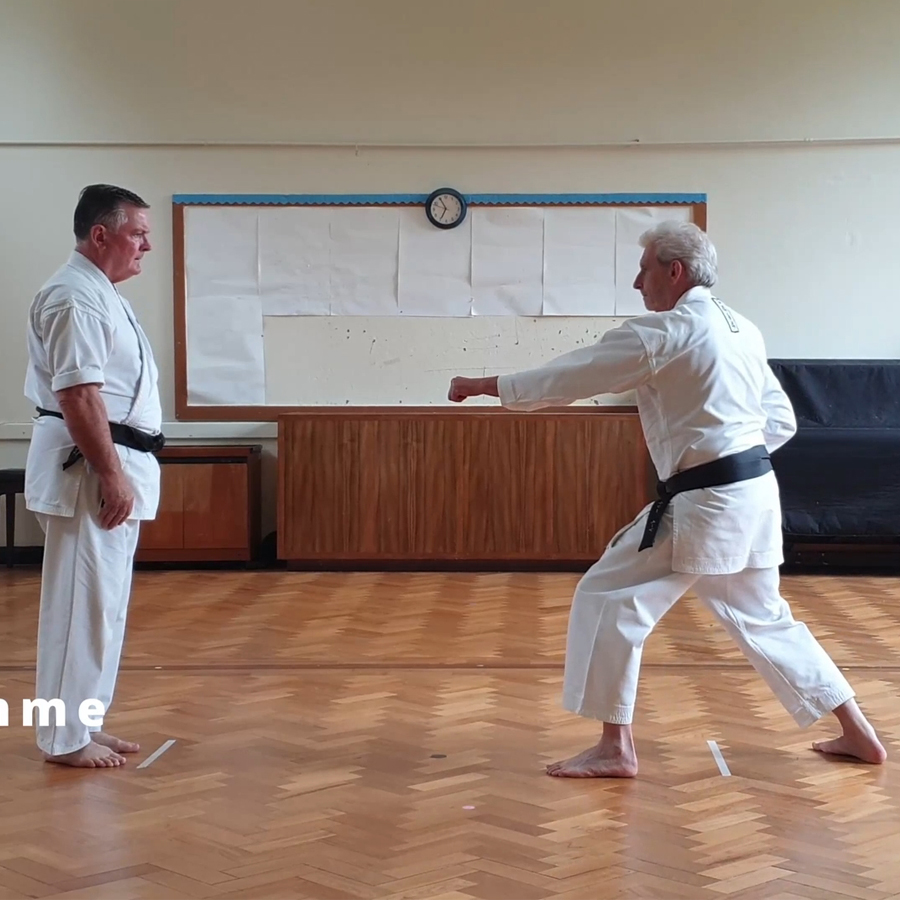
Uke attacks from Hidari Junzuki Dachi with Iyumi Ashi Chudan Junzuki. Tori does not meet force with force, but instead receives and connects to the attacking arm.
The initial movement is subtle. The body shifts slightly off line while maintaining the relationship with Uke’s centre.
“The important thing is not to clash. Connect first… then control the structure.”
Receiving and Establishing Control
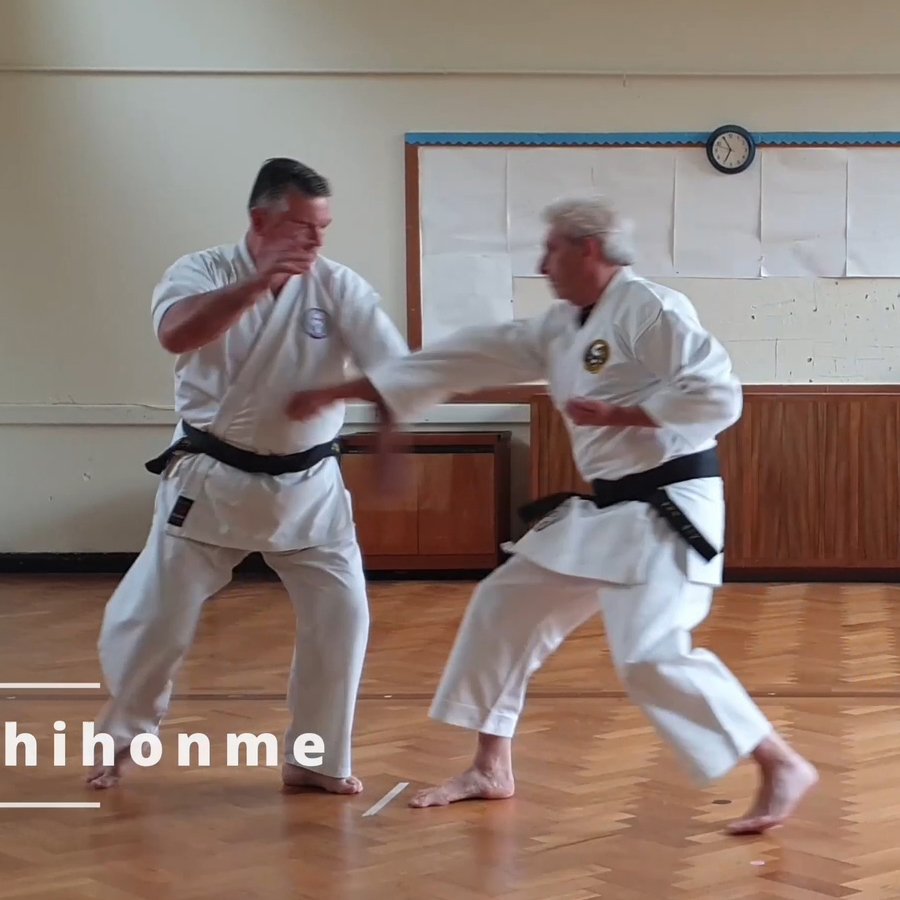
As the punch extends, Tori establishes control through the attacking arm rather than attempting to stop the strike directly.
The rear hand secures the arm while the body begins to rotate and position itself safely outside the line of attack.
The key is that the control comes from body positioning and angle rather than gripping strength.
Pulling and Creating Kuzushi
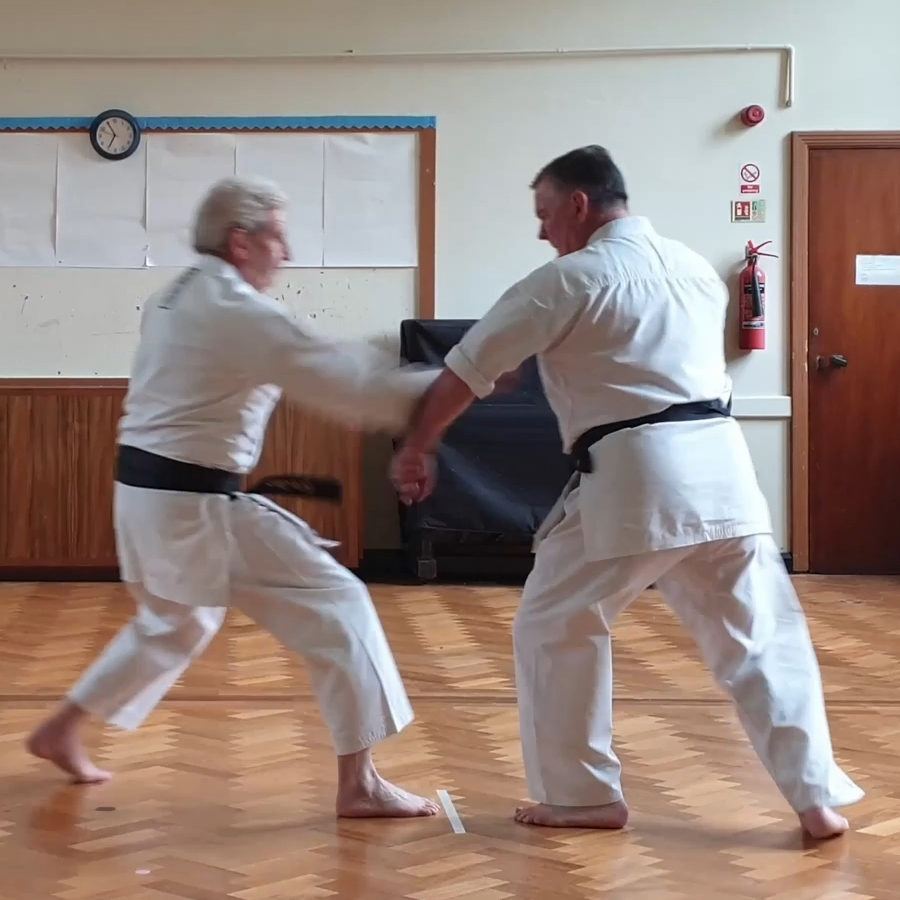
Tori’s rear hand pulls Uke’s arm while the body shifts and drops.
This begins the process of kuzushi — breaking balance and disturbing posture.
The pulling action is not large or exaggerated. Instead, it redirects the shoulder and elbow relationship, creating instability through the spine and hips.
Otoshi Uchi and Body Drop
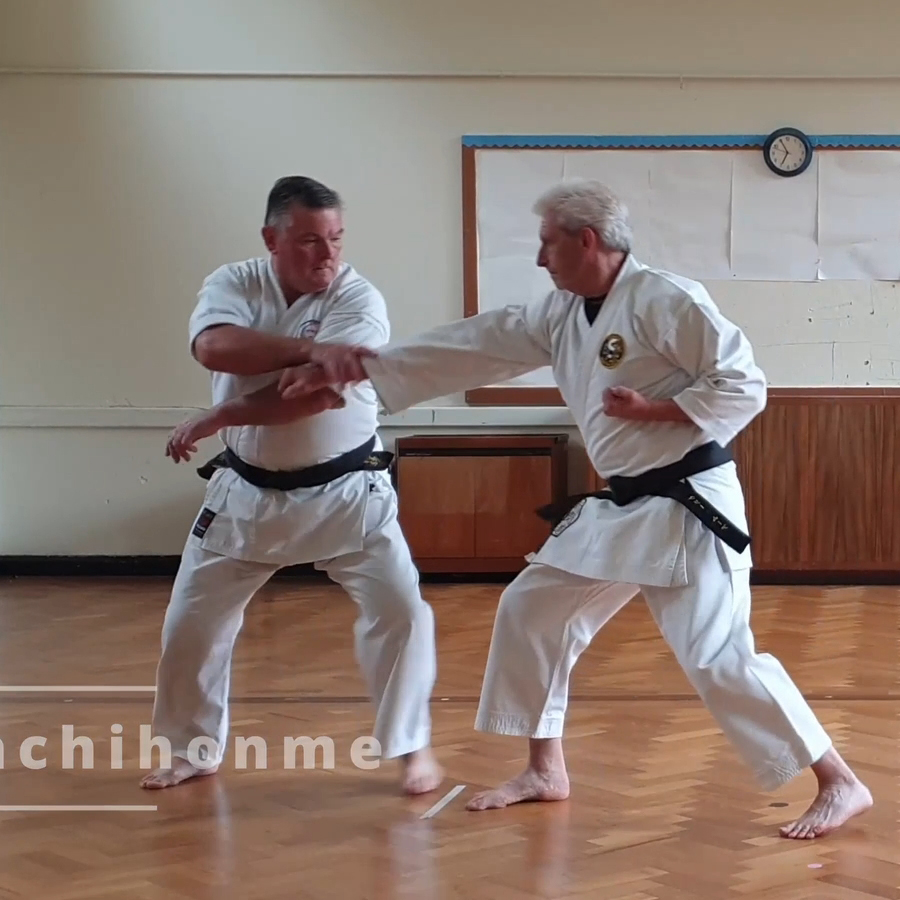
The left hand applies Chudan Otoshi Uchi while the body weight drops.
This dropping action is crucial. The technique does not rely purely on the arm strike itself, but on the lowering of the centre through the body.
“Drop your weight through the technique — don’t hit with the arm alone.”
As the weight drops, Uke’s posture becomes increasingly difficult to maintain.
Turning the Wrist and Controlling the Elbow
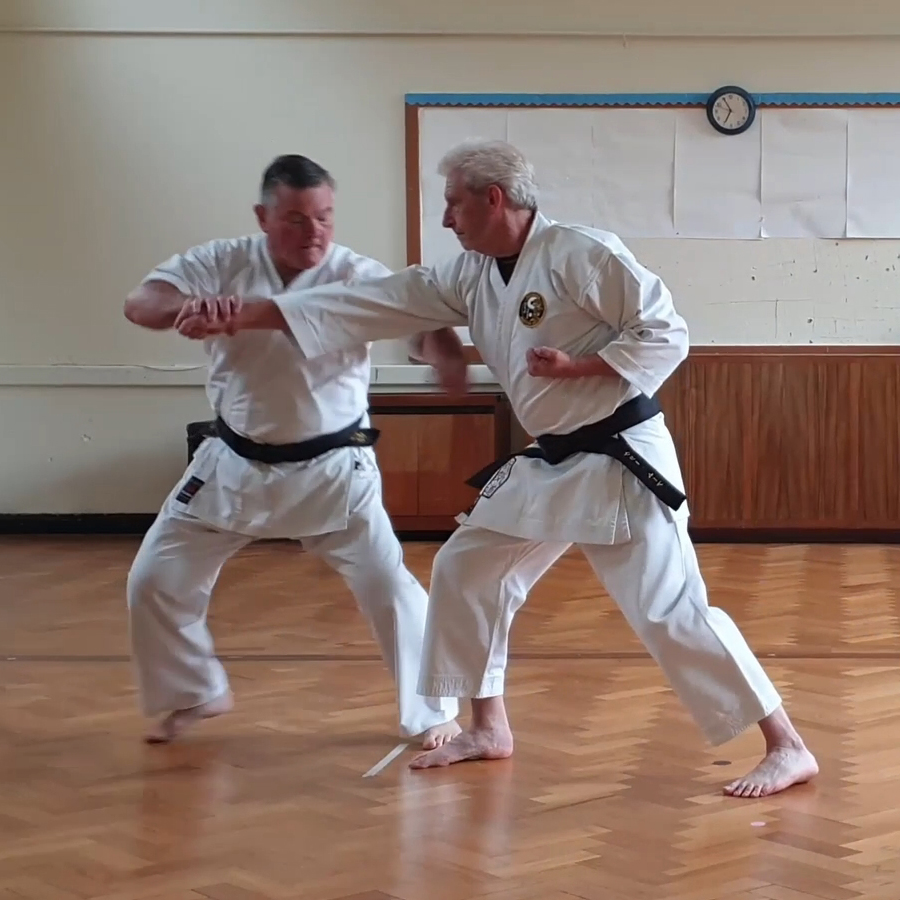
Tori rotates the wrist away and downward while maintaining pressure through the elbow line.
This creates a spiralling effect through Uke’s arm and shoulder structure.
Rather than forcing the arm, the technique follows the natural weakness in the elbow and shoulder alignment.
Rising Through the Elbow
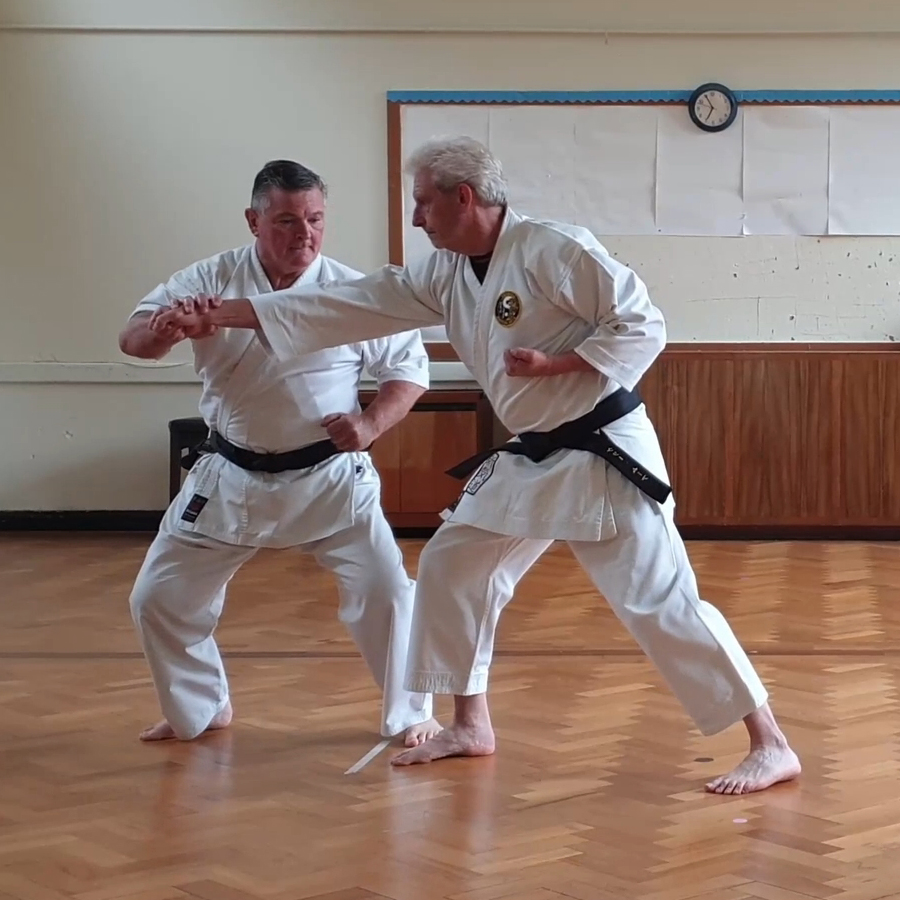
As the body rises slightly, the left hand rolls over Uke’s elbow.
This creates a continuous pressure through the joint and further destroys structure.
The motion should feel smooth and connected rather than segmented into separate techniques.
“It’s one movement all the way through.”
Continuous Connection
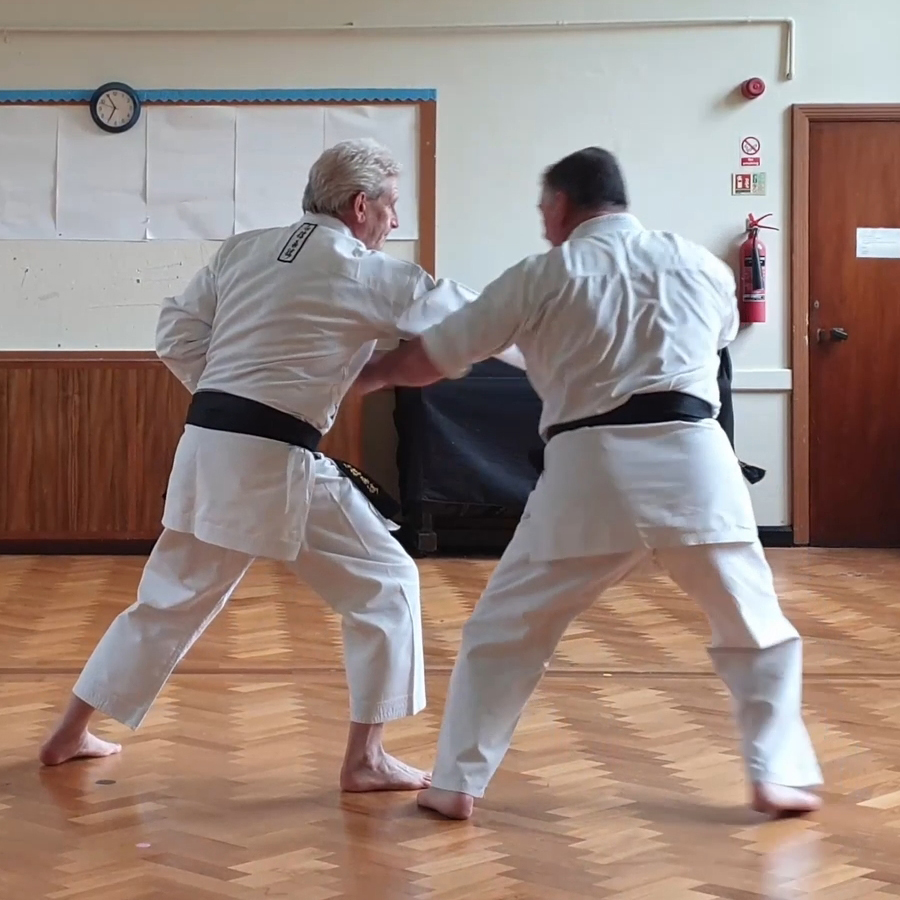
At this stage, Tori maintains constant connection with Uke’s arm and shoulder.
There is no release of pressure. Each movement feeds naturally into the next.
This continuity is central to Wadō-Ryū paired practice.
Rear View – Structural Collapse
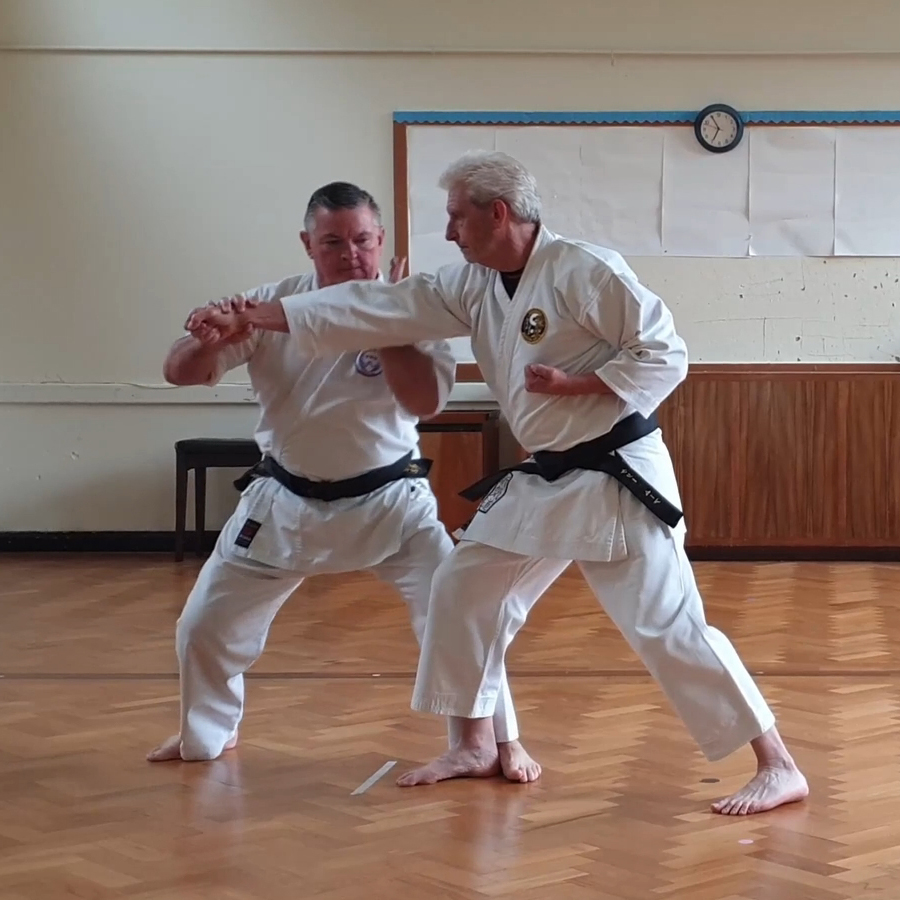
From the rear angle, the structural collapse becomes more visible.
Uke’s spine begins to bend forward while the shoulder and elbow are rotated away from their natural alignment.
This creates a position where balance recovery becomes increasingly difficult.
Knee Pressure and Shoulder Control
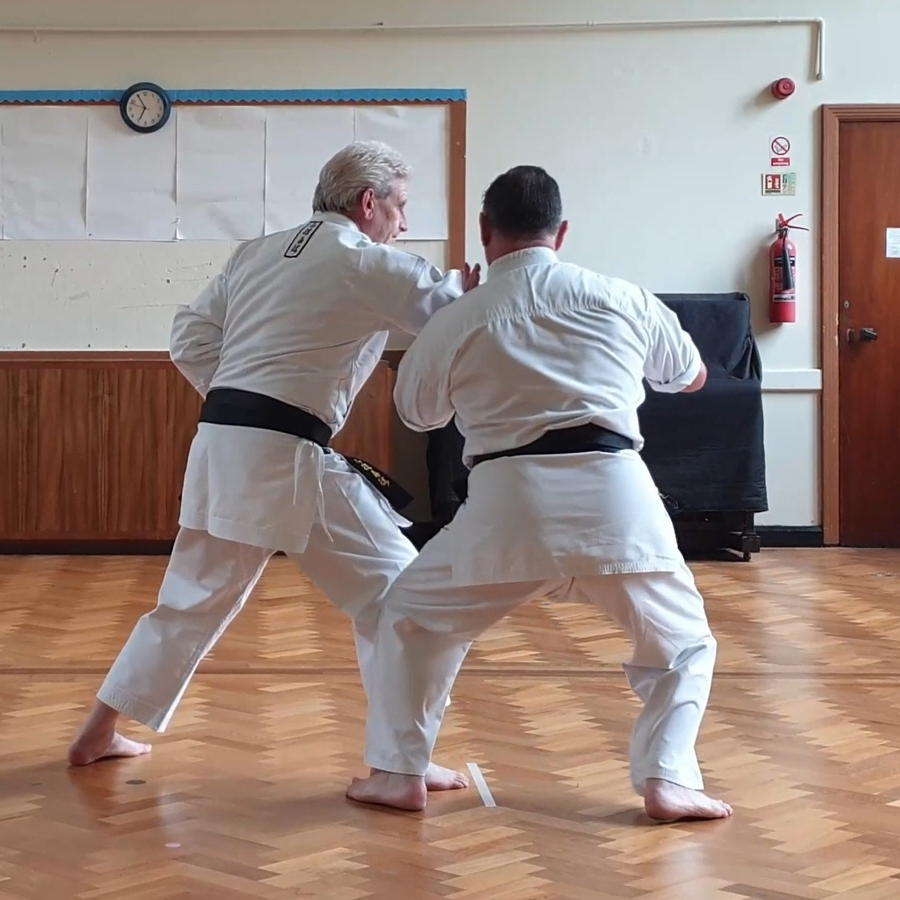
Tori’s knee drops into the back of Uke’s knee while the shuto hand controls the shoulder joint.
This is a classic Wadō principle — controlling the upper and lower body simultaneously.
The collapse does not come from force alone, but from attacking the integrity of the stance itself.
“If the structure goes… the body follows.”
Breaking the Stance
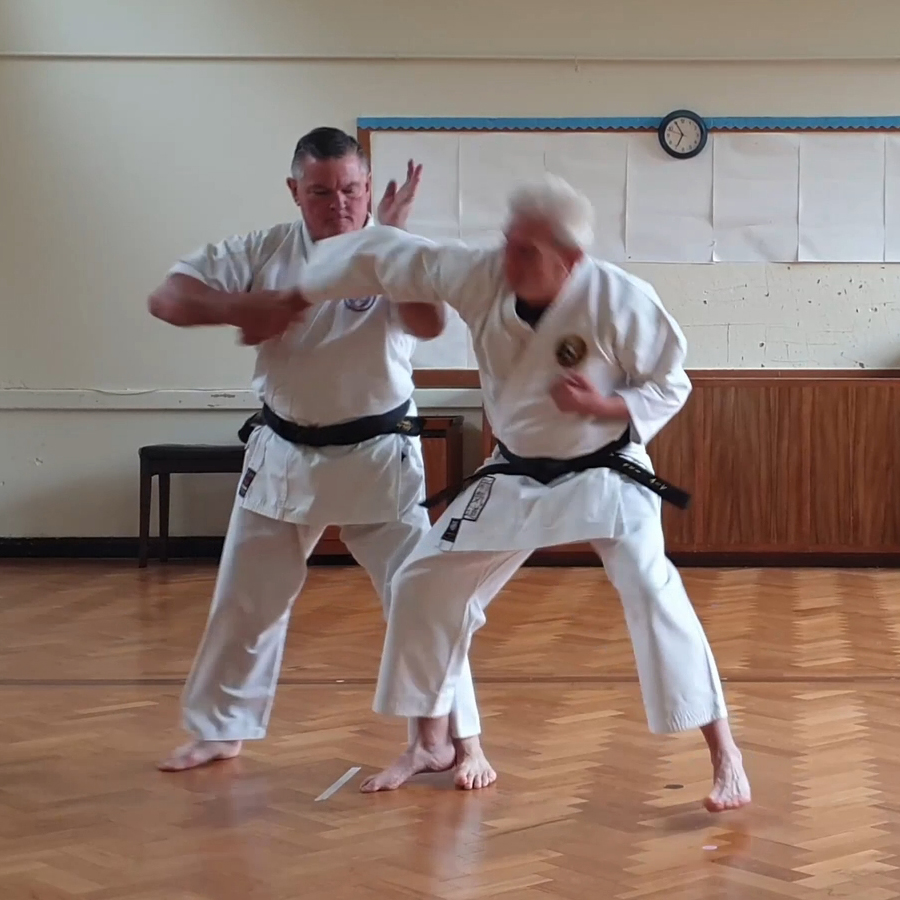
As pressure continues through the shoulder and knee, Uke’s stance begins to collapse.
The dropping of body weight through the technique amplifies the effect without requiring excessive muscular effort.
Final Control Position
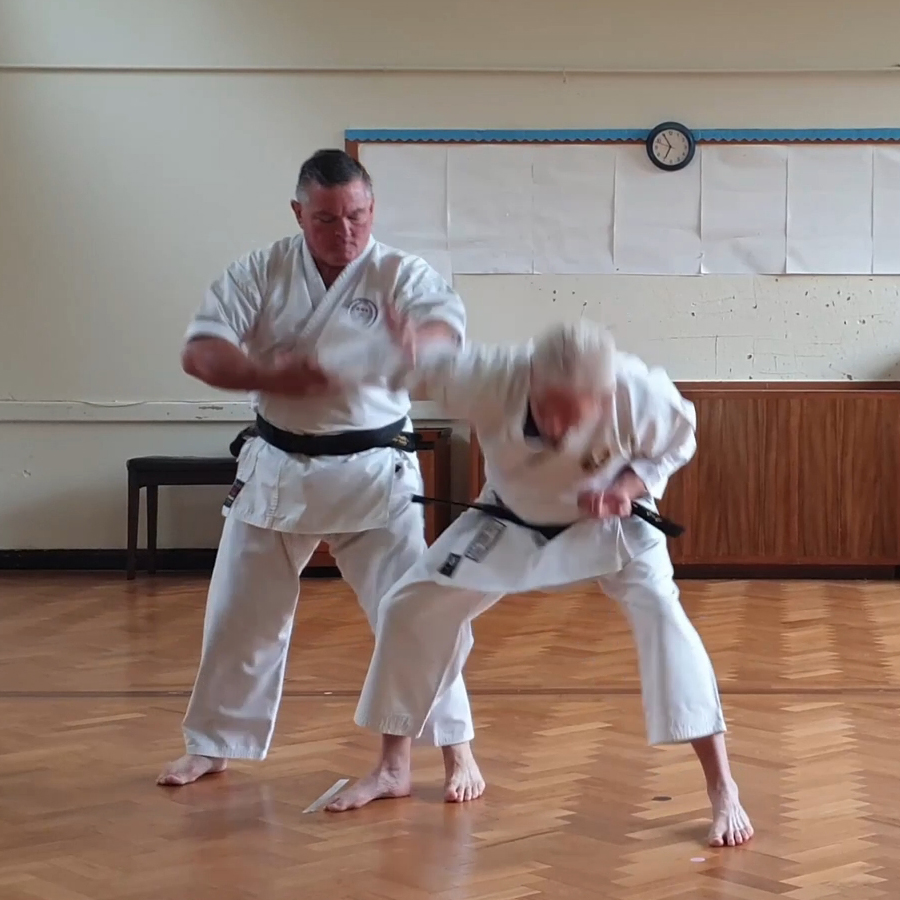
The final position demonstrates complete control through posture, angle, and connection.
Tori maintains pressure through the elbow and shoulder while directing Uke’s balance downward and away.
The technique concludes not with impact, but with total domination of structure.
What Uke Should Experience
- Loss of posture through elbow and shoulder rotation
- Continuous pressure without release
- Disruption of stance through knee control
- Collapse of balance through body weight dropping
- Inability to recover structure once connection is established
Key Principles
- Receiving without collision
- Connection before control
- Dropping body weight through technique
- Controlling upper and lower body simultaneously
- Breaking posture through spiralling movement
- Continuous movement without pause
Extra Notes
The instructional emphasis throughout hachihonme focuses heavily on:
- Maintaining relaxation throughout the movement
- Using body weight instead of arm strength
- Controlling the elbow line rather than chasing the wrist
- Dropping and rising naturally through the technique
- Destroying structure progressively rather than suddenly
The lesson repeatedly returns to the principle that the body should remain connected from beginning to end, creating one uninterrupted action.
Final Thoughts
hachihonme reveals many of the deeper principles hidden inside Wadō-Ryū paired kata.
At first glance, the movement appears simple. However, beneath the surface lies sophisticated use of timing, spiralling control, posture breaking, and body-weight manipulation.
The form teaches that effective control does not require forceful collision. Instead, by understanding alignment, balance, and connection, the opponent’s structure can be dismantled progressively and efficiently.
“Control the structure… and the rest becomes easy.”
With careful practice, hachihonme becomes an excellent study in how Wadō-Ryū uses softness, positioning, and body movement to achieve decisive control.