Ippon Kumite No.9 – Kyūhonme
A study in nagashi, forward pressure, simultaneous entry, and striking before Uke’s kicking foot lands
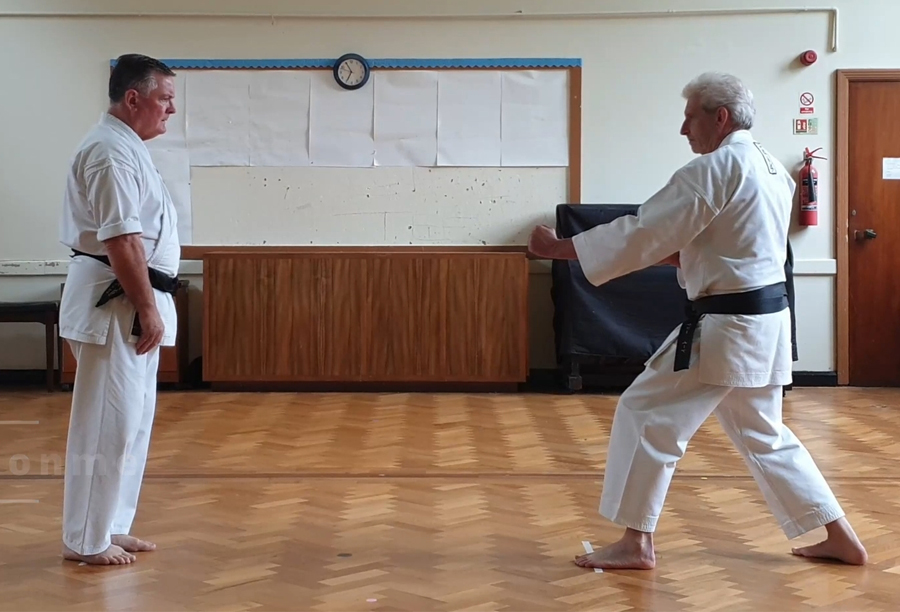
Ippon Kumite No.9 – Kyūhonme is one of the more direct-looking forms in the series, but its apparent simplicity hides several important Wadō-Ryū principles.
Unlike the earlier waza based primarily around hand attacks, Kyūhonme deals with a committed front kick. Tori must not merely step away or block the leg. The real lesson is to enter forward, use nagashi, take the space, and counter before Uke has had time to recover their posture.
The technique teaches forward pressure without collision. Tori does not retreat from the kick, nor does Tori smash the leg aside. Instead, the incoming energy of the kick is used to rotate the body and strengthen the counterattack.
Initial Kamae – Reading the Kick
Uke begins in Hidari Tate Seishan Dachi. The attack is Okuri Ashi Migi Mae Geri Chūdan.
This is important because the front kick creates a different problem from a punch. Uke is advancing with the body mass behind the leg, but for a brief moment their balance is also committed onto one supporting foot.
Tori must recognise that moment and take it. If the response is late, Uke lands, recovers structure, and can continue. If the timing is correct, Uke is crowded and struck before the kicking foot has returned to the floor.
Step Forward – Do Not Escape Sideways
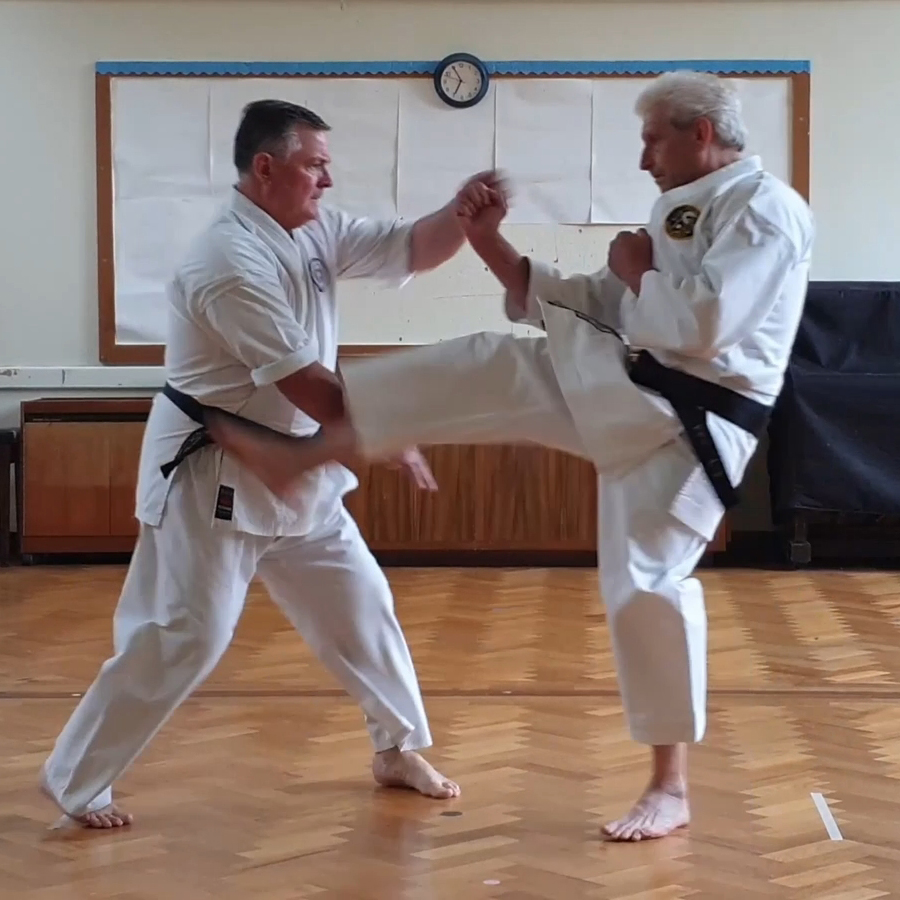
Tori steps forward with the left foot, applying Migi Gedan Barai and Migi Jōdan Zuki.
One of the key teaching points is that Tori should not move out to the side in a way that loses pressure. The movement is nagashi, but it still goes forward. Tori takes Uke’s ground rather than simply escaping from the kick.
“Try not to go to the side to punch — try and take their ground.”
The forward movement creates pressure immediately. Uke should feel that their attack has not simply been avoided, but has been overtaken.
Using the Kick to Rotate the Body
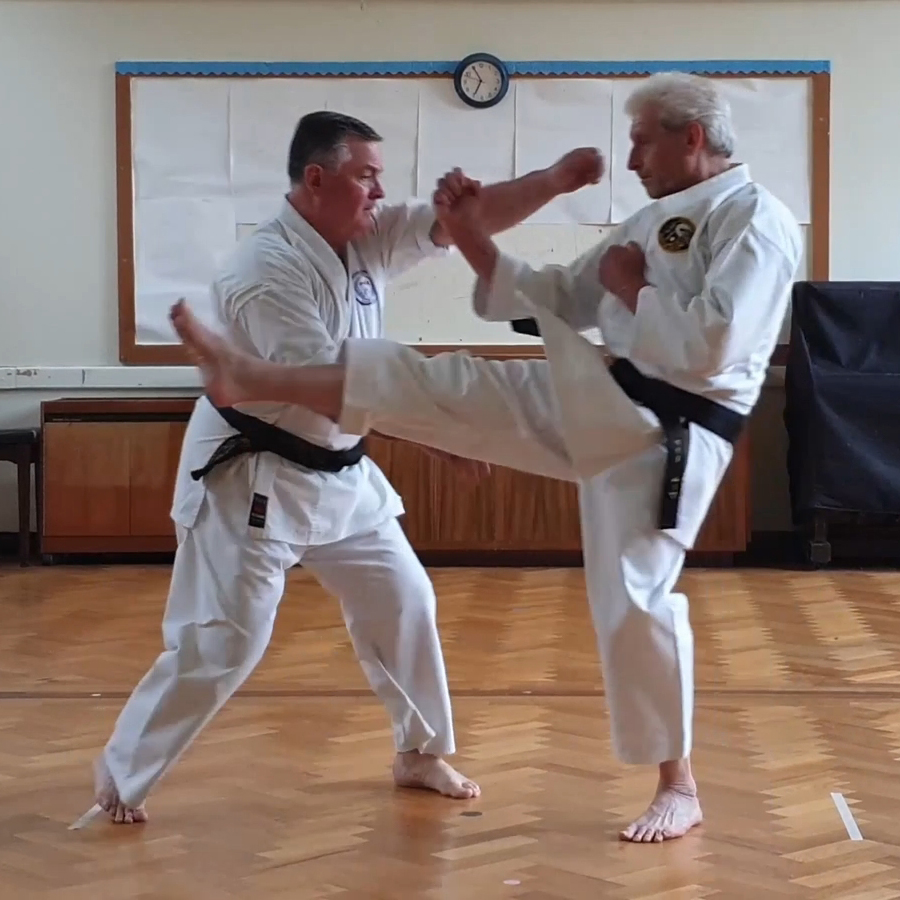
The contact with the kicking leg should not be a heavy, smashing gedan barai. There is contact, but the purpose is not to overpower the leg.
Instead, the energy of the kick helps rotate Tori’s body. That rotation then enhances the punch. In this way, the defensive action and the counterattack become linked rather than separated.
“Use their kick to move your body… their kick is rotating your body, and by doing so it will enhance your zuki.”
This is a very clear example of Wadō using the opponent’s action as part of the response.
The First Strike – Hidari Jōdan Zuki
As the body turns, Hidari Jōdan Zuki is delivered. The punch should not be treated as an isolated counter after the block. It is part of the same entering movement.
The timing must be early. Tori is not waiting until the kick is finished. The aim is to strike while Uke is still in the action of kicking.
The body should feel long and deep, almost as if reaching through Uke’s centre. This helps prevent Tori from becoming short, cramped, or defensive.
Rear View – Taking the Line
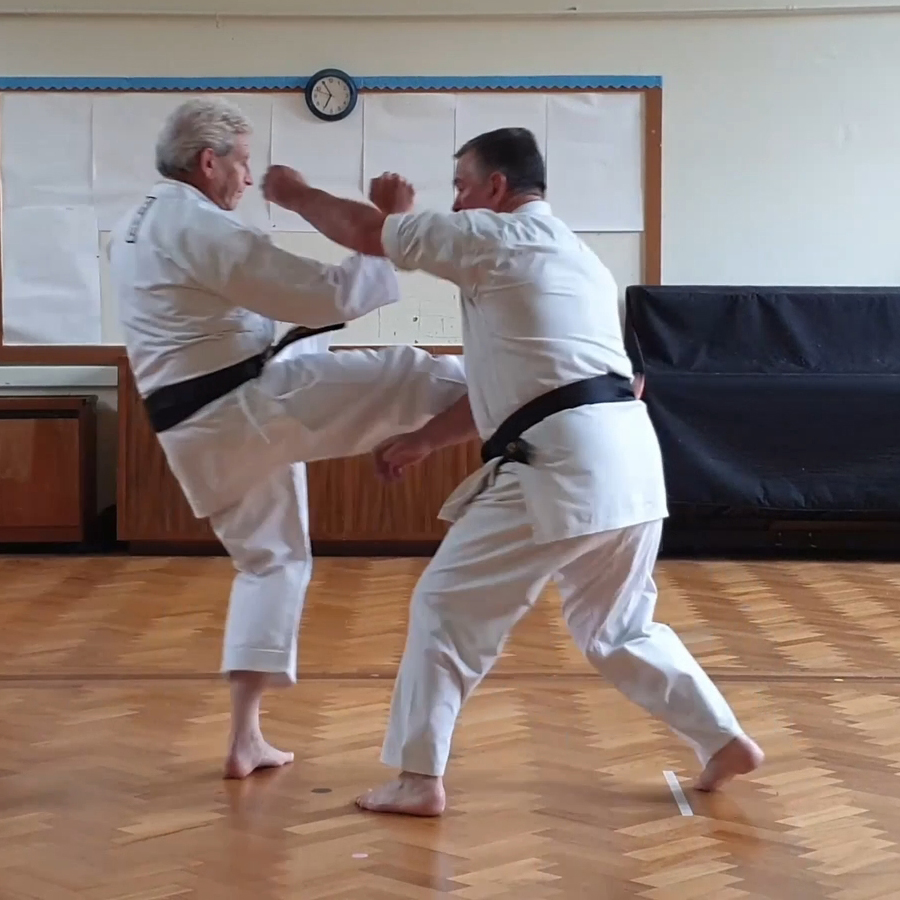
From the rear view, the principle becomes clearer. Tori is not outside and detached from the exchange. Tori is entering on a line that makes Uke feel crowded and unable to counter freely.
This angle also shows why moving too far to the side can weaken the technique. If Tori escapes sideways, the counterattack becomes separate. If Tori enters forward with the correct angle, the same movement receives, turns, and strikes.
Second Strike – Before the Foot Lands
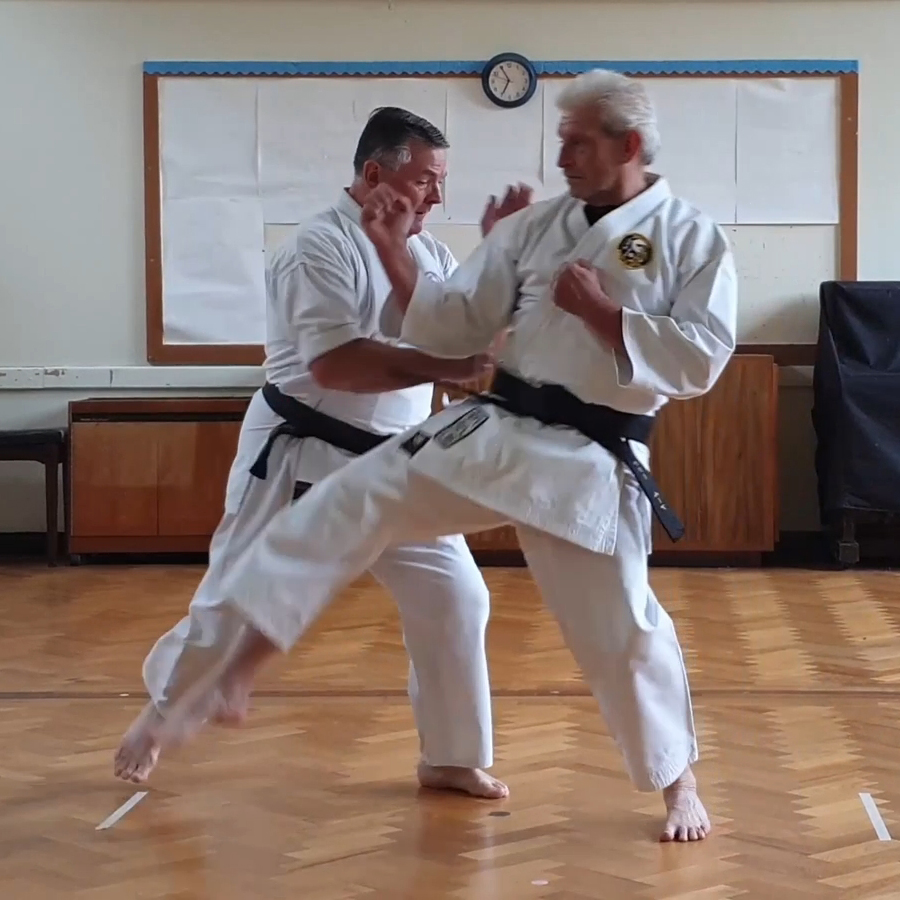
The next action is Chūdan Migi Gyakuzuki, delivered before Uke’s kicking foot has landed.
This is a central point of Kyūhonme. Tori should not wait for the kick to complete, then reset, then strike again. Both attacks must arrive while Uke is still unsettled.
“You want to get both zukis in before it’s actually hit the floor.”
In training terms, Sensei compares this to scoring two waza-ari for an ippon. The idea is not simply to perform two punches, but to overwhelm Uke with continuous forward pressure.
Long, Deep Movement
Kyūhonme should feel like natural walking extended into combative movement. The body moves in an organised, coordinated way rather than separating the upper and lower halves.
As the leg moves, the opposite arm connection is maintained. The action should feel natural, long, and deep. If Tori fails to step through properly, there is not enough room or rotation to affect Uke’s body.
A useful training image is to aim through Uke’s pelvis rather than merely touching the leg. This helps turn the whole body rather than only redirecting the lower limb.
“Try and hit their bottom… then you start to turn the pelvis rather than just the leg.”
Cover After the Punch
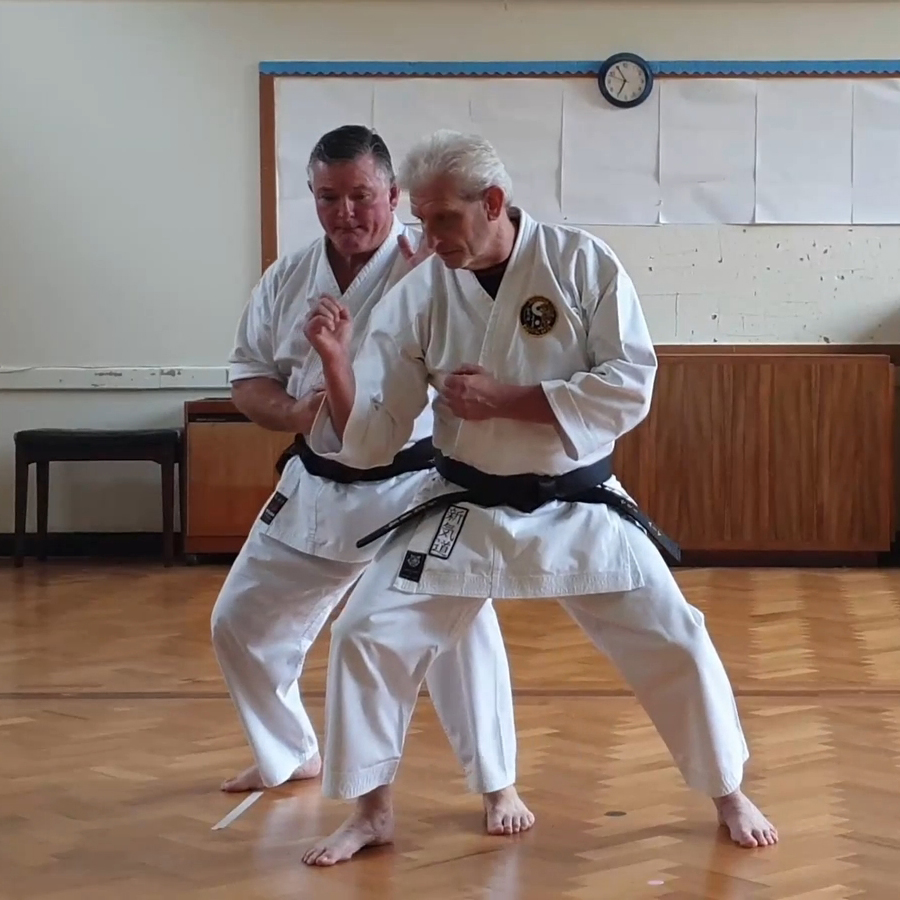
After the gyakuzuki, Tori must not stop in a dangerous position. Uke still has arms, balance, and potential to respond.
The next movement closes the gap and covers the remaining danger. Tori moves in to control the knee and shoulder, continuing the pressure created by the strikes.
This is one of the finer details. The striking phase may appear complete, but the waza is not finished until Uke is covered and controlled.
“After you’ve done the zuki, make sure you cover.”
Control of Knee and Shoulder
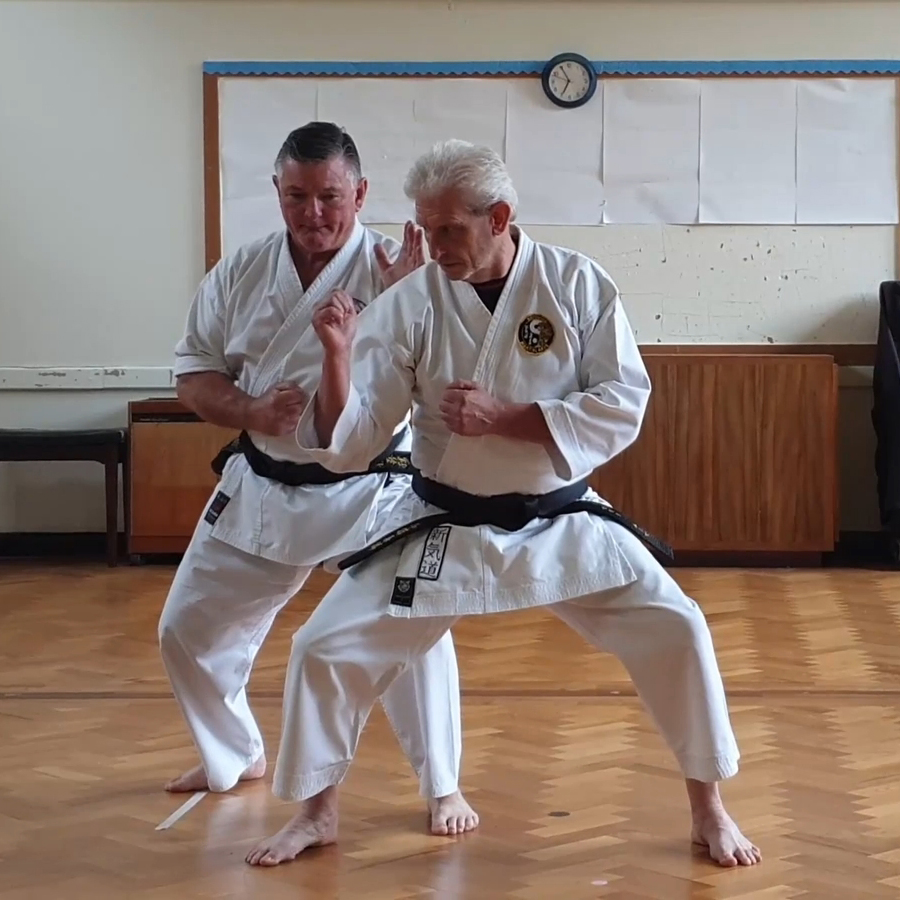
The control phase works through both the upper and lower body. Tori’s positioning affects Uke’s knee while the upper body is covered through the shoulder line.
By stepping forward into this control, Tori further breaks Uke’s balance. The forward entry that began the technique continues right through to the finishing position.
The effect on Uke should be one of pressure and crowding. There is no easy space to regain posture or launch a counterattack.
Final Push Away
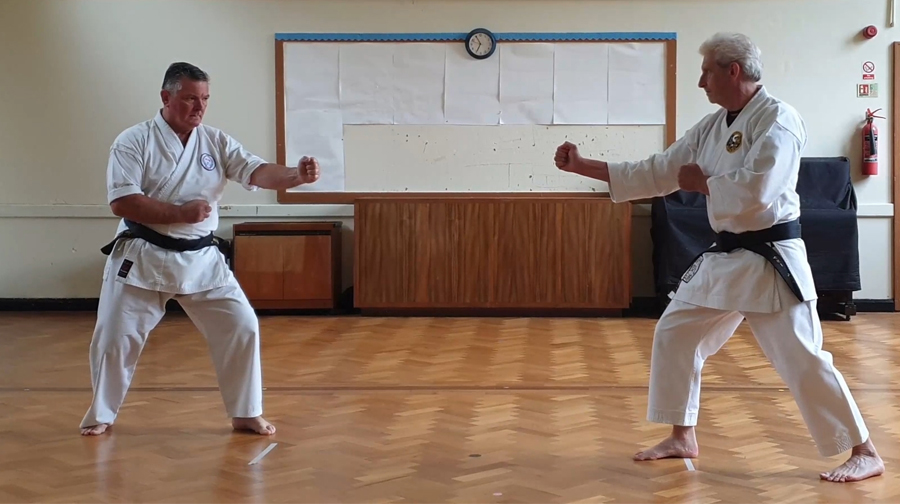
The final action applies control and pushes Uke away.
This ending should not be understood as a casual release. It is the final expression of the control already established through entry, timing, cover, and pressure.
Tori has taken the line, struck before Uke could recover, covered the danger, and then controlled the body sufficiently to create a safe separation.
What Uke Should Experience
- the feeling that their kick has been received without a heavy collision
- immediate forward pressure from Tori
- being crowded while still in the act of kicking
- two strikes arriving before the kicking foot lands
- the pelvis and body being turned rather than only the leg being moved
- loss of balance through Tori’s continued entry and cover
Key Principles
- Nagashi — receiving and flowing without escaping the exchange
- Forward pressure — taking Uke’s ground rather than retreating
- Kōbō-ittai — defence and attack expressed as one movement
- Timing — striking before Uke’s foot lands
- Body rotation — using the kick to enhance the punch
- Cover and control — not stopping after the strike
Common Errors
- moving too far sideways and losing forward pressure
- using a heavy gedan barai against the leg
- waiting for Uke’s foot to land before striking again
- stopping after the punch without covering the remaining danger
- only moving the leg rather than affecting Uke’s pelvis and body
- making the movement short instead of long and deep
Final Thoughts
Kyūhonme may contain fewer visible movements than some of the earlier Ippon Kumite, but it is rich in detail.
The lesson is not simply how to block a front kick. The deeper study is how to enter against a kick without collision, use the opponent’s energy to rotate the body, and overwhelm Uke before they can regain structure.
This makes Kyūhonme an excellent study in Wadō-Ryū’s preference for timing, flow, and intelligent pressure over hard resistance.
“Try and overwhelm your Uke with this forward pressure of the attack. They should feel very crowded performing this technique.”
With correct practice, Kyūhonme teaches that even against a strong kicking attack, Tori can move forward, avoid collision, and take control through precise timing and connected body movement.