Kumite Kata No.1 – Ippon Me
A study in entering, receiving, striking, covering, collapsing structure, and withdrawing with awareness
Kumite Kata No.1 – Ippon Me introduces the paired Kumite Kata series through a compact but important study of timing, entry, cover, and structural control.
At first glance the sequence appears direct: Uke attacks with Okuri Ashi Jōdan Zuki, Tori receives with Jōdan Naiwan Uke and counters with Chūdan Gyaku Zuki. However, as with all Wadō-Ryū paired work, the depth lies not in the external shape alone, but in how the body enters, how the centre is controlled, and how Uke’s structure is progressively taken.
This first form sets the tone for the series. Tori must move with purpose, avoid unnecessary collision, cover intelligently, strike through the centre, and finish by dropping weight in a way that collapses Uke’s posture before withdrawing into Hanmi Gamae.
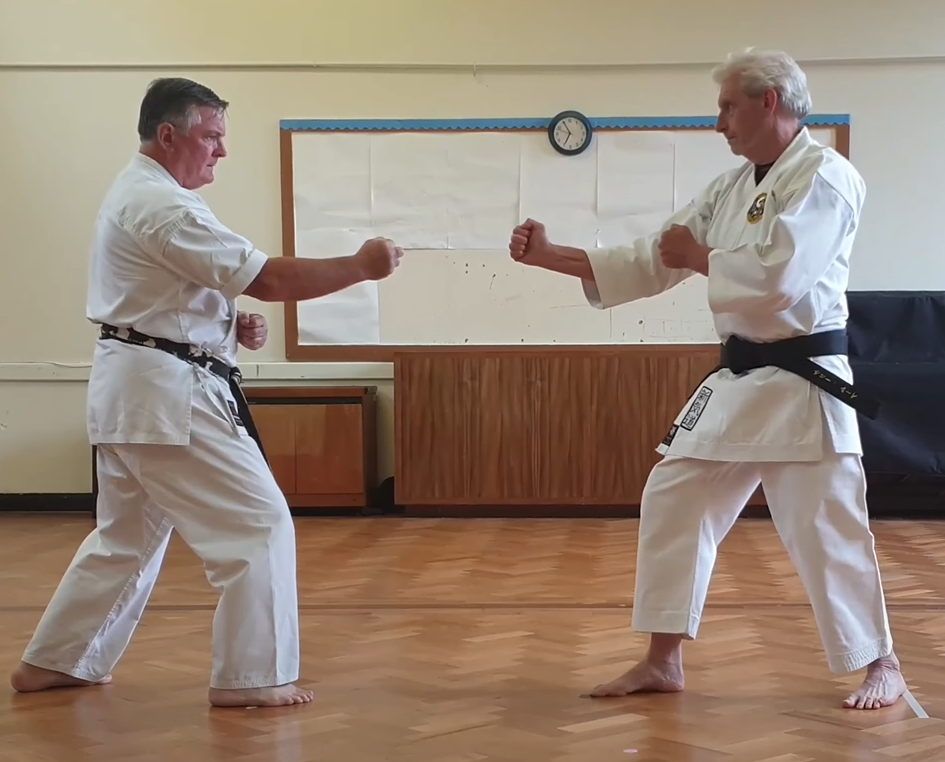
Opening Kamae – Migi Tate Seishan Dachi
Both partners begin in Migi Tate Seishan Dachi. This is not simply a starting position. It establishes the correct relationship of distance, line, and readiness.
The posture should feel alive. Tori is not waiting passively, and Uke is not merely stepping through a rehearsed action. Both partners must maintain awareness, structure, and intent from the beginning.
Uke’s Attack – Okuri Ashi Jōdan Zuki
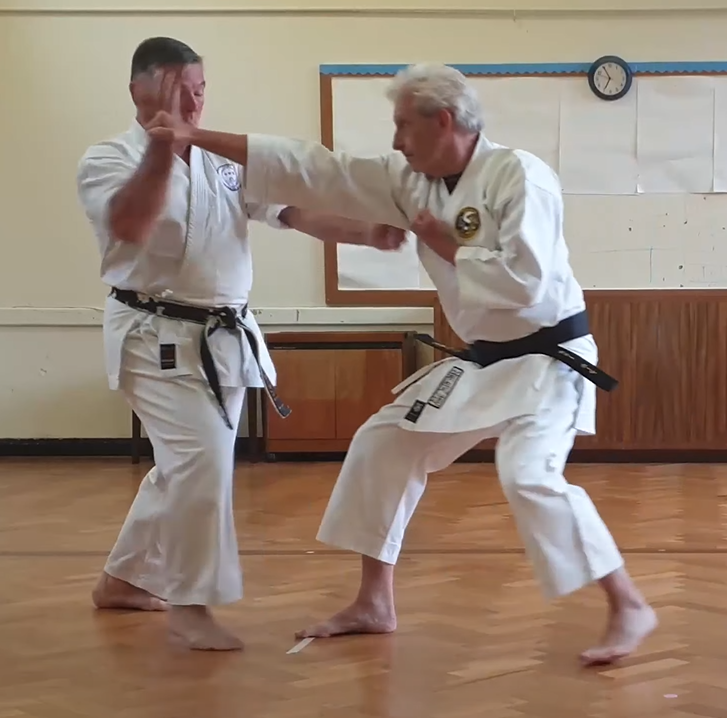
Uke attacks with Okuri Ashi Jōdan Zuki. The attack must be committed enough to create a genuine line of danger.
Tori responds with Jōdan Naiwan Uke and Chūdan Gyaku Zuki. The receiving action should not be a hard block that stops the movement dead. It should protect the line while allowing Tori to enter and counter immediately.
The gyaku zuki is not an afterthought. It is part of the same moment of receiving and entering. This is an early expression of kōbō-ittai — attack and defence as one.
Receive, enter and counter as one continuous action.
Chūdan Gyaku Zuki – Striking Through the Centre
The first counter should travel through Uke’s centre rather than simply touching the surface. Tori’s posture must remain settled, with the body supporting the strike.
If the punch is delivered only from the arm, the effect is limited. When the stance, hips, and centre are connected, the strike also begins to disturb Uke’s structure.
Uke should feel that Tori has entered decisively and is beginning to occupy the space, rather than merely defending from the outside.
Push In – Chūdan Zuki with Suri Uke
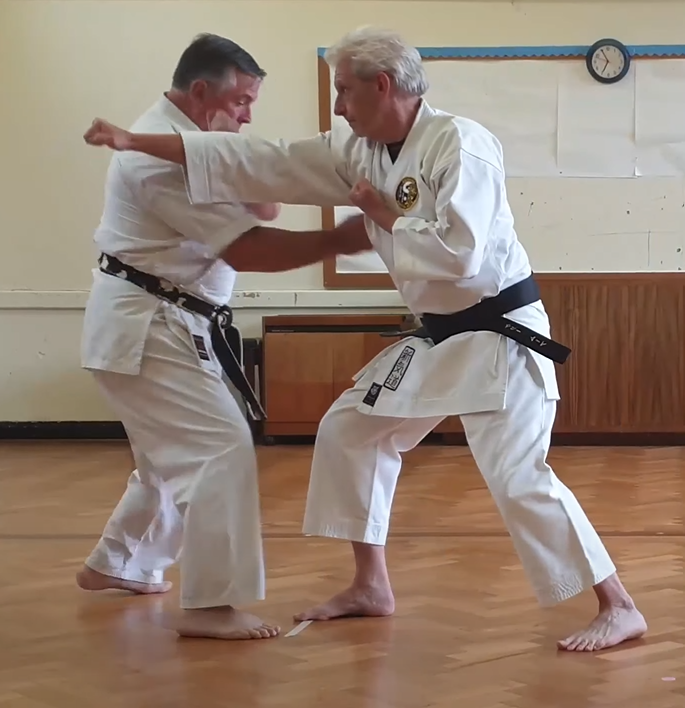
Tori continues by pushing in with Chūdan Zuki, while applying Suri Uke on Uke’s covering arm.
This is a key feature of the form. The second action is not simply another punch. The covering arm is managed and pressed so that Uke cannot freely recover, counter, or regain the line.
Suri Uke should feel like a sliding, controlling action. It does not snatch or grab unnecessarily. It occupies the arm line and allows Tori’s body to continue entering.
Controlling Uke’s Body
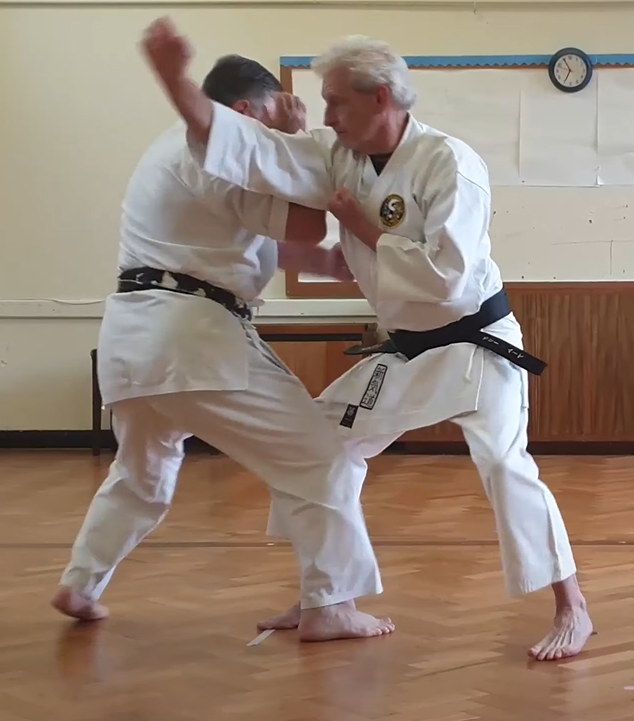
Tori then pushes in to control Uke’s body. This phase is where the form begins to move beyond simple striking.
The pressure should be applied through the whole body, not only through the hands. Tori’s stance, hip position, and line of entry all contribute to restricting Uke’s movement.
Uke should feel crowded. Their posture is being shortened and their ability to counter is being reduced.
Dropping Weight to Collapse Uke
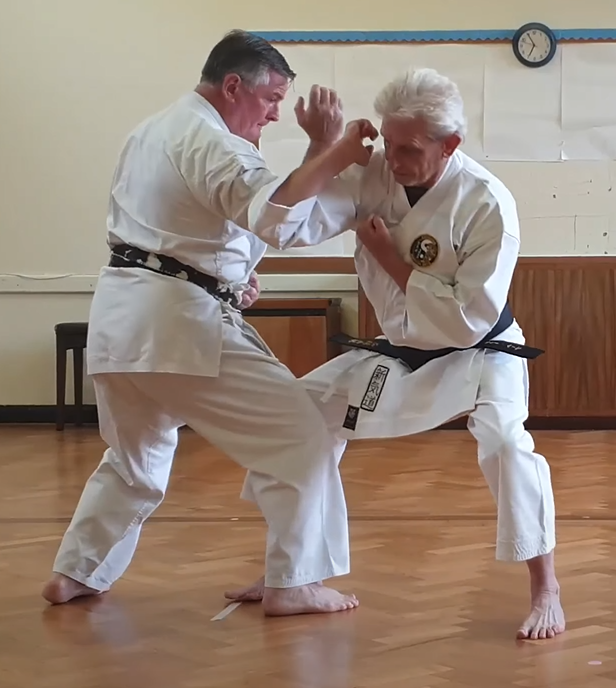
The next phase is to drop weight in order to collapse Uke.
This is not a downward shove with the arms. The effect comes from Tori lowering the centre while maintaining connection through the arm, shoulder, and body line.
When performed correctly, Uke’s structure folds because the centre is being taken. The collapse should feel inevitable rather than forced.
The body drops; the arms transmit the pressure.
Withdrawal – Sugi Ashi Kōtai into Hanmi Gamae
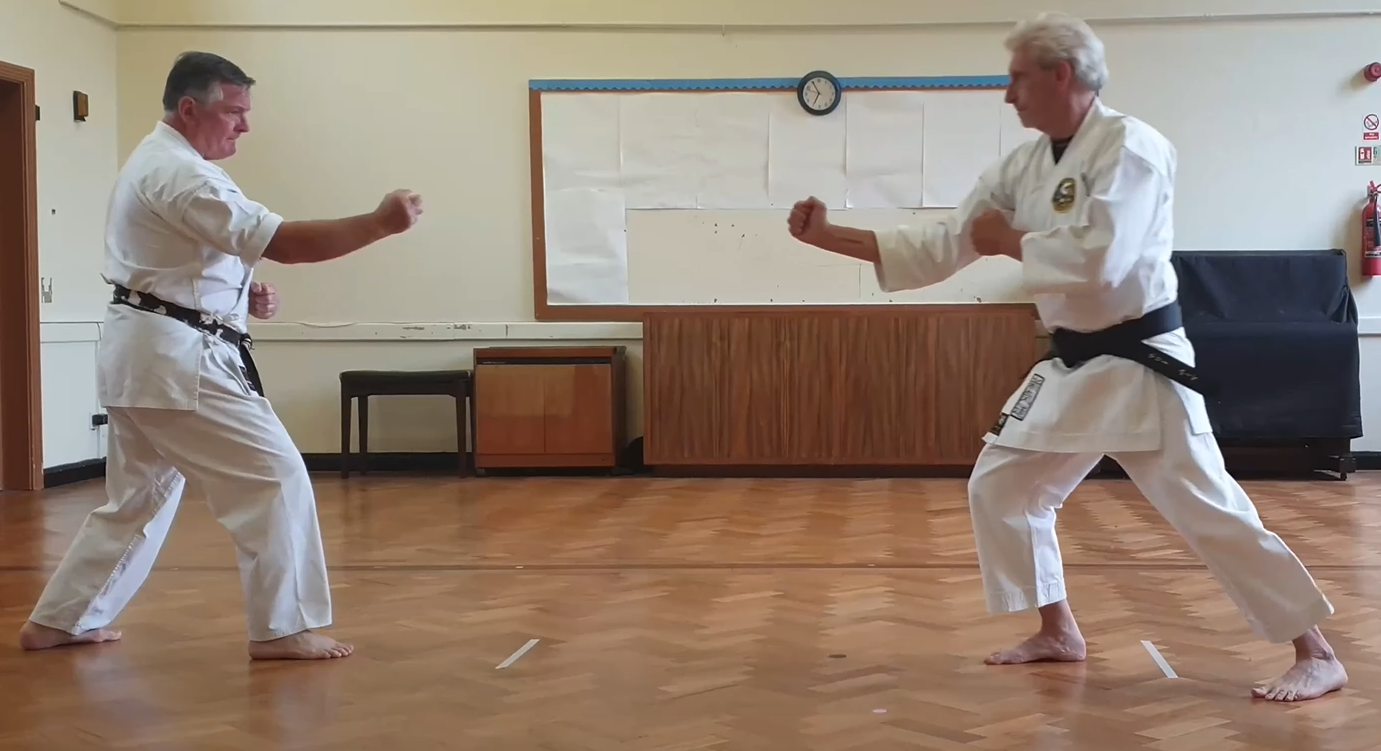
The sequence concludes with Sugi Ashi Kōtai into Hanmi Gamae.
The withdrawal is as important as the entry. Tori must leave with posture, distance, and awareness intact. The form should not finish in a collapsed or careless position.
This final movement reinforces an essential Wadō habit: enter cleanly, control decisively, and withdraw without losing readiness.
What Uke Should Experience
- a clear jōdan attack line being received without unnecessary collision
- Tori entering immediately with chūdan gyaku zuki
- the covering arm being controlled through suri uke
- pressure building through the body rather than just the hands
- loss of posture as Tori drops weight
- a controlled finish with Tori withdrawing into correct ma-ai
Key Principles
- Kōbō-ittai — receiving and countering as one action
- Ma-ai — entering and withdrawing with correct distance
- Suri Uke — sliding control of the covering arm
- Kuzushi — breaking posture through pressure and weight drop
- Shizumu — lowering the centre to create collapse
- Zanshin — maintaining awareness after the technique
Common Errors
- blocking the jōdan attack too hard and stopping the flow
- punching from the arm rather than entering with the body
- forgetting to control Uke’s covering arm
- pushing with the hands instead of using body pressure
- dropping the head rather than lowering the centre
- withdrawing casually without restoring ma-ai and posture
Final Thoughts
Kumite Kata No.1 is a strong opening to the series because it introduces many of the central concerns of Wadō-Ryū paired practice in a concise form.
The sequence teaches that a technique does not end with the first successful strike. Tori must continue to control the line, manage Uke’s arm, take the centre, and finish with awareness.
Practised carefully, Ippon Me becomes more than a formal drill. It becomes a study in how Wadō-Ryū links timing, body movement, control, and finishing posture into one complete exchange.