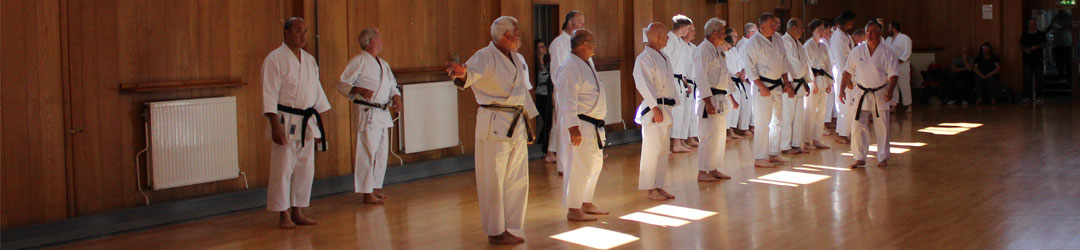
Kumite Kata No.2 – Nihon Me
A study in receiving chūdan attack, taking the wrist, controlling the head, applying Empi, locking the structure, and dropping weight
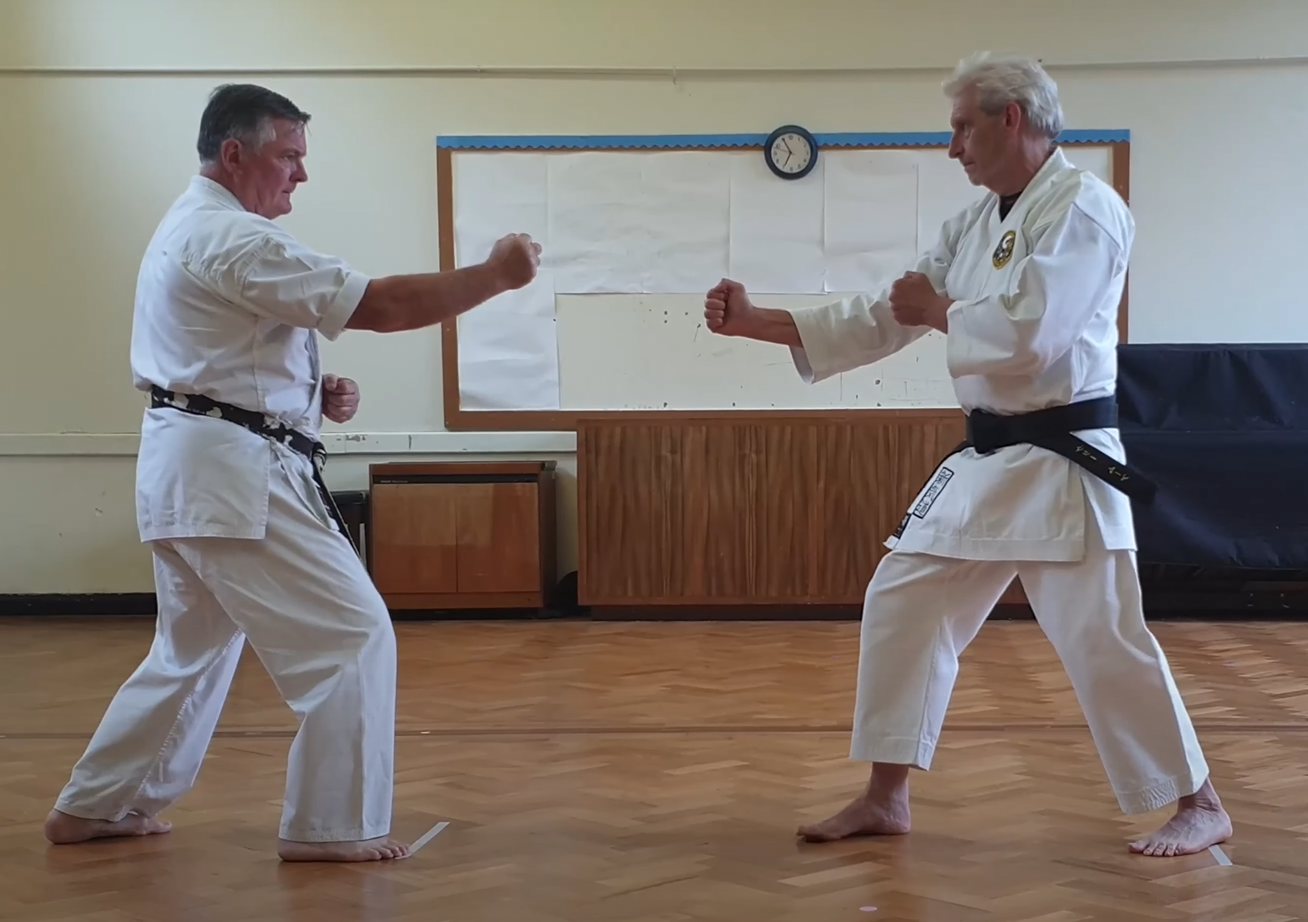
Kumite Kata No.2 – Nihon Me continues the paired Kumite Kata series by developing the themes of timing, body movement and control, but with a stronger emphasis on wrist capture, head control and locking the upper body.
The form begins from Migi Tate Seishan Dachi, with Uke attacking using Okuri Ashi Chūdan Zuki. Tori must take the target away, receive the attack, counter with Chūdan Gyaku Zuki, and then continue into control of Uke’s arm, head and posture.
As with all Wadō-Ryū paired work, the visible technique is only part of the lesson. The deeper study is how the body moves, how the wrist is taken, how Uke’s structure is locked, and how Tori uses the centre and elbow pressure to collapse Uke without relying on brute strength.
Opening Kamae – Migi Tate Seishan Dachi
Both partners begin in Migi Tate Seishan Dachi. Tori should present a realistic chūdan target rather than holding the guard so high that Uke is drawn into a jōdan attack.
This starting relationship is important. Uke must have a clear line to attack, while Tori must be ready to remove that target through body movement and timing.
Lift the guard enough to invite the chūdan line, then take the target away.
Uke’s Attack – Okuri Ashi Chūdan Zuki
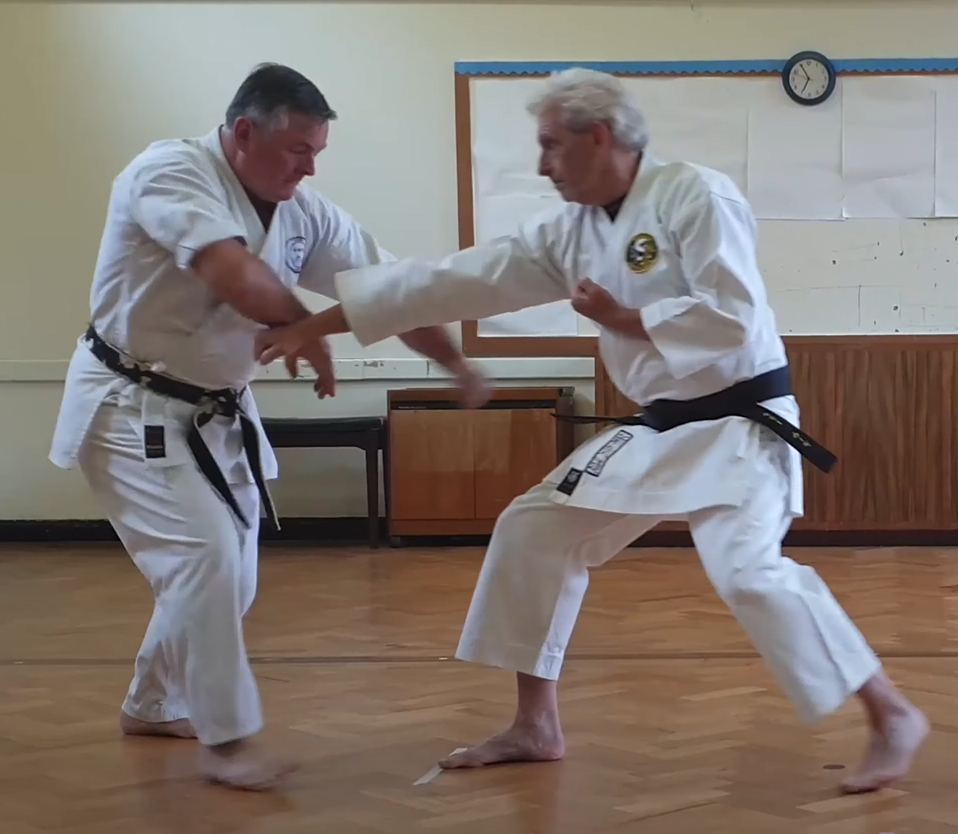
Uke attacks with Okuri Ashi Chūdan Zuki. Tori must not simply stand and block the incoming strike. The body moves back and to the side, removing the target while maintaining the relationship needed to counter and control.
Tori receives and counters with Chūdan Gyaku Zuki. The counter should be linked to the body movement rather than added after it. The action should feel like one continuous response: remove the target, receive the attack, counter, and begin taking control.
The receiving action should not be heavy or disconnected. It creates the opportunity to capture the wrist and move into the next phase.
Taking Control of Uke’s Arm
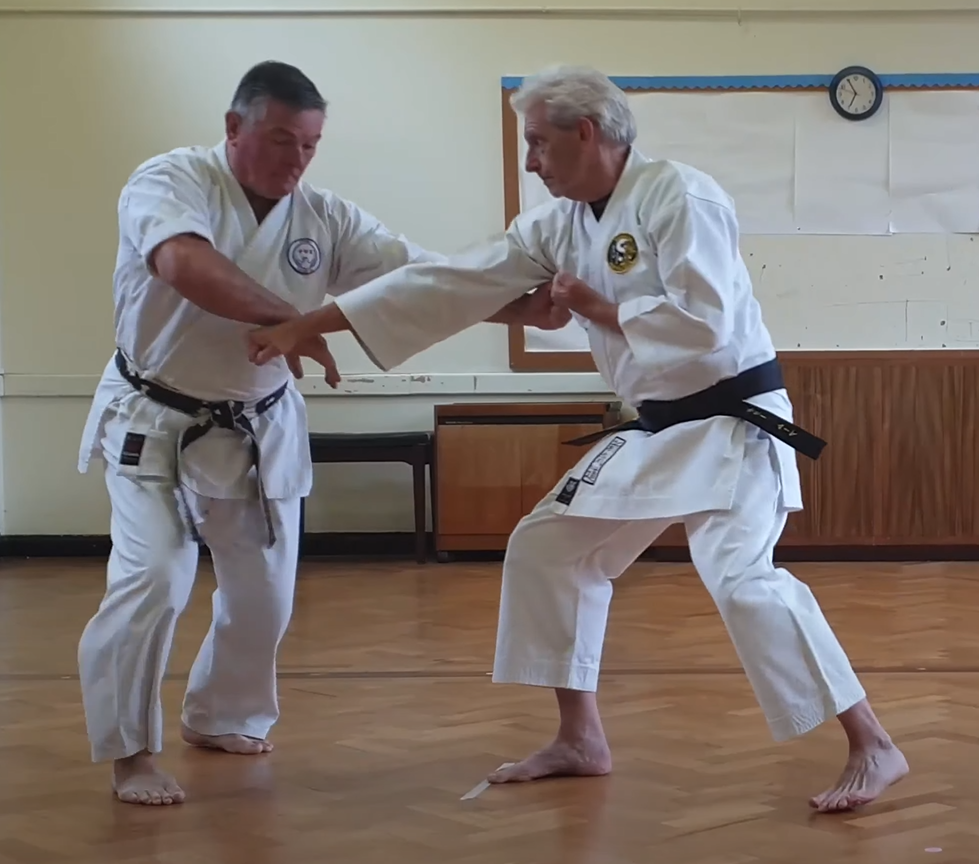
Tori takes control of Uke’s arm using the striking hand. This is not a casual grab. The aim is to take the wrist, not the forearm or the hand.
Taking the wrist gives far greater control because it influences Uke’s hand, wrist, elbow and shoulder together. If the wrist is turned correctly, the rest of the arm begins to lock naturally.
Sensei explains that this habit is important not only for Kumite Kata, but also for later practice such as Idori and Tanto Dori, where taking the wrong part of the arm can allow the weapon hand to continue moving.
Try to take the wrist, not the forearm or the hand.
The Wrist as a Locking Point
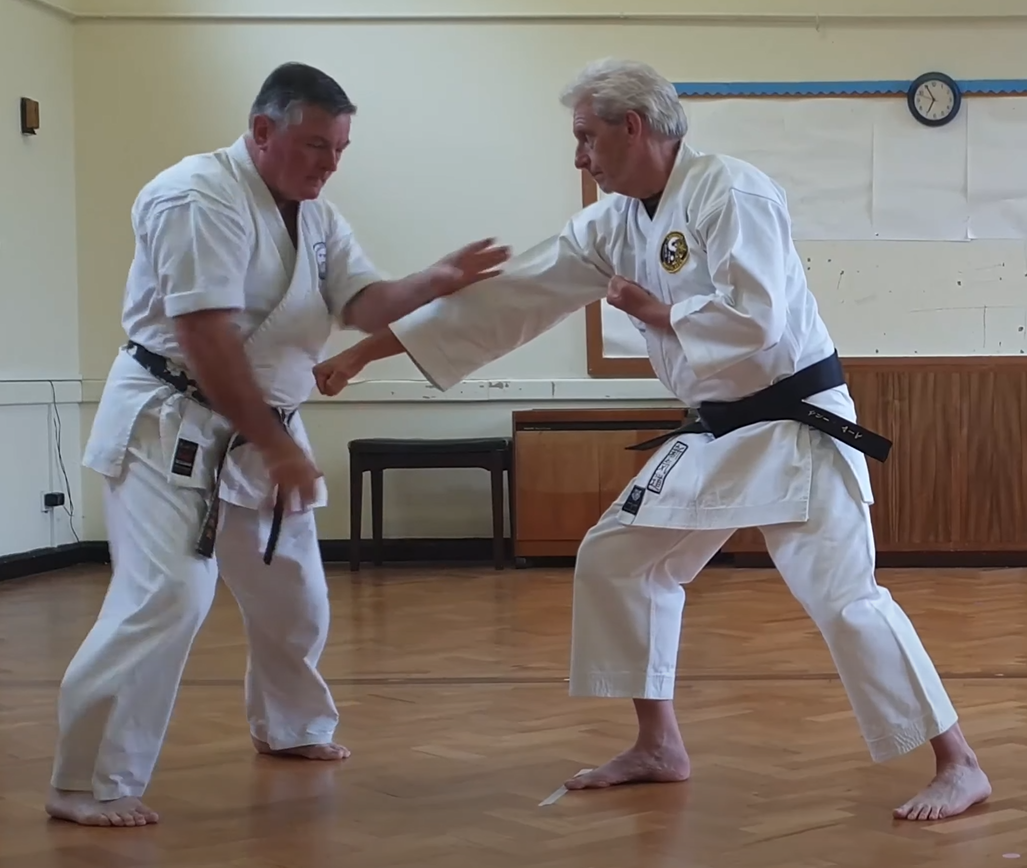
The wrist is sometimes referred to as one of the “necks” of the body — a narrow point through which control can affect the larger structure.
When Tori’s palm is placed against the back of Uke’s hand or fist, the line can be brought up towards the armpit. A slight twist of the wrist then locks the wrist, elbow and shoulder together.
This is a key learning point in Nihon Me. The lock does not need to be dramatic. A small amount of correct turning can make the whole arm difficult to move.
Stepping In – Head and Wrist Control
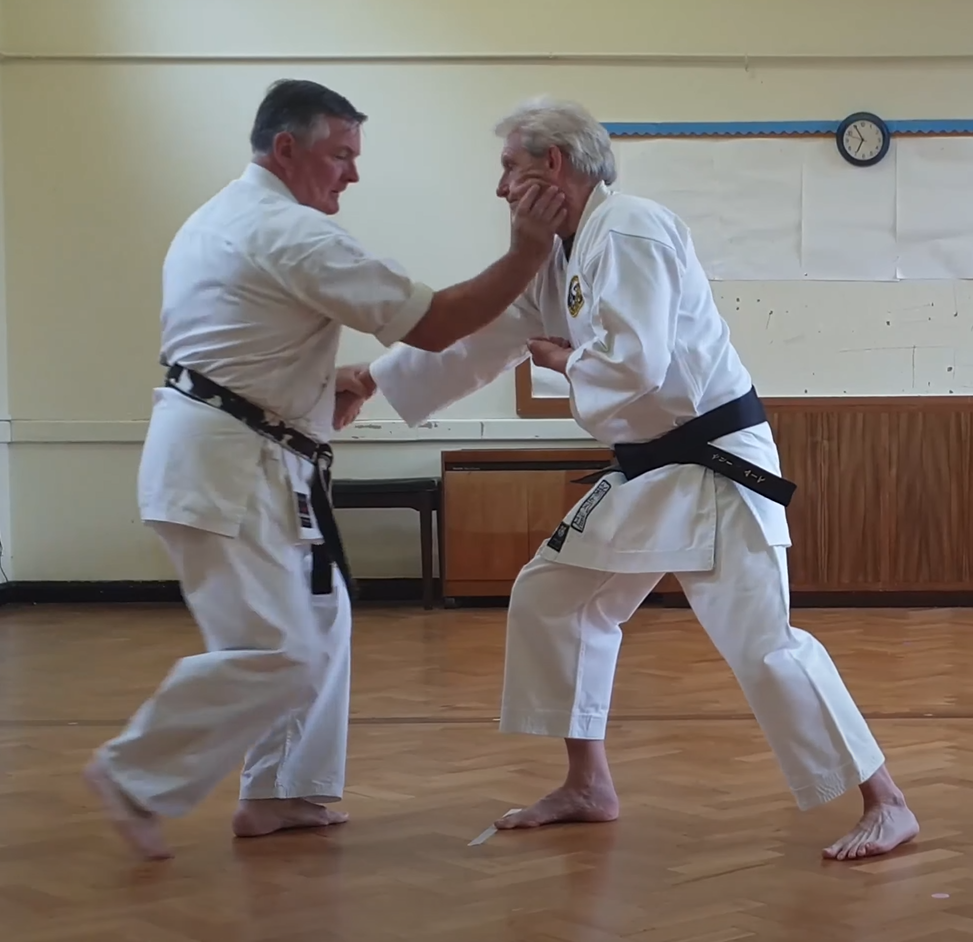
Tori steps in, taking control of Uke’s head and wrist. This combines upper-body control with the arm lock, making it difficult for Uke to turn, recover or counter.
The head control is not simply a push to the face. It influences the spine and posture. When the head is controlled and the wrist is locked, Uke’s freedom of movement becomes severely restricted.
This phase must be practised with care. The contact to the head, jaw and neck area can be uncomfortable, and the wrist lock can become strong very quickly.
Empi to Chūdan – Lock and Strike Together
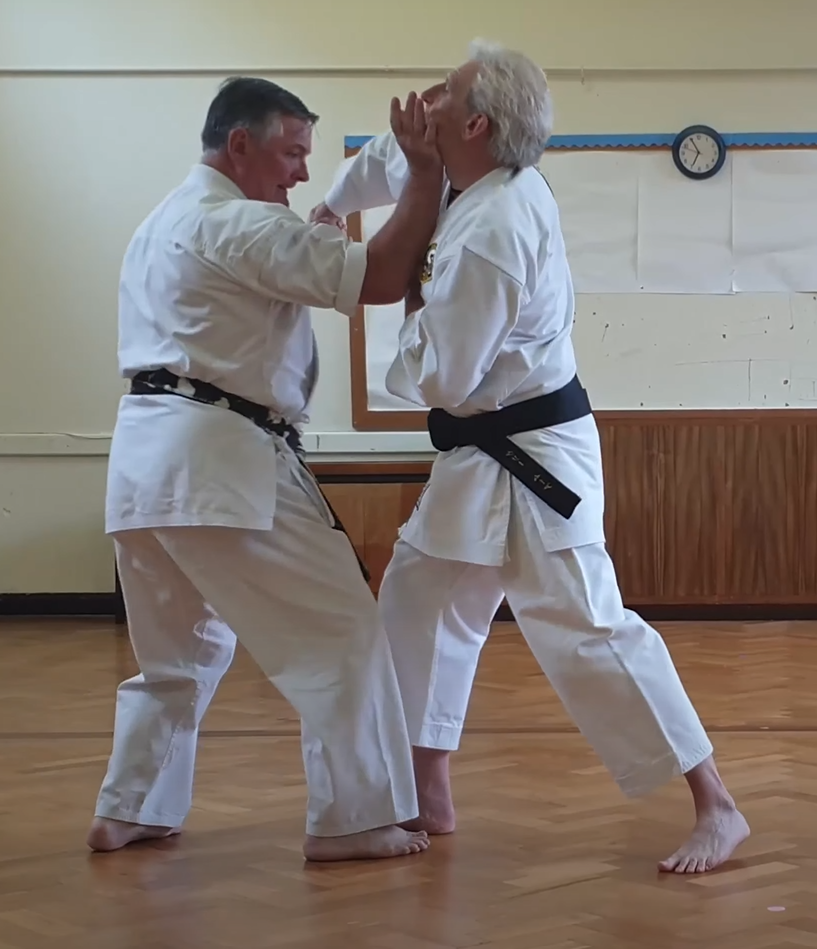
Tori applies the wrist lock and delivers Empi to Chūdan, while still controlling Uke’s head.
This is an important example of control and striking being combined. The wrist lock fixes Uke in place, the head control influences the posture, and the elbow action creates both impact and additional structural pressure.
Uke should feel that the body is being locked from multiple points. The wrist is being lifted and twisted, the head is being controlled, and the elbow pressure begins to drive the structure down.
The twist of the wrist locks the wrist, elbow and shoulder.
Rear View – Seeing the Lock
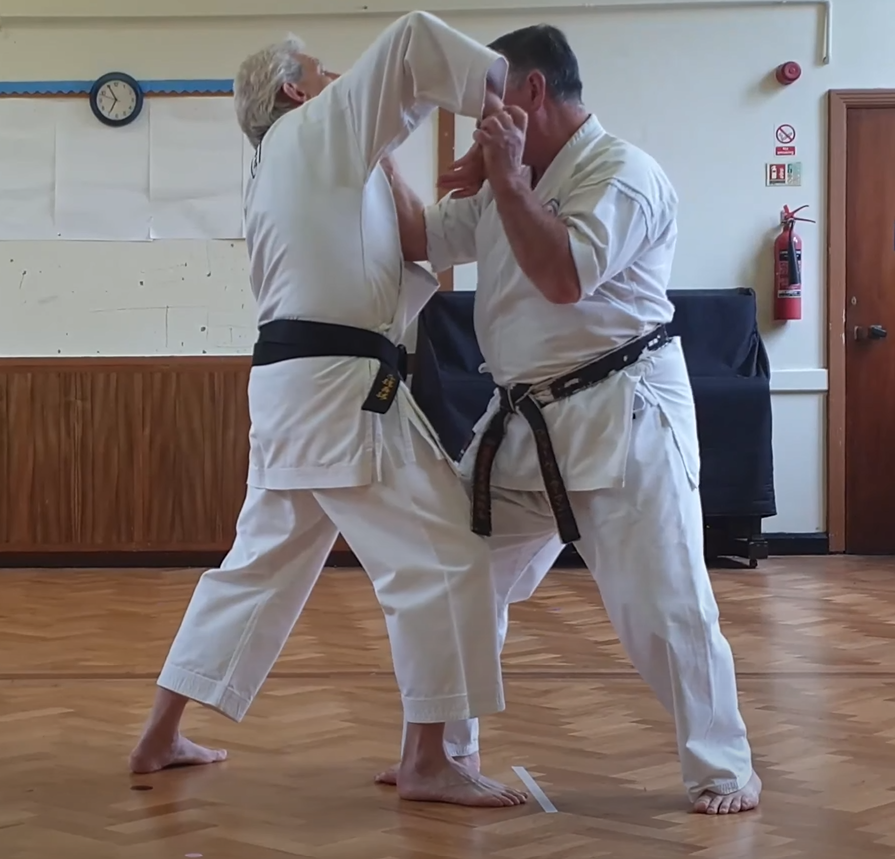
From the rear view, the structure of the lock becomes clearer. Tori’s body is close enough to control, while the wrist is directed up and in towards Uke’s armpit.
This positioning prevents Uke from freely turning out of the technique. At the same time, the head control keeps the upper body compromised.
The lesson is to use body position and alignment rather than arm strength. The closer the lock is connected to Tori’s centre, the less effort is needed.
Dropping Weight to Collapse Uke
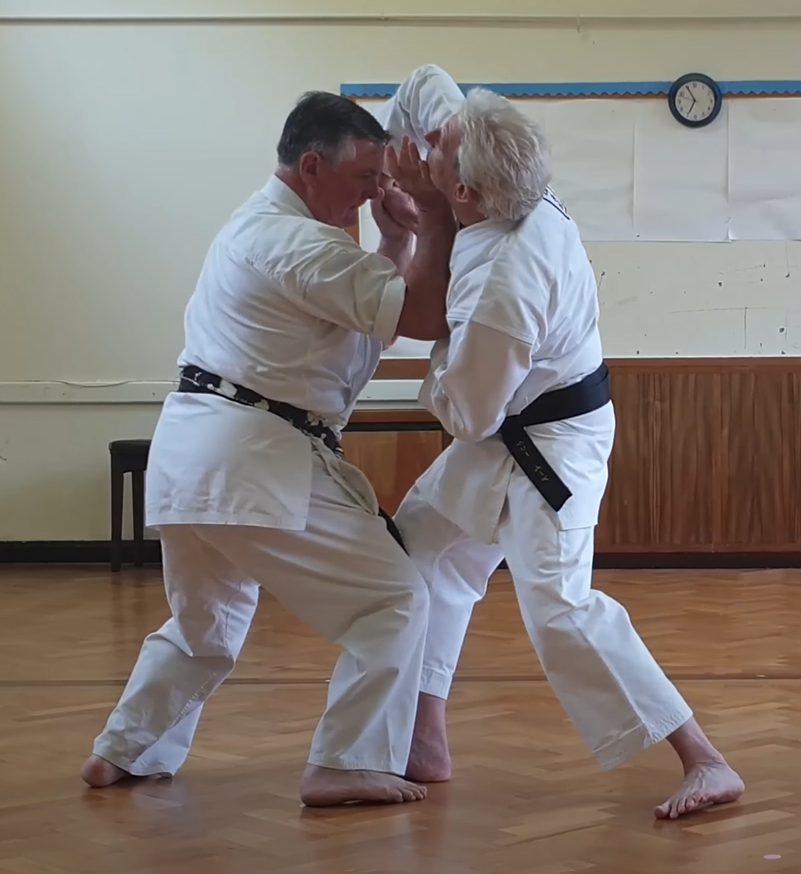
Tori then drops weight to collapse Uke. This is the final controlling action before withdrawal.
The drop should not be performed by pushing down with the arms alone. Tori lowers the centre, allowing the elbow and body weight to drive Uke’s structure downward while the wrist lock continues to apply upward pressure.
From Uke’s perspective, this creates two competing pressures: the wrist is being lifted and locked, while the body is being driven down by the elbow and weight drop.
The wrist is pressured up, while the elbow and centre drive the body down.
Withdrawal – Sugi Ashi Kōtai into Hanmi Gamae
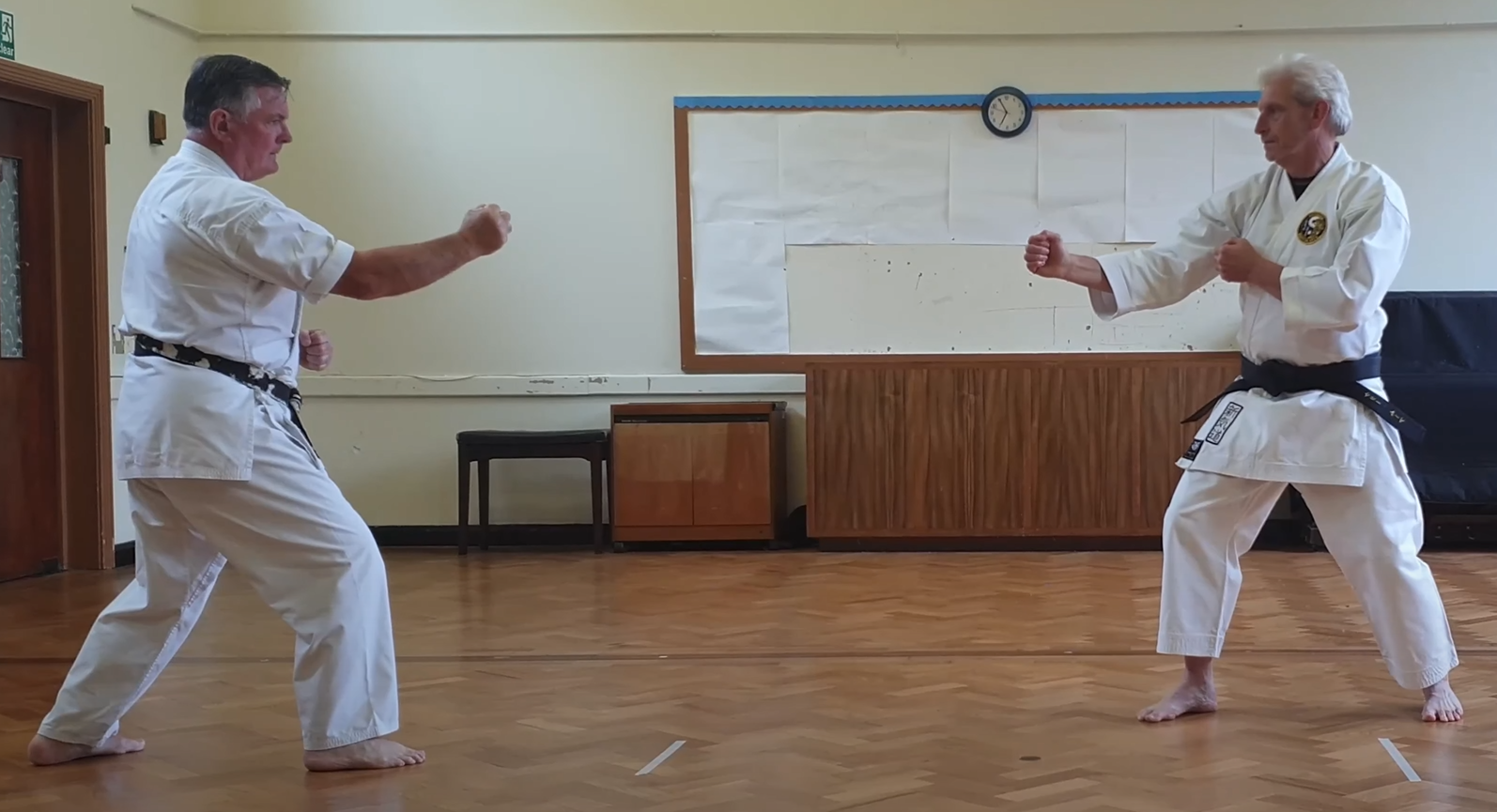
The form concludes with Sugi Ashi Kōtai into Hanmi Gamae.
As with No.1, the withdrawal is not an afterthought. Tori must return to a position of correct distance, posture and awareness. The technique is complete only when Tori has controlled the danger and restored ma-ai.
The final posture should show readiness, not relaxation or loss of focus.
What Uke Should Experience
- a chūdan attack line being removed through body movement rather than stopped by force
- Tori countering while beginning to take control of the attacking arm
- the wrist being captured rather than the forearm or hand
- the wrist, elbow and shoulder becoming locked through a small turn
- head and jaw control restricting the upper body
- Empi and body pressure combining to collapse posture
- a controlled withdrawal into correct ma-ai
Key Principles
- Target removal — taking the body away from the chūdan attack line
- Wrist control — taking the correct point to influence the whole arm
- Kuzushi — breaking posture through the wrist, head and elbow
- Empi — using the elbow as both strike and control mechanism
- Shizumu — lowering the centre to collapse Uke
- Zanshin — withdrawing with awareness and correct distance
Common Errors
- standing in place and blocking rather than taking the target away
- grabbing the forearm instead of the wrist
- using too much arm strength instead of body position
- failing to turn the wrist enough to lock the elbow and shoulder
- losing head control before applying Empi
- dropping the arms rather than lowering the centre
- withdrawing without restoring ma-ai and posture
Final Thoughts
Kumite Kata No.2 builds naturally from the first form, but adds a more sophisticated layer of control. The attack is received and countered, but the main study lies in what happens next: how the wrist is taken, how the head is controlled, and how the body is locked through small but precise movements.
The form teaches that effective control does not require large movements. A small turn of the wrist, correct body placement, head control and a well-timed drop of the centre can make Uke’s posture extremely difficult to recover.
Practised carefully, Nihon Me becomes an excellent study in how Wadō-Ryū links striking, locking, body movement and weight drop into one continuous method of control.