Exploring the Foundations of Pinan Shodan in Wado-Ryu Karate
· by Roger Vickerman 6th Dan Renshi · 5 minute read
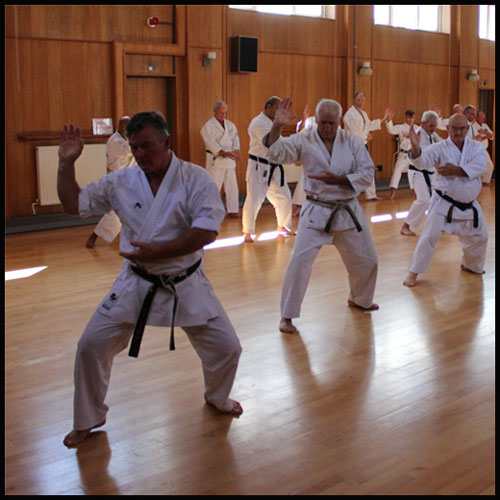
Pinan Shodan (平安初段) is often the second kata taught in Wado-Ryu, yet historically, it was intended to be the first, but due to some more advance Kihon techniques like Shuto Uke, Neko Ashi Dachi and Gyaku Gaiwan Uke it is taught second in Wado-Ryu. More than just a sequence of movements, it serves as an essential foundation for understanding key stances, fluid body mechanics, and can help with the integration of Jujitsu principles into Karate.
Why Pinan Shodan Matters
Pinan Shodan is deeply rooted in balance, natural body mechanics, and the use of Shuto Uke (knife-hand block). Unlike in some styles where blocks are rigid and forceful, Wado-Ryu encourages a flowing, Nagasu (deflective) movement that allows techniques to be executed with minimal resistance and maximum efficiency.
Key benefits of training Pinan Shodan include:
- Mastering Neko Ashi Dachi (Cat Stance): This stance, fundamental to Wado-Ryu, teaches stability and mobility, enhancing both defensive and offensive movements.
- Developing Shuto Uke Mechanics: The rolling action of the body, rather than a static upper-body movement, creates a natural, energy-efficient defense that blends seamlessly with counterattacks.
- Understanding Distance (Maai): The kata emphasizes how to position yourself relative to an opponent, ensuring that strikes and blocks are applied effectively.
Five Core Lessons from Pinan Shodan
Shuto Uke as More Than Just a Block
Pinan Shodan teaches that Shuto Uke is not merely a defensive tool but also a method of controlling an opponent’s limbs. This subtle yet crucial concept transforms blocking into a proactive strategy for setting up counters.
Moving with the Whole Body, Not Just the Limbs
Many techniques in Pinan Shodan emphasise body movement over isolated limb action. By engaging the hips and core, techniques gain efficiency and power, reducing unnecessary tension.
Variations and Interpretations Matter
Across different styles, the opening movements of Pinan Shodan vary slightly. Some emphasise moving forward, others emphasise evasion, and Wado-Ryu integrates Nagasu to flow with an opponent’s attack rather than meeting it head-on.
Jujitsu Influences in Wado-Ryu
The Kata can include elements of joint manipulation, wrist releases, and weight shifting that align closely with Jujitsu principles. The ability to break grips and redirect an opponent’s energy plays a crucial role in Wado-Ryu’s self-defense strategies.
Historical Context Enriches Training
Pinan Shodan traces its origins to the Okinawan master Anko Itosu, who designed the Pinan series as an accessible but deeply meaningful set of kata. Understanding its history—possibly derived from the lost Channan kata—adds depth to its practice.
Beyond the Pattern: Practical Applications
In the linked video, Sensei Roger Vickerman (6th Dan Renshi, Chubu Karate) and Sensei Kerry Moore (Shinkido Martial Arts) explore the nuances of Pinan Shodan, breaking it down into fundamental principles and practical applications.
They discuss:
- The connection between Shuto Uke and Junzuki Notsukomi – The mechanics of hip movement in both techniques enhance projection and efficiency.
- Using Pinan Shodan in sparring and self-defense – Variations in blocking, striking, and distancing allow for real-world applications beyond the dojo.
- The importance of stances and transitions – Mastering Neko Ashi Dachi helps develop fluidity and precision in movement.
A Kata That Grows With You
Pinan Shodan is more than just a stepping stone; it is a Kata that evolves with your skill level. As you progress in your Wado-Ryu journey, revisiting Pinan Shodan reveals new insights, reinforcing the idea that even "beginner" kata contain profound lessons for advanced practitioners.
If you want to refine your understanding of Pinan Shodan, check out the full discussion and analysis in our video: Watch it here.
Watch the video on YouTube or join the conversation on Facebook.