Exploring the Depth of Pinan Yondan in Wadō-Ryū Karate
· by Roger Vickerman Renshi (7th Dan) · Kata
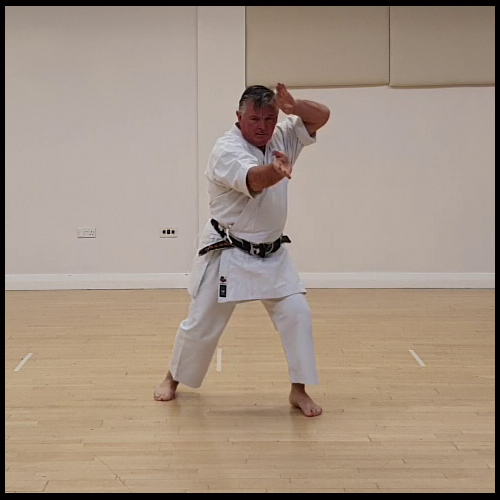
Pinan Yondan (平安四段) marks a significant evolution in the Pinan series. As the fourth kata in the sequence, it introduces more dynamic footwork, open-hand techniques, and simultaneous offensive and defensive actions, building on the foundations laid in Shodan, Nidan, and Sandan.
Often described as a bridge between the foundational Pinan kata and more advanced forms such as Kushanku, Pinan Yondan challenges the practitioner to move with greater fluidity and adaptability. The kata showcases nekoashi-dachi (cat stance), refined evasion, and the principle of Dōjini—executing offence and defence together rather than as separate, sequential actions.:contentReference[oaicite:1]{index=1}
Understanding the Kata
To truly understand Pinan Yondan, it’s essential to see beyond the outer choreography. The kata is a study in timing, positioning, and intelligent use of the body. Every transition—each shift into nekoashi-dachi, every open-hand strike, and each redirection—embodies Wado-Ryu’s emphasis on evasion, redirection, and efficient counterattack.
Key Takeaways from Pinan Yondan
- The Introduction of Open-Hand Techniques: Moving beyond the primarily closed-fist approach of earlier Pinan kata, Yondan brings in open-hand strikes such as shutō (knife-hand), haishu (back-hand), and taishō (palm-heel). These techniques offer greater versatility for striking, controlling, or redirecting an opponent’s movement.
- Use of Nekoashi-Dachi for Mobility: The cat stance is integral to Wado-Ryu’s characteristic movement. In Yondan, nekoashi-dachi supports evasiveness, subtle weight shifts, and the ability to launch counters while maintaining lightness and readiness.
- The Principle of Dōjini (Two Together): Rather than “block then strike,” Pinan Yondan emphasises simultaneous defence and offence. This integration reduces reaction time and reflects a more realistic combative rhythm, where actions must be efficient and layered.
- Expanding Practical Applications: As highlighted in the accompanying video, the kata’s movements can be interpreted as more than straightforward strikes. They also encompass wrist manipulations, joint locks, and takedown principles, aligning Yondan with the deeper combative strategies of Wado-Ryu.
Bringing Pinan Yondan to Life
To bring Pinan Yondan to life, each movement must be executed with clear intent. The goal is not simply to reproduce a pattern, but to embody the kata’s principles: blending evasion, redirection, and structured counterattack. Transitions should feel seamless, with footwork, posture, and hand techniques all working together as a unified strategy rather than isolated techniques.
In this sense, Yondan should be approached as a compact catalogue of combat ideas—teaching the practitioner how to manage distance, timing, and angles while maintaining readiness to strike, lock, or unbalance an opponent.
A Look at Applications
In the breakdown video, Sensei Roger Vickerman (6th Dan Renshi, Chubu Karate) and Sensei Kerry Moore (Shinkido Martial Arts) explore multiple interpretations of Pinan Yondan, demonstrating how its sequences adapt to striking, grappling, and control scenarios.
These applications reveal how Dōjini, nekoashi-dachi, and open-hand techniques combine to create a kata that is both expressive and highly functional. When studied diligently—with a partner as well as solo—Pinan Yondan becomes a tool for honing subtlety, precision, and tactical awareness.
If you are refining your Wado-Ryu practice or revisiting the Pinan series with fresh eyes, this breakdown of Pinan Yondan offers valuable insight into how the kata connects foundational practice with more advanced strategy.
Watch the video on YouTube or join the conversation on Facebook.
What insights have you gained from Pinan Yondan? Have particular open-hand sequences or Dōjini applications stood out for you? Share your thoughts and experiences so we can continue learning and growing together as a community of martial artists.