Mushin (無心) — No Mind in Wadō-Ryū
· by Roger Vickerman Renshi (7th Dan) · Principles
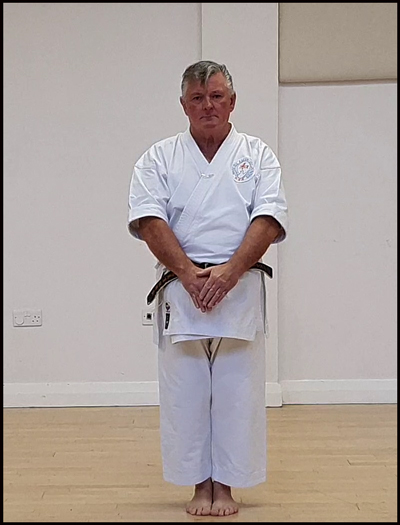
Mushin (無心) is commonly translated as “no mind” or “empty mind.” In Wadō-Ryū, it describes a state of mental clarity that is free from hesitation, fixation, and emotional disturbance. It is not a blank or absent mind — it is a mind that is not cluttered. When mushin is present, attention stays in the moment: no replaying the day, no worrying about what comes next, no carrying stress into training — only Karate.
In practical terms, mushin is the mindset that allows movement to happen naturally. If the mind is occupied, the body becomes late. If the mind is clear, reactions sharpen, timing improves, and technique becomes more accurate — not because you “try harder,” but because nothing is in the way.
Mushin in the Dōjō
Mushin becomes especially relevant when you begin partner training, jiyū kumite, or any kind of dynamic practice. In those situations, you cannot afford to hold onto distractions. If your mind is elsewhere, your ma-ai collapses, you miss cues, and your reactions become delayed.
When Roger Vickerman Renshi describes mushin as “clearing your mind so that when you partner off with somebody you’re giving them your full attention,” this is not simply a courtesy — it is a functional requirement. Wadō depends on timing, position, and subtle reading of intention. A distracted mind cannot do that well.
The Release from the World Outside
Many practitioners recognise mushin most clearly as a kind of release. You may arrive at training stressed, tired, or mentally overloaded — and then, for those one or two hours in the dōjō, the outside world disappears. You cannot hold onto work problems while trying to move, respond, and coordinate with another person. The mind settles because it must.
This is one of the quiet gifts of karate training: mushin improves performance, but it also brings calm. For many, it is not only a training tool — it is peace of mind.
Mushin and the “Three Minds”
Mushin is often discussed alongside two other mental states:
- Shoshin (初心) — “beginner’s mind”: open, curious, and willing to learn.
- Mushin (無心) — “no mind”: clear attention without distraction or fixation.
- Fudōshin (不動心) — “immovable mind”: calm stability under pressure.
In Wadō terms, these are not abstract philosophy. They describe the mental conditions that allow correct technique to emerge. Shoshin keeps the learning alive. Mushin keeps the moment clear. Fudōshin keeps the spirit stable when pressure rises.
What Mushin Is Not
- Mushin is not daydreaming or switching off.
- Mushin is not passivity or lack of intent.
- Mushin is not “thinking nothing” in a vague way.
Mushin is alert and present. The mind is quiet, but awareness is high. This is why high-level kumite can look calm: the practitioner is not mentally “busy.”
Where You’ll Notice Mushin Most
You’ll feel mushin most clearly in training situations that demand real-time response:
- Partner drills where timing and sensitivity matter
- Jiyū kumite, where hesitation is costly
- Kihon Kumite when performed without over-thinking
- Kata when the mind stops narrating and the body simply moves
Often the sign of mushin is simple: movement becomes free, reactions become honest, and training becomes deeply enjoyable — because you are fully there.
In Simple Terms
Mushin is clearing away distraction so that only what matters remains. In Wadō-Ryū, it supports sharper reactions, freer movement, and calmer training. It is one of the clearest examples of how karate develops not only technique, but the mind that carries it.
Upcoming filming sessions & YouTube releases
Stay tuned for new Kata deep-dives and historical features on our YouTube channel.
Join our mailing list for updates