Unveiling the Foundations of Seishan Kata in Wadō-Ryū Karate
· by Roger Vickerman Renshi (7th Dan) · Kata
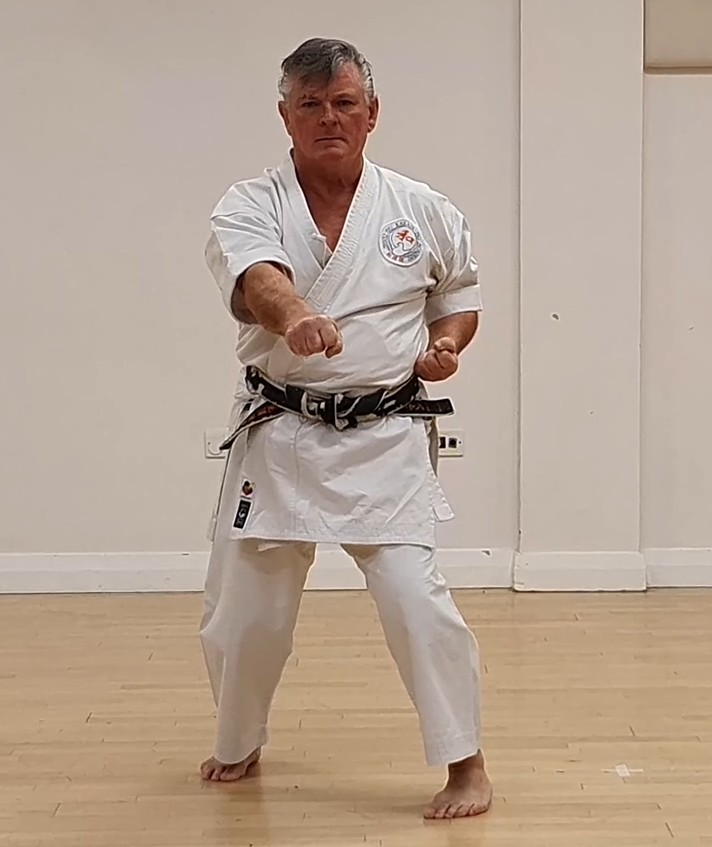
Seishan (征捨安)—one of the oldest kata found across Okinawan and Southern Chinese martial arts traditions—is a cornerstone of Wadō-Ryū Karate. Known as Hangetsu in Shotokan, it reflects a lineage steeped in history, internal training, and refined body mechanics. With its calm intensity, compressive stances, and measured rhythm, Seishan challenges practitioners to unite breath, structure, and intention at a mature stage of their karate journey.
Unlike dynamic forms such as Kushanku or the expansive transitions of Pinan Godan, Seishan draws the practitioner inward. It demands precision in posture, an understanding of internal pressure, and the ability to generate force without unnecessary movement—skills that only deepen through long-term study.
Understanding the Kata
Seishan’s origins are often traced to Southern Chinese systems such as “Incense Shop Boxing,” attributed to Shaolin monks practising in secrecy. The kata spread across Okinawa and into several karate styles, with interpretations varying widely—from “13 steps” to “13 energies.” The accompanying instructional session by Roger Vickerman Renshi and Kerry Moore Sensei explores this evolution, emphasising how Seishan’s principles express themselves within Wado-Ryu.
Key Takeaways from Seishan Kata
- Naihanchi as a Prerequisite: Seishan’s stance work builds directly on the inward tension and groin-protecting structural mechanics of Naihanchi. Without the compression and internal engagement trained in Naihanchi, understanding Seishan’s footwork and body alignment becomes far more difficult. Practising the two kata as a paired study is strongly recommended.
- Stance Work & Energy Compression: Tate Seishan-dachi requires subtle foot placement, knee engagement, and hip compression. Dropping weight and lightly closing the knees creates internal pressure, reducing unnecessary motion and preparing the body for efficient transitions.
- Arm Mechanics & Wrist Control: Seishan prioritises forearm rotation and wrist alignment over large, sweeping arm movements. Many blocks and strikes rely on correct shoulder and forearm structure; premature wrist rotation weakens control and reduces the effectiveness of both offence and defence.
- Partner Work & Practical Kaisetsu: Applications in Seishan include counters to grabs, joint manipulation, grappling entries, and targeted strikes. For example, downward punches may target the femoral region, while rotational transitions use irimi and kuzushi to unbalance an opponent.
- Strategic Footwork & Directional Awareness: Moving between Tate Seishan and Yoko Seishan emphasises posture, alignment, and consistent mechanics across direction changes. Imaginary alignment lines help maintain precision regardless of angle.
Philosophical Depth: Breath, Mindset & Internal Structure
Seishan shares profound similarities with Goju-Ryu’s Sanchin kata, especially in its internal and philosophical aspects. Several themes underpin its practice:
- Ibuki (Breath Control): The kata’s opening sequences cultivate breath timing, tension release, and whole-body awareness, laying the foundation for powerful and controlled movement.
- Same & Tame (Readiness and Storage): These principles encourage stillness under pressure, storing energy until its exact moment of release—clearly demonstrated in the kata’s early movements.
- Shime (Tension Testing): Borrowing from Goju-Ryu, controlled external pressure or striking can be applied during practice to refine structural integrity under load.
A Fragmented Legacy with Timeless Relevance
Seishan has multiple origin stories and numerous stylistic expressions. Figures such as Matsumura, Kanbun Uechi, and Seisho Aragaki have influenced its development, with Aragaki famously demonstrating the kata in 1867 before the Chinese royal delegation. Despite variations—such as which foot steps first or how transitions are expressed—its essence remains universal: breath, stability, and precision.
Seishan’s Place in Your Training
For many practitioners, Seishan may seem understated at first. But with sustained study, its depth becomes undeniable. It grows with the karateka, revealing more as one’s structural understanding, breathing control, and internal awareness develop. Like Naihanchi, Seishan is best learned in layers: structure first, then breath, then application. Approach it with patience and curiosity.
Continue the Journey
To explore Seishan further, watch the detailed video breakdown on our YouTube channel and join the discussion with fellow practitioners on Facebook.
Watch the video on YouTube or join the conversation on Facebook.
What does Seishan mean to you? How do you approach its subtle strength and internal structure? Share your experiences and insights below to enrich our community’s understanding.