Wanshū Kata – Elegance, Deception, and Dynamic Flow
· by Roger Vickerman Renshi (7th Dan) · Kata
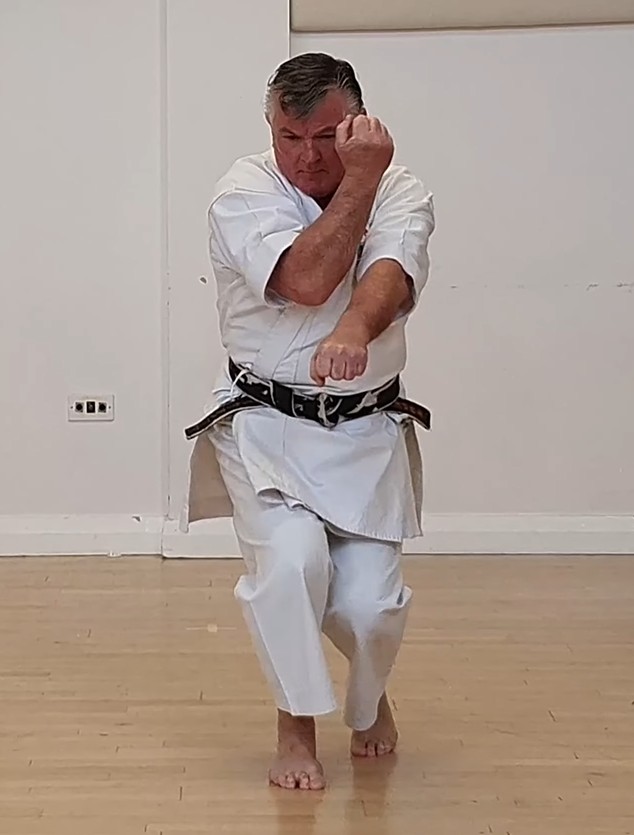
Wanshū (汪楫 / 腕秀) is one of the most distinctive kata in the Wado-Ryu syllabus. On paper it might not look drastically different from other forms, but once you begin unpacking its movements, theories, and historical subtleties, you discover a kata that reveals far more than first impressions suggest. Compact, elegant, deceptive, and highly adaptable, it is no surprise that Wanshū is chosen as the kata of focus at 4th Dan level in some Wado-Ryu systems.
History and Origins
Of all the kata we practise in Wado, Wanshū perhaps sounds the most distinctly Chinese – and with good reason. In 1683, a Chinese envoy named Wang Zhi arrived in Okinawa, bringing with him a wealth of Southern Chinese martial knowledge. Wanshū, loosely translated as “Excellent” or “Graceful Man”, is said to have been passed down from him through the Tomari-te tradition.
There are at least two major lines of Wanshū: one attributed to Matsumura and one to Itosu. As with many kata in Okinawan and Japanese karate, there is no single universal version. Each lineage emphasises different timings, angles, and applications. If your own instructor teaches a different approach, it is important to follow their guidance; what is presented here is simply one interpretation within the Wado-Ryu framework.
Technical Breakdown and Kaisetsu
Wanshū opens with a recognisable scenario: dealing with a gyakuzuki followed by a maegeri – a classic one-two attack. The defender moves off the centre line, intercepts, and counters while controlling the opponent’s position. From the outset, Wanshū teaches us to respond to realistic combinations rather than isolated attacks.
Many of the movements are not simply “blocks” in the conventional sense; they are setups, redirections, and tools for off-balancing. The empi appearing in this kata, for instance, is not delivered as a finishing strike but as a transitional action – a way to create kuzushi (unbalancing) before applying a decisive counter.
Another hallmark is the changing tempo. Wanshū can begin in a calmer, more reactive mode (go no sen), before shifting into sen no sen, and finally into full-on irimi, pressing the initiative. Several combinations require you to move decisively into the opponent, switching rapidly from passive to dominant – disrupting their rhythm and taking control of the encounter.
Additional Technical Features
- Compression Strikes: Short, compact strikes aimed at areas such as the spleen or floating ribs, using tight body mechanics rather than large swings.
- Deception and Target Baiting: Presenting apparent openings to draw an attack, then exploiting the resulting reaction and angle.
- Throws and Takedowns: Certain withdrawing movements, particularly those before shutō-uchi, can be interpreted as setups for projection or sweeping the opponent.
- Subtle Hikite and Taisabaki: The kata brims with drawing actions, balance disruption, and fluid body shifting that support both striking and grappling applications.
In the video, both classical and more contemporary kaisetsu (bunkai) are explored, with an emphasis on safety, control, and clear progression. Practitioners are encouraged to use these as a foundation and then continue testing and refining applications for themselves.
Theoretical Insights
1. Shin–Gi–Tai
Shin (heart/spirit), Gi (skill), and Tai (body) must all be present for Wanshū – or any kata – to function as true martial practice. Without intent, technique is empty; without skill, intent lacks precision; without physical conditioning and structure, neither can be expressed effectively. Wanshū provides an excellent testing ground for this balance.
2. Proprioception and Contact Awareness
One subtle theme is the use of tactile feedback. Once you have made contact with your opponent, you “know” where they are without relying solely on vision. Nerve signals travel faster than visual processing, allowing for faster, more precise follow-up techniques. Wanshū’s close-range actions make this concept very tangible.
3. Mudras and Esoteric Gestures
The kata begins with a distinctive hand gesture that some view as ceremonial or symbolic. It may represent readiness, a grip on a weapon, or be a vestige of older ritualised movements. Even where the exact original meaning is uncertain, these gestures remind us of the cultural and historical layers that sit behind the physical kata.
4. Kata Beyond Fighting
At Shinkido, Kerry Moore Sensei and colleagues also use Wanshū as a tool for breathing, posture, and mental state training – for example, as a Mushin Kata (kata performed in a meditative, no-mind state) or as a structured warm-up. In this way, Wanshū becomes a vehicle for developing presence and awareness, not just combative technique.
Application, Deception, and Higher-Level Thinking
What sets Wanshū apart, and what makes it a kata worthy of senior study and grading, is the demand for layered understanding. Practitioners must explore:
- Deception and misdirection – using feints, line changes, and apparent softness to create opportunities.
- High-speed transitions from defence to offence – shifting gears quickly while remaining structurally sound.
- Close-range control – unbalancing, sticking, and pressuring the opponent while maintaining your own stability.
- Rapid tactical variation – changing responses as the situation evolves, rather than relying on a single fixed answer.
From double-punch defences to “sticky body” pressure and shifting centre lines, Wanshū asks the karateka to remain grounded yet adaptable – much like real encounters, where conditions change from moment to moment.
Final Reflections
Preparing and revisiting this kata has highlighted just how deceptive Wanshū really is. At first glance it appears clean, functional, and flowing. Beneath the surface lies a potent, highly strategic form—rich in timing, manipulation, and dynamic movement.
It felt especially poignant to explore Wanshū after the passing of Kuroda Sensei, whose mastery of taisabaki and balance was extraordinary. In reviewing old footage, I noticed a movement that echoed part of Wanshū – subtle, precise, and almost impossible to seize. In its own way, that became a tribute: a reminder of how deep these principles can go when embodied over a lifetime.
Watch the video on YouTube or join the conversation on Facebook.
How has Wanshū influenced your understanding of deception, timing, and dynamic flow in Wado-Ryu? Share your thoughts and training experiences so we can continue learning together as a community of martial artists.