Advanced Kihon Dachi
An introduction to the more advanced dachi, or stances, of Wadō-Ryū with Roger Vickerman Renshi, examining how posture, balance, timing and body movement work together to support effective practice.
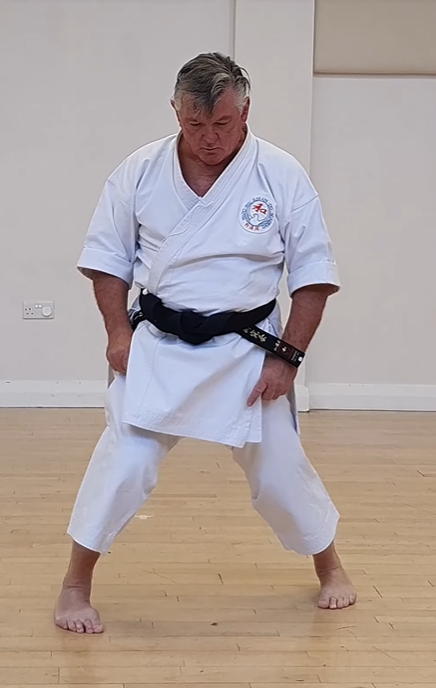
Dachi (立ち), or stances, form the foundation of movement within Wadō-Ryū Karate. Although they are often viewed simply as positions of the feet, they are better understood as methods of developing posture, balance, body alignment and efficient movement.
Each stance emphasises slightly different qualities, yet all share the same underlying principles of relaxation, stability and natural body mechanics. This section of the Kihon Library introduces several of the more advanced dachi used throughout Wadō-Ryū, together with guidance from Roger Vickerman Renshi.
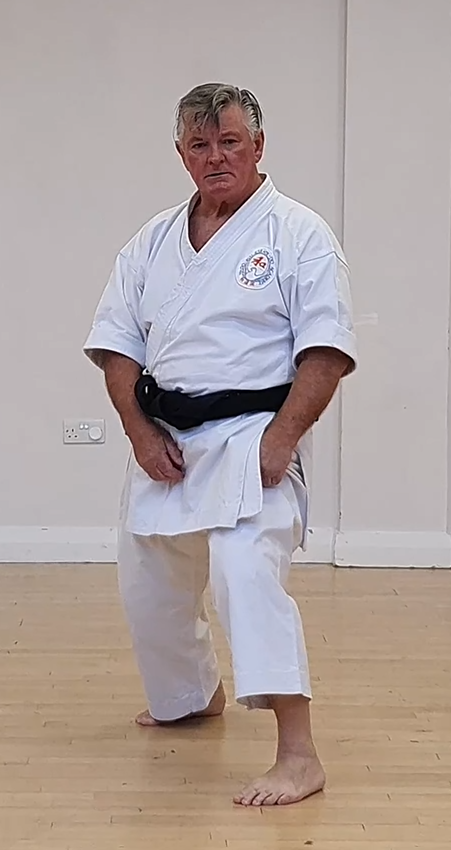
1. Tate Seishan-dachi
Tate Seishan-dachi is one of the most dynamic and adaptable stances within Wadō-Ryū. It is often described as a fighting stance because of its balanced weight distribution and readiness for rapid movement.
Tate Seishan-dachi develops relaxed posture, stability and the ability to move quickly and fluidly. It is used extensively throughout paired practice, including Kihon Kumite, Kumite Kata and Jiyū Kumite.
- Keep the knees relaxed rather than locked.
- Maintain a low, balanced centre without forcing the body downward.
- Remain ready to move quickly and efficiently in any direction.
- Allow the weight to transfer naturally from front to back, or back to front.
- Feel the weight supported through both feet.
- Avoid excessive tension in the legs, hips and shoulders.
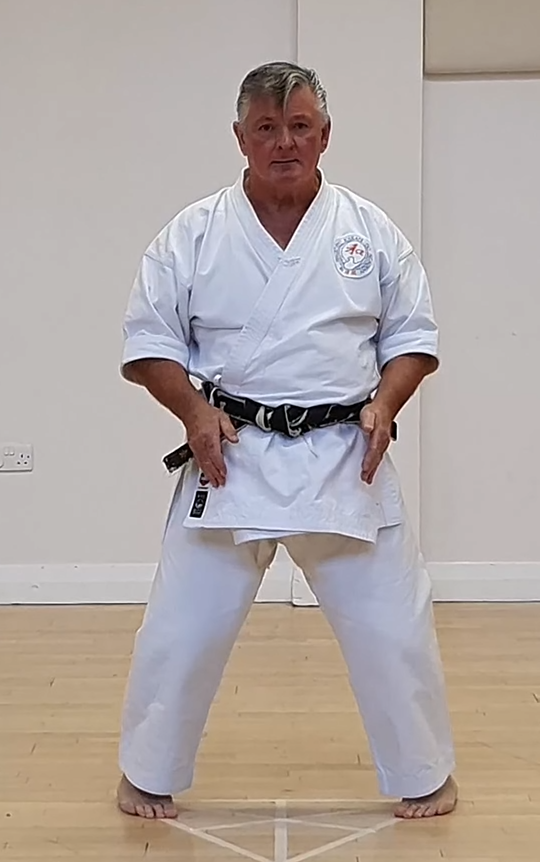
2. Naihanchi-dachi
Naihanchi-dachi develops strong lateral structure, stability and the ability to control the body while moving from side to side.
Although Naihanchi-dachi may appear static, it should not be held with unnecessary tension. The stance develops a stable connection between the feet, knees, hips and centre while preserving the ability to move, turn and apply technique.
The stance is most clearly associated with the kata Naihanchi, where it provides the structural foundation for lateral movement, close-range technique and coordinated use of the whole body.
- Keep the spine naturally upright without leaning forwards or backwards.
- Allow the knees to remain relaxed and aligned with the feet.
- Settle the hips naturally rather than forcing or locking them into position.
- Maintain a stable centre while remaining capable of lateral movement.
- Distribute the weight evenly through both feet.
- Avoid excessive tension in the thighs, hips and shoulders.
3. Yoko Seishan-dachi
Yoko Seishan-dachi belongs to the same broad family of laterally structured stances as Naihanchi-dachi.
Yoko Seishan-dachi develops the ability to establish a strong, stable position while controlling the body's weight through a forward-facing triangular structure.
It is seen most clearly within the kata Seishan, which is closely related to Naihanchi and holds a fundamental place within the Wadō-Ryū syllabus.
- Keep the spine naturally aligned without leaning.
- Allow the hips to settle naturally rather than holding them rigid.
- Maintain the triangular relationship between the feet, knees and centre.
- Lower the body through relaxation rather than muscular force.
- Keep the weight controlled and supported through both feet.
- Avoid excessive tension that prevents the body from moving or responding.