Traditional Karate
Weekly Newsletter • 10 January 2026
Weekly Update from Wadō-Ryū Benkyō
Welcome to your fifth weekly update from Wadō-Ryū Benkyō. Below you’ll find notes from this Saturday’s training, the latest long-format video, a featured article, course updates, and this week’s principle.
🥋 1. Saturday Benkyō Class Review – Today’s Training
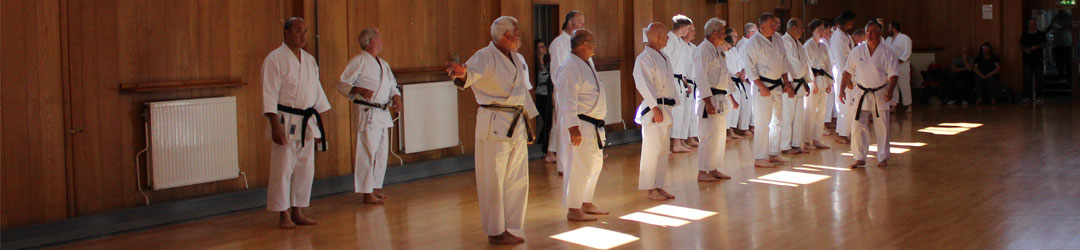
Despite the ice and snow keeping numbers low, those who made it to training today put in a great deal of focused effort. With a return to the Dan Grade syllabus, this Saturday session allowed time for a full deconstruction of each technique, exploring timing, body connection, movement, and coordination in depth.
After warming up with Renzoku Waza, we moved into Kette Waza. Fresh from filming earlier in the week, this area provided plenty to explore. Over the course of an hour, we worked through kette jun-zuki, kette gyaku-zuki, kette jun-zuki notsukomi, and kette gyaku-zuki notsukomi, breaking each down carefully and then rebuilding it with greater understanding.
Particular attention was given to the role of the hips in aligning the body and allowing correct movement during each technique. We also focused on the importance of finishing each technique in the correct position, so that it naturally becomes the starting point for the next. That first hour passed quickly, as each movement was refined and reconnected into a more coherent whole.
We then moved on to Keri Kihon Waza, working through the Dan Grade combinations up and down the room to become comfortable with the body movement and mechanics. To deepen understanding, we then paired up to practise the same combinations with a partner. As is often the case, techniques take on a very different meaning when someone is in front of you, demanding greater accuracy and control. This partner work fed directly back into solo practice, giving it context and purpose. After working all three combinations in pairs, we returned to lines to fine-tune the details with this new understanding.
The final section of the class focused on Pinan Yondan. Saturday sessions often cycle through the Pinan kata, allowing time to explore them properly and address any areas needing attention. In Pinan Yondan, we concentrated on transitions between directions and the importance of full-body movement. The focus was on ensuring the arms do not detach from the body or lead independently, and that each technique follows its full range of motion rather than taking shortcuts.
The Pinan kata remain with us throughout our entire Wadō-Ryū journey — from kyu grade through to senior Dan level. They exist to ensure fundamentals are being applied correctly, and for that reason they deserve careful scrutiny and regular revisiting as a way of checking and refining our karate.
There is no training next Saturday. Saturday sessions will run throughout 2026, with training on all Saturdays in January and February except:
- 17th January 2026 (next week)
- 21st February 2026 (Wadō Academy Winter Course)
If you would like to attend a Saturday session for the first time, contact us and let us know.
🎥 2. This Week’s Long-Format Video
PART 14 – KERI WAZA: USHIRO GERI | KIHON FUNDAMENTALS
This week we are looking at Ushiro Geri, often considered a sacrifice technique or last resort due to turning your back on the opponent. When used with correct timing, distance, and awareness, it can be a highly effective technique.
Sensei breaks down the mechanics of the kick and discusses where he has seen it used successfully by a select few. Ushiro Geri remains an important part of the keri waza armoury, helping practitioners develop understanding of ma-ai, multi-directional movement, and effective use of peripheral vision. As the saying goes: if you don’t hear an “ouch,” you’re already facing the right direction to make a break for it.
Watch on YouTube📝 3. Featured Article of the Week
Article: Wadō-Ryū Benkyō — Pinan Godan by Roger Vickerman Renshi
Exploring the Depth of Pinan Godan in Wadō-Ryū Karate
Pinan Godan (平安五段) marks the culmination of the Pinan series, bringing together everything developed in the earlier kata while introducing a clear shift toward more advanced Wadō-Ryū principles.
Rich in directional changes, dual-hand coordination, grappling concepts, and the iconic jump, Godan expands the practitioner’s understanding of movement beyond striking into throws, joint locks, off-balancing, and verticality. Often seen as a bridge toward kata such as Seishan, it challenges students to harmonise power, precision, and intent.
📅 4. Upcoming Courses, Events, or Updates
- The courses and events calendar is now live — please bookmark and check regularly.
- The May 2026 course details and booking are now available.
- The August 2026 course is open for booking.
- The October 2026 course is also available.
🧠 5. Wadō-Ryū Principle of the Week
Ryūsui (流水)
In Wadō-Ryū, ryūsui describes continuous, adaptive movement — the ability to flow without collision, interruption, or fixation, even under pressure.
Literally meaning “flowing water,” ryūsui is the living expression of Wadō’s approach to conflict. Where dōsa defines movement and hadō governs power transmission, ryūsui explains how both must adapt in real time.
Ryūsui is the ability to keep moving correctly, no matter what the opponent does. It is what makes Wadō feel calm, adaptive, and unavoidable when practised at a high level. You can see a full explanation here
🙏 Thank You for Being Part of the Community
If you have any questions, video requests, or feedback, simply reply or get in touch.
Wishing you a fantastic week of training,
Roger and The Team
Wadō-Ryū Benkyō