Traditional Karate
Weekly Newsletter • 28 March 2026
Weekly Update from Wadō-Ryū Benkyō
Hello,
Welcome to your 16th Weekly update from Wado-Ryu Benkyo, here is what you will find below (want to view as a webpage click here):
🥋 1. Saturday Benkyo Class Review – Today's Training
We had a full class this week ahead of the course, with people attending from far and wide. It made for an excellent session, with a strong focus on refining movement and deepening understanding.
The first half of the session returned to Kihon, with an emphasis on maximising fluidity — working towards the idea of one movement, one moment, one intent. Rather than treating techniques as separate actions, the aim was to allow each movement to develop naturally from the body.
We worked through a range of core techniques, including Junzuki, Kette Junzuki, Gyakuzuki, Kette Gyakuzuki, Junzuki Notsukomi, Kette Junzuki Notsukomi, Gyakuzuki Notsukomi, and Kette Gyakuzuki Notsukomi, focusing on maintaining connection, posture, and continuity throughout.
The second half of the session moved on to Kumite Kata, working through numbers 1, 2, 3, 4, 5, 6, 8, and 10.
A strong theme throughout was the integration of head movement, body movement (taisabaki), irimi, and kuzushi, and how these principles underpin each sequence.
Kumite Kata 1 focused on evasion, changing the line of attack, and immediately taking balance as the opportunity arises.
Watch example
Kumite Kata 2 explored moving off the line while maintaining the attacking line, using a double step to enter, take balance, and collapse the opponent’s centre.
Watch example
Kumite Kata 3 emphasised head movement to avoid and redirect the attack, followed by entering through the centre using Junzuki Notsukomi, anchoring the stance, loading the opponent’s weight, and applying shizumu.
Watch example
Kumite Kata 4 (Pinan Nidan) focused on avoiding the kick, drawing the body in, and maintaining connection to deliver effective technique. The movement continues through the opponent’s structure, using kuzushi and Naihanchi principles to complete the action.
Watch example
Kumite Kata 5 developed from a double-hand deflection into a body-led entry, creating space to re-enter and strike, before breaking balance and settling with shizumu.
Watch example
Kumite Kata 6 highlighted dropping (shizumu) with furizuki to create initial kuzushi, followed by controlled entry and continuous technique to collapse the opponent’s structure.
Watch example
Kumite Kata 8 reinforced continuous movement — no pause — applying ryūsui (flowing movement) to attack the weak line and maintain control.
Watch example
Kumite Kata 10 focused on noru — receiving and controlling the attack — trapping the arm, collapsing the structure, and maintaining control through subtle adjustment.
Watch example
A very strong session, enjoyed by all, and a valuable deep dive into what makes Kumite Kata so unique within Wadō-Ryū — not just as a set of techniques, but as a study of timing, movement, and control.

Saturday sessions to run through 2026 - we will be training all Saturdays in April except the 18th April, if you would like to attend a Saturday session for the first time reply to this email and let us know
🎥 2. This Weeks Long-Format Video
Part 24 - Gyakuzuki Notsukomi Keisetsu - Kihon Fundamentals
Kihon Fundamentals – Gyakuzuki Notsukomi Keisetsu
Part 24 – Gyakuzuki Notsukomi Keisetsu
This week’s video continues the Kihon Fundamentals series, exploring how Gyakuzuki Notsukomi develops beyond basic line work into practical application.
The focus is on understanding how to drop the body and use the hips and centre effectively, allowing the technique to emerge naturally rather than being forced through fixed positions. Particular attention is given to the use of soft knees, weight distribution, and how the body can move not only forwards and backwards, but also sideways and through changes in height.
Through paired work and examples from kata — including Wanshū — the session shows how Gyakuzuki Notsukomi can be applied in a more functional context, bridging the gap between kihon and kumite.
A useful session for developing a deeper understanding of how Wadō-Ryū principles connect movement across all areas of practice.
Follow the link to watch the full technical breakdown.
📝 3. Featured Article of the Week
Article: Read the full article on the website
Ippon Kumite No.2 – Ippon Me
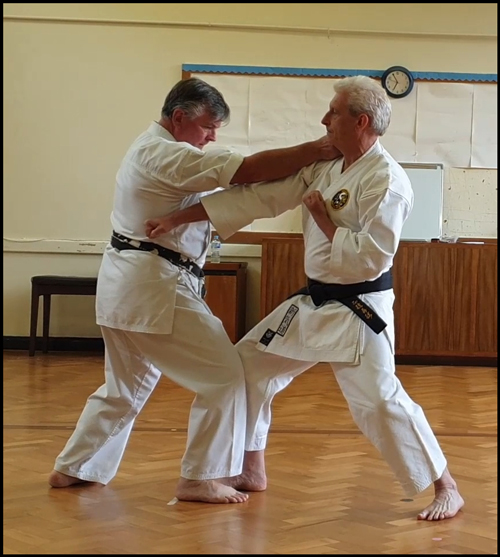
This second Ippon Kumite reveals how Wadō-Ryū partner work continues to grow out of Kihon Kata. What appears to be a simple sequence actually contains key lessons in off-line movement, posture, centre control, and balance disruption. In the video and article, Roger Vickerman Renshi explores the technique step by step, including what uke should be feeling as the structure begins to collapse.
Follow the link for the full article and detailed breakdown.
📅 4. Upcoming Courses, Events, or Updates
Things you may want to know about:
- Course and events calendar is now live on the website and will be updated regularly so please bookmark it and check it
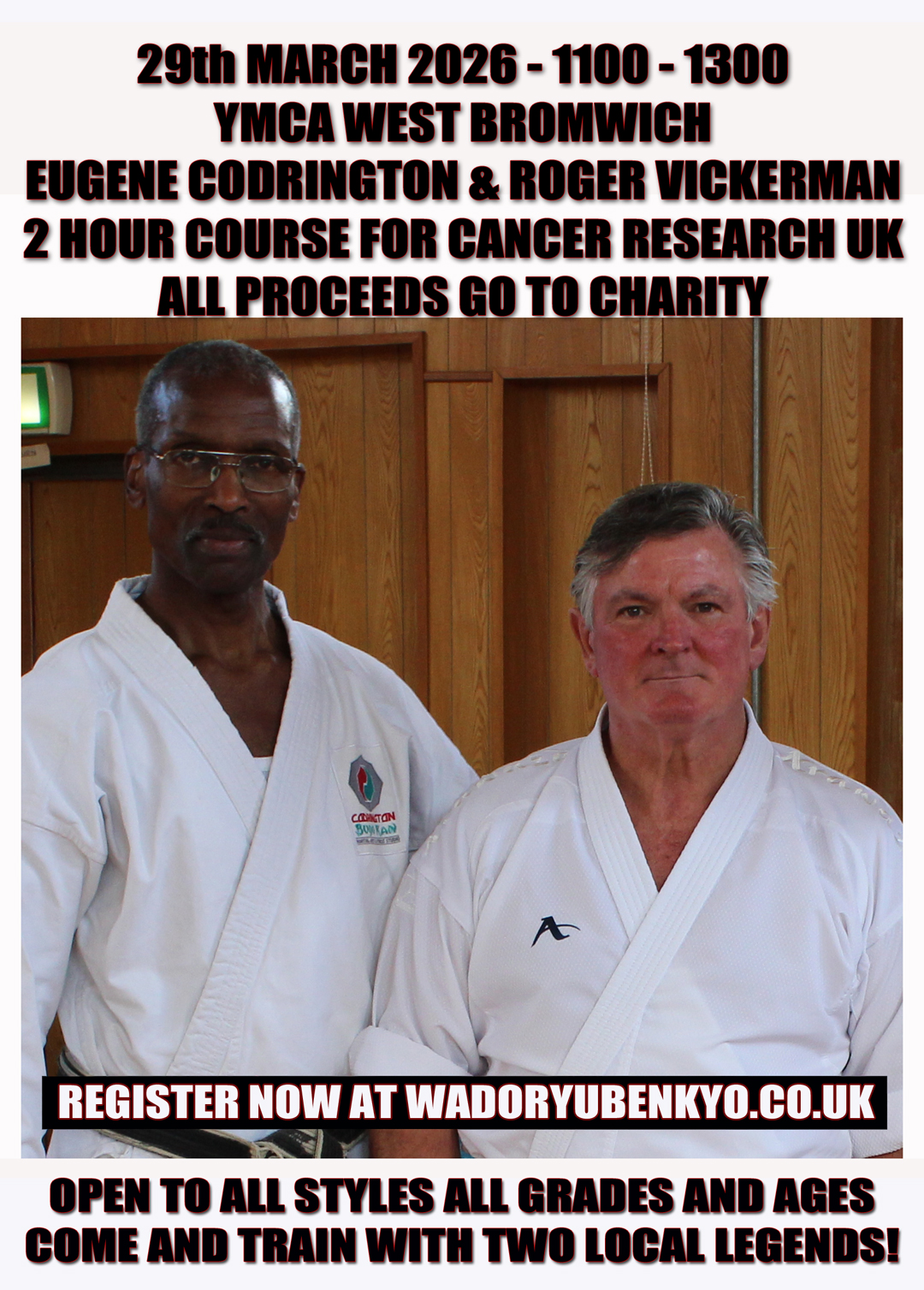
- 29th March 2026 Joint Charity Course with Eugene Codrington full details here ONLY ONE DAY LEFT TO BOOK
- The May 2026 course dates and location has been confirmed, you can see all the details and book on here
- Website updates: Wadō-Ryū Benkyō is now fully live, but more content is being added all the time, so keep checking back for new articles, videos and announcements
- Saturday sessions to run through until 2026 - we will be training all Saturdays in December and January except the 17th January, if you would like to attend a Saturday session for the first time reply to this email and let us know
🧠 5. Wado Ryu Principle of the Week
Sen-sen-no-sen (先先の先) — Anticipatory Initiative
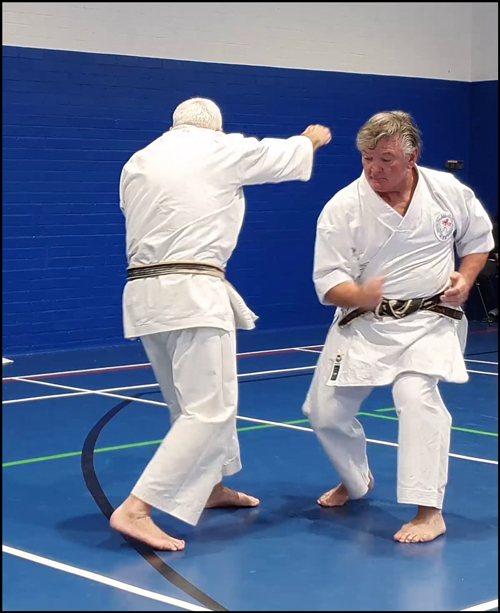
Sen-sen-no-sen in Wadō-Ryū — anticipating intention before the attack begins
Sen-sen-no-sen: perceiving intention and taking initiative before the opponent’s attack begins.
Sen-sen-no-sen (先先の先) is often translated as “initiative before the initiative.” It describes acting before the opponent’s attack has physically begun, based on the ability to perceive intention and recognise the moment when the opponent is preparing to move.
In Wadō-Ryū Karate, this represents the highest level of timing. Rather than responding after an attack or intercepting it as it begins, the practitioner recognises the opponent’s intention and moves before the attack can even start.
To an observer this can appear almost effortless, as if the defender somehow moved first without warning. In reality, the movement arises from awareness, distance control, and the ability to read subtle cues in the opponent’s posture, breathing, and focus.
Understanding the Meaning of Sen-sen-no-sen
The phrase consists of four elements:
- Sen (先) — initiative
- Sen (先) — initiative again
- No (の) — possessive connector
- Sen (先) — initiative
Together they describe taking initiative before the opponent can initiate their own action.
The practitioner perceives the opponent’s intention and enters before the attack becomes visible.
Perceiving Intention
Every physical movement begins with intention. Before an attack appears externally, the body begins to prepare:
- a subtle shift in weight
- a change in posture
- a tightening of the shoulders
- a focus of the eyes
Experienced practitioners learn to recognise these early signals. When the intention becomes clear, movement occurs immediately.
Because the attack has not yet begun, the opponent is often unable to adjust or defend effectively.
Sen-sen-no-sen in Wadō Strategy
Wadō-Ryū emphasises positioning, timing, and efficiency rather than direct collision. Sen-sen-no-sen reflects this strategic mindset.
Instead of waiting for the opponent’s attack to develop, the practitioner recognises the emerging opportunity and takes control of the exchange before it begins.
This often involves:
- entering into superior position
- controlling distance (ma-ai)
- disrupting the opponent’s balance
- preventing the attack from developing
Examples in Wadō Training
Although Sen-sen-no-sen represents an advanced level of timing, its principles appear throughout Wadō training.
In kumite, experienced practitioners often move just as the opponent prepares to attack, preventing the attack from fully forming.
In Kihon Kumite, the structure of the exercises trains sensitivity to distance and timing, helping practitioners recognise the moment before an attack becomes unavoidable.
In kata, certain movements can be interpreted as entering before the opponent’s attack develops, disrupting the attack before it can occur.
The Role of Distance (Ma-ai)
Correct distance is essential for Sen-sen-no-sen.
If distance is too great, the opponent can adjust before contact occurs.
If distance is too close, the practitioner may be forced to react instead of acting freely.
When distance is correct, the practitioner can recognise intention and move before the opponent’s technique becomes dangerous.
Sen-sen-no-sen and the Mind
Because Sen-sen-no-sen depends on perception rather than reaction, the mental state of the practitioner becomes extremely important.
The mind must remain calm, aware, and free from unnecessary tension.
This state is closely related to Wadō concepts such as Mushin and Fudōshin.
When the mind is clear and observant, intention becomes easier to recognise.
Sen-sen-no-sen Compared with Other Timing Concepts
Traditional budō often describes three main timing strategies:
- Go-no-sen — responding after the attack begins
- Sen-no-sen — entering at the same moment the attack begins
- Sen-sen-no-sen — anticipating the attack before it begins
Among these, Sen-sen-no-sen represents the most subtle form of initiative, relying heavily on awareness, distance, and experience.
In Simple Terms
Sen-sen-no-sen means recognising the opponent’s intention and acting before the attack begins.
Rather than reacting to movement, the practitioner responds to intention itself. Through awareness, positioning, and timing, the exchange is controlled before the opponent’s technique can even start.
🙏 Thank You for Being Part of the Community
If you have any questions, video requests, or feedback, contact us here — We read everything.
Wishing you a fantastic week of training,
Roger and The Team
Wado-Ryu Benkyo