🧠 5. Wado Ryu Principle of the Month
Hikite (引き手) & Hikite no Riyū (引き手の理由)
The Pulling Hand - Understanding Its Purpose in Traditional Wadō-Ryū Karate
"The hand that returns is only empty if it has failed to take something with it."
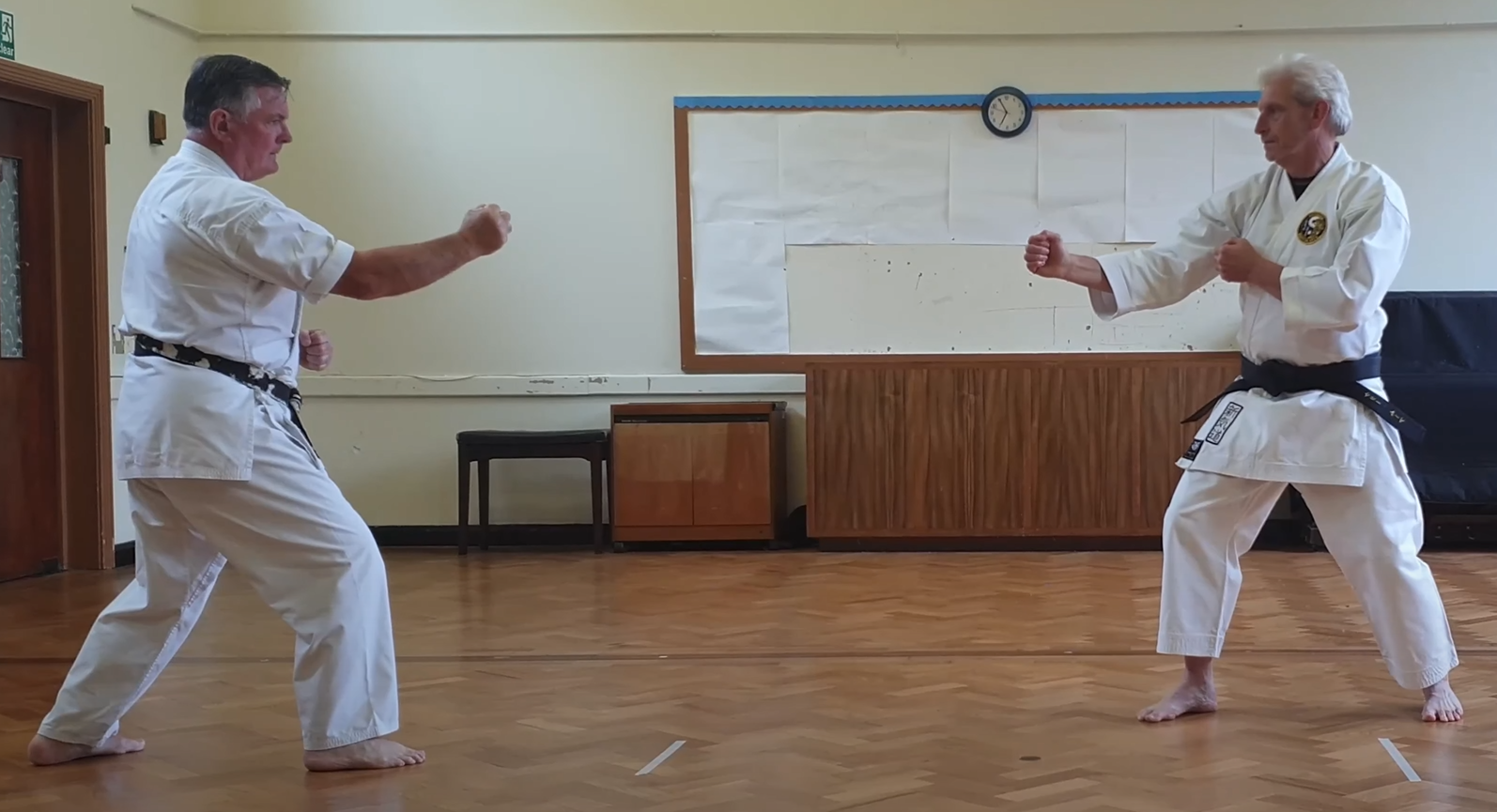
Among all the movements practised in traditional karate, few have generated more debate than Hikite (引き手). Every karateka has performed it thousands of times during kihon practice. From the very first lesson, students are taught to draw one hand firmly back to the side of the body as the opposite hand punches. Yet it is also one of the first techniques to be questioned.
"Why would I put my hand on my hip in a real fight?"
It is a reasonable question, but it begins with a misunderstanding. The movement seen in kihon is not intended to teach the habit of retracting the hand to the hip during combat. Rather, it teaches a principle so fundamental that it underpins striking, grappling, locking, throwing, balance breaking, posture and power generation.
In many modern interpretations of karate, Hikite has gradually become little more than a formal requirement of line work. In traditional Wadō-Ryū, however, the pulling hand is every bit as important as the striking hand, and often more so.
Hironori Ōtsuka, the founder of Wadō-Ryū, frequently emphasised the importance of Hikite, explaining that approximately eighty percent of the power of a punch comes from the Hikite arm. Whether intended as a precise measurement or as a teaching principle, the message is unmistakable: students tend to focus on the hand that strikes, while overlooking the movement that allows it to strike effectively.
What Does Hikite Mean?
The Japanese word Hikite (引き手) is beautifully simple. Hiku (引く) means to pull, draw, or bring towards oneself. Te (手) means hand. The literal translation is therefore "pulling hand".
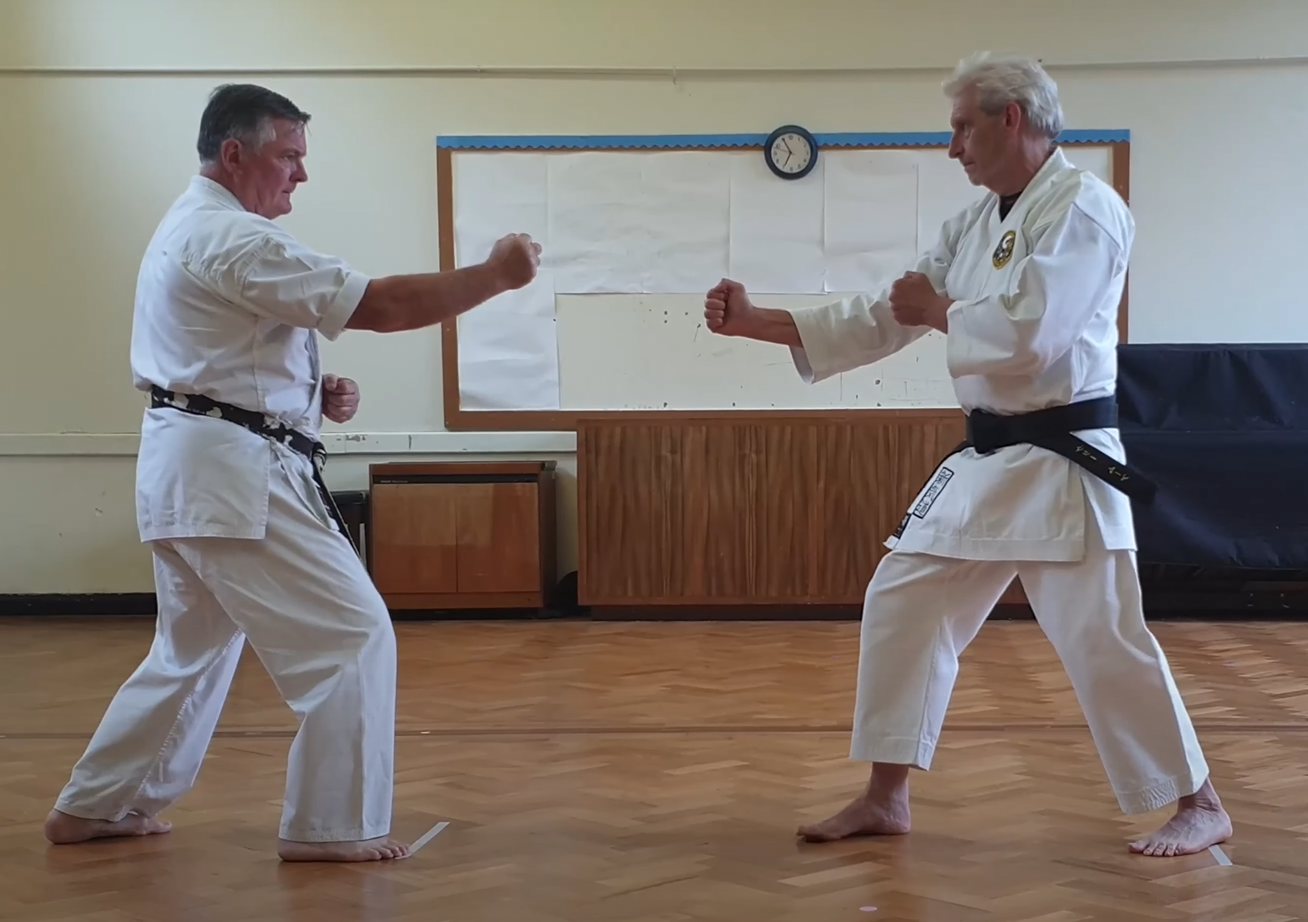
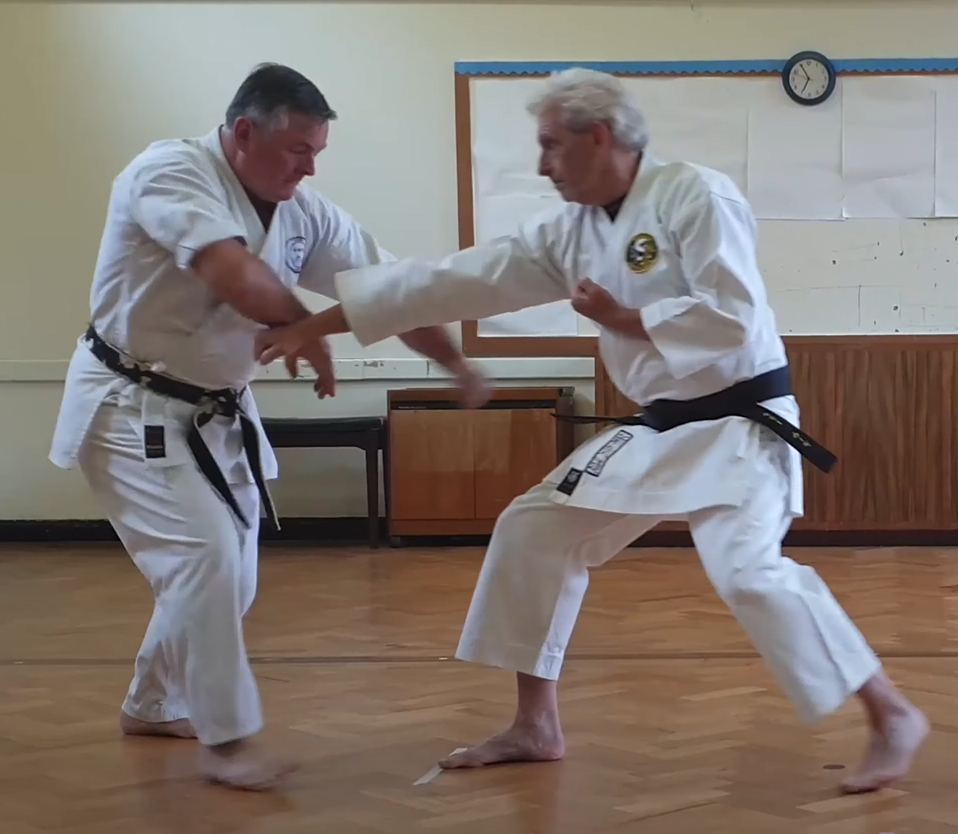
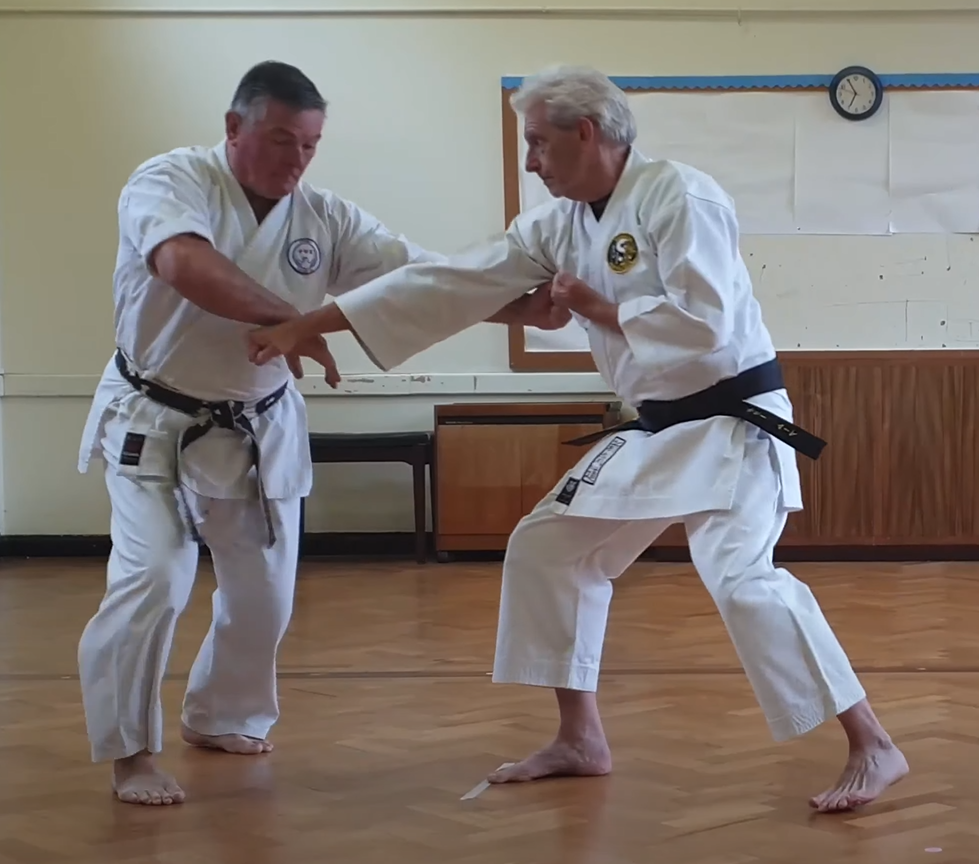
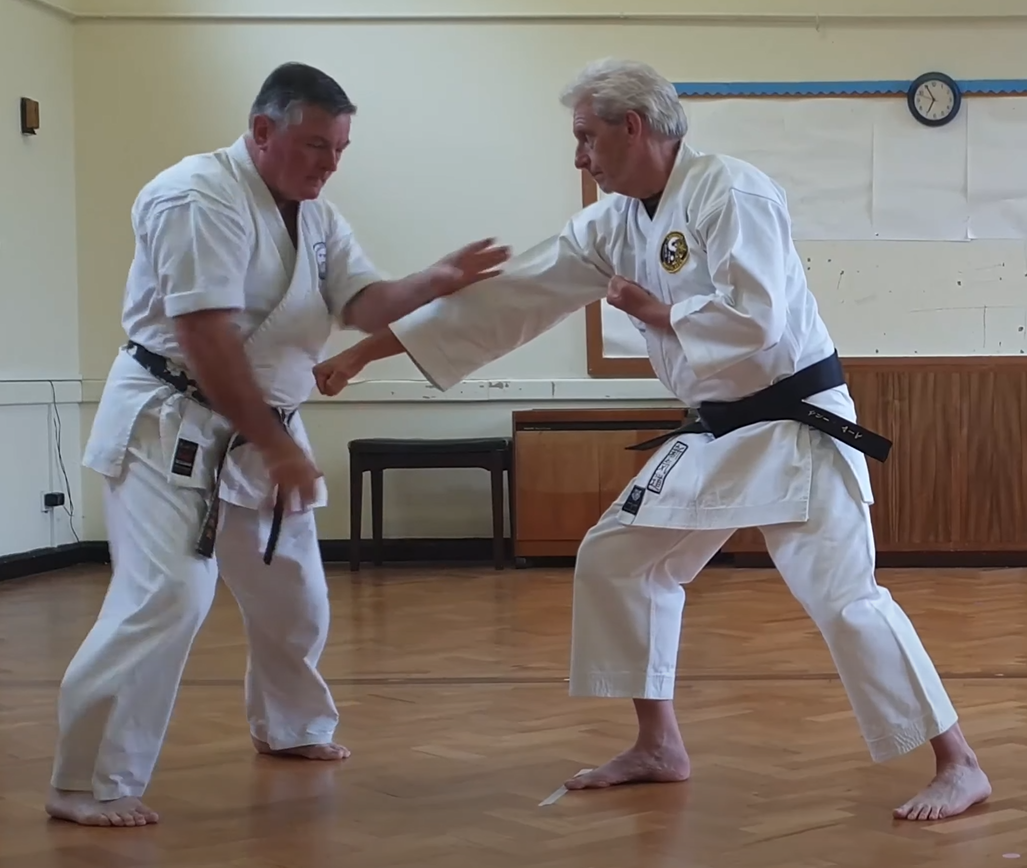
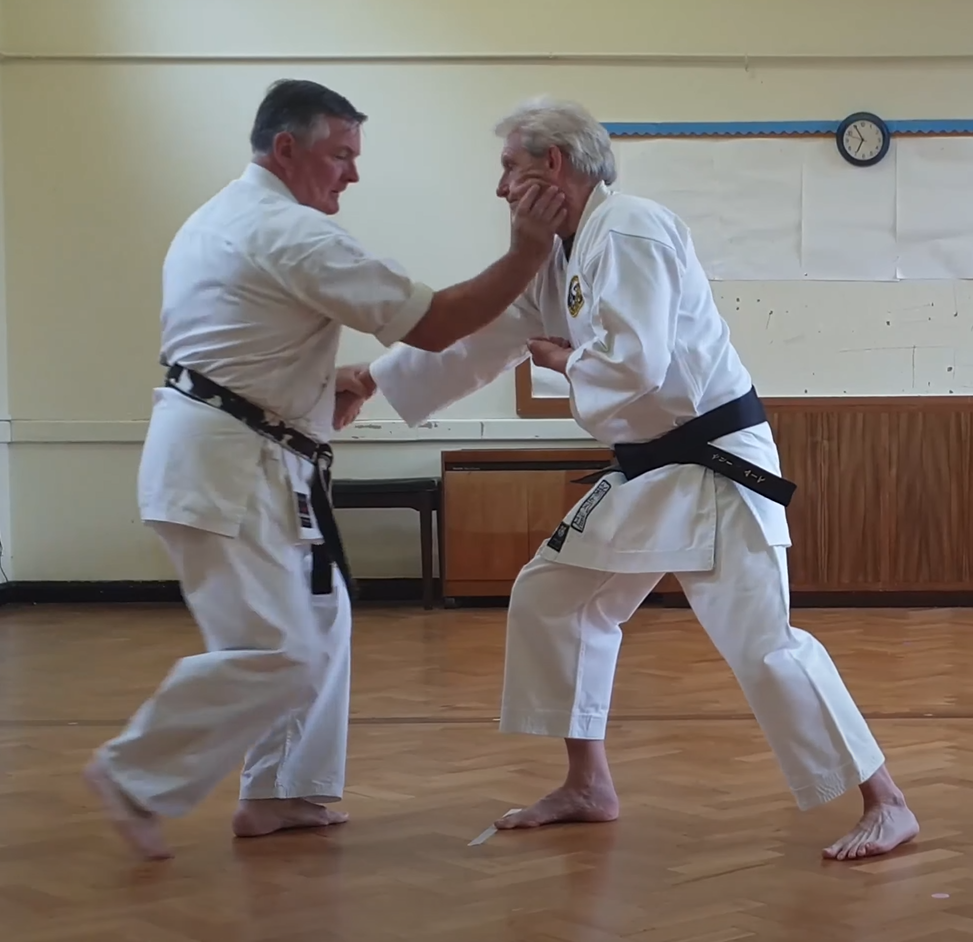
It does not mean "returning hand" and it does not mean "hand on the hip". This distinction fundamentally changes how we interpret the movement. During solo practice the hand finishes beside the ribs because there is no opponent to pull. During application, however, that hand should almost always have something attached to it.
- the opponent's wrist
- their sleeve or lapel
- their head or shoulder
- a trapped arm
- or the balance of the whole body through connection
The hand is doing work, not merely returning to a chamber position.
The Body Works as One
One of the great lessons of traditional karate is that the body should never operate in isolated parts. The novice punches with the arm. The experienced karateka punches with the body. This is where Hikite becomes essential.
As the pulling hand accelerates backwards, the shoulder retracts, the scapula moves, the latissimus dorsi contracts, the spine rotates, the hips engage, the centre stabilises, and the opposite shoulder naturally projects forwards. The entire kinetic chain becomes connected.
Without Hikite the punch is often reduced to little more than an arm extension. With correct Hikite the punch becomes the final expression of movement generated throughout the whole body.
Timing - One Body, One Moment
Power is created when everything finishes together. The pulling hand should not complete its action before the punch arrives, nor should it lag behind. Instead, both actions should culminate at precisely the same instant.
The Hikite finishes, the hips settle, the stance completes, and the strike lands. Everything reaches completion simultaneously. The two hands are not performing separate actions. They are expressing one action through opposite directions.
Hikite and Power Generation
Power in Wadō-Ryū is often misunderstood. Strength alone rarely produces effective technique. Instead, power comes from timing, structure, relaxation and whole-body coordination. Hikite contributes to all four.
The act of pulling activates the muscles across the back, particularly the large muscles surrounding the shoulder blades and torso. These muscles help rotate the body as a unified structure. Rather than imagining the punching arm extending towards the target, it is often more useful to imagine the pulling arm driving the body forwards.
Hikite as Kuzushi
Once an opponent has been contacted, Hikite takes on another purpose. It becomes kuzushi: breaking balance. Whenever we grip, seize or control an opponent, the pulling action immediately influences their posture.
- it disrupts alignment
- extends posture
- opens vulnerable targets
- prevents retreat
- and increases the effectiveness of every subsequent technique
Instead of striking a balanced opponent, Hikite allows us to strike an opponent who is already being drawn into the technique.
Hikite and the Jujutsu Heritage of Wadō-Ryū
Perhaps nowhere is Hikite more naturally understood than within Wadō-Ryū itself. Before studying Okinawan karate, Hironori Ōtsuka had already achieved a high level of proficiency in Shindō Yōshin Ryū Jujutsu. In jujutsu, gripping is constant. The hands are continually controlling, pulling, rotating, unbalancing, locking and throwing.
When Ōtsuka combined karate with his jujutsu knowledge, Hikite naturally retained this practical meaning. The hand was never intended to become passive. It remained active throughout every exchange.
Hikite in Okinawan Karate
It is sometimes suggested that the grappling applications of Hikite originate solely from jujutsu. History suggests otherwise. Many Okinawan karate masters described grabbing before striking. The idea of "grab, pull, strike" runs throughout traditional karate.
Wadō-Ryū did not invent this principle. Rather, its jujutsu heritage allowed these applications to be understood even more deeply and integrated even more naturally.
Trapping, Locking and Control
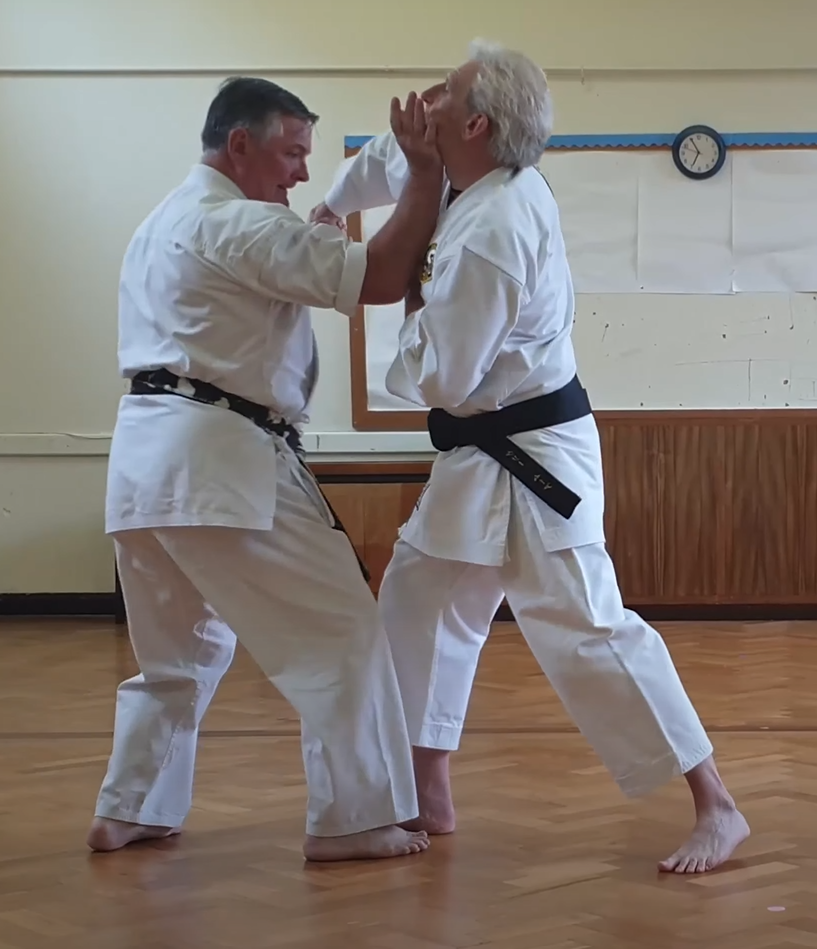
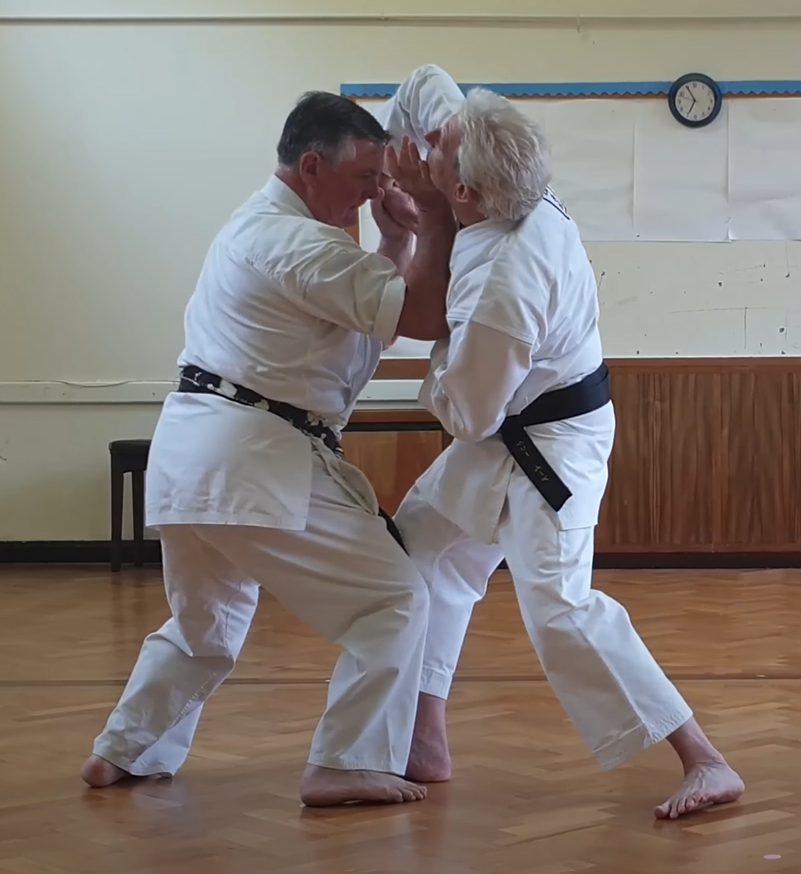
The pulling hand also forms the basis of many trapping and locking methods. A trapped wrist cannot strike. A controlled elbow cannot generate power. A rotated shoulder weakens posture. A pulled head compromises balance.
In many kata these controls occur almost invisibly because the emphasis remains on the obvious striking technique. However, if the Hikite is removed, the application frequently becomes much less convincing. The pull creates the opportunity. The strike simply finishes it.
Why Kihon Exaggerates Hikite
One of the common criticisms of traditional karate is that nobody fights with their hand on their hip. That is true, but training exaggerates principles. Kihon deliberately enlarges movements to teach timing, coordination, posture, body connection, balance and whole-body mechanics.
As understanding develops, the movement naturally becomes smaller. The principle remains exactly the same. A beginner may pull the hand thirty centimetres. An expert may only move it three. The effectiveness lies not in the distance travelled but in the purpose behind it.
Common Misunderstandings
Hikite is not placing the hand on the hip, exposing the ribs, pulling backwards for no reason, or an outdated formal movement. Hikite is pulling, connecting, controlling, balancing, trapping, generating power and coordinating the entire body.
Closing Thoughts
Few movements in karate have been as frequently practised or as widely misunderstood as Hikite. To the casual observer it appears to be nothing more than the return of the hand to the hip. Yet beneath this seemingly simple action lies one of the central principles of traditional martial arts.
Hikite reminds us that power does not originate in the fist, but in the coordinated movement of the entire body. It teaches that striking and grappling are not separate disciplines but complementary expressions of the same principles. It demonstrates that control often begins before the strike is delivered, through the ability to seize, pull, unbalance and connect with an opponent.
Once Hikite is understood in this way, kihon takes on new meaning, kata begins to reveal hidden layers of application, and kumite becomes less about exchanging techniques and more about controlling the opponent before the decisive movement is ever delivered.