Traditional Karate
Weekly Newsletter • 14 February 2026
Weekly Update from Wadō-Ryū Benkyō
Hello, welcome to your 10th weekly update from Wadō-Ryū Benkyō. Below you’ll find this Saturday’s training notes, the latest long-format video, a featured article, course updates, and this week’s principle.
🥋 1. Saturday Benkyō Class Review – Today’s Training
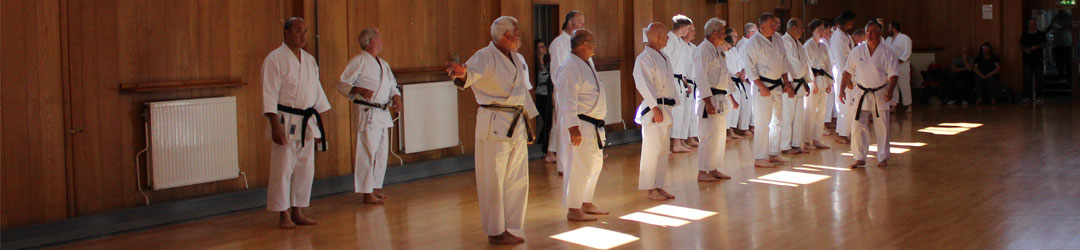
Today’s session centred around a theme that sits quietly beneath everything we do: posture.
Posture is not simply how we stand at the beginning or end of a technique. It is the vehicle that carries the technique, allows timing to function, and controls distance. Correct posture distributes weight properly — and correct weight distribution gives us balance, mobility, and impact. When posture is right, the body moves freely; when it is wrong, it applies its own brakes.
A clear example of this came through our work on Kette techniques. Understanding that Kette Junzuki is Maegeri plus Junzuki — not half of each — changes everything. Returning to Ōtsuka II’s philosophy of 1 + 1 + 1 = 1, each component remains a complete entity in its own right, yet when combined correctly they become a single unified action.
Relaxation in movement was another key focus. Removing unnecessary tension prevents mudana from creeping into our training. Excess tension restricts fluidity and disrupts natural movement. By allowing the body to move without interference, technique becomes smoother, lighter, and more efficient.
Throughout the class we covered a broad range of material — Kihon, Nihon Kumite, Kumite Kata, and Kihon Kumite — continually applying the principles of fluidity, timing, distance, and balance. These are fine details, but they always make the difference.
We also explored how the body can work in unison while parts of it operate independently. The best place to see this clearly is Naihanchi Kata, where the lower body often remains stable while the upper body rotates and creates action. Once understood, this principle can be transferred into other areas, such as Kumite Kata Numbers 3 and 9, where minimal lower-body movement allows upper-body rotation to generate uke and prepare the next technique.
Keeping in line with today’s video release, we also revisited Notsukomi techniques, studying how the body operates as a connected chain — from the foot, through the hips, into the shoulders and arms. When that chain is aligned and free of unnecessary tension, power travels cleanly and naturally.
A session built on detail and refinement — subtle work that strengthens the foundations and sharpens understanding. Exactly what Saturday Benkyō is about.

🎥 2. This Week’s Long-Format Video
Part 18 – Junzuki Notsukomi — Kihon Fundamentals
In this latest Kihon Fundamentals volume, Roger Vickerman Renshi (7th Dan) explores the unique Wadō-Ryū technique Junzuki Notsukomi, focusing on how continuous forward movement, correct body connection, and precise timing create power without tension or interruption. Rather than treating it as a simple stepping punch, the session breaks down how hips, centre, and posture work together to maintain ryūsui and dōsa, ensuring each technique remains complete while seamlessly transitioning into the next. Ideal for practitioners refining kihon, kata, and kumite, this breakdown highlights why Junzuki Notsukomi is a defining expression of Wadō’s calm, connected, and efficient movement principles.
Watch on YouTube📝 3. Featured Article of the Week
Article: Wanshū Kata — Elegance, Deception, and Dynamic Flow
Wanshū Kata – Elegance, Deception, and Dynamic Flow
Wanshū (汪楫 / 腕秀) is one of the most distinctive and deceptively deep kata within the Wadō-Ryū syllabus. Although compact in appearance, it reveals layers of strategy, timing, and body management once explored beyond the surface. Rooted in Chinese influence through the Tomari-te tradition, Wanshū blends subtle taisabaki, kuzushi, deception, and close-range control, encouraging practitioners to move from reactive timing into decisive irimi while maintaining structure and adaptability.
📅 4. Upcoming Courses, Events, or Updates
- March 2026 Charity Course — Full details.
- The course and events calendar is now live — Courses & Events.
- May 2026 Course — Full details.
- October 2026 Course — Full details.
- Saturday sessions running through February except 21st Feb — Contact us.

🧠 5. Wadō-Ryū Principle of the Week
Mushin (無心) — No Mind in Wadō-Ryū
Mushin describes a state of mental clarity free from hesitation, fixation, and emotional disturbance. It is not an empty or absent mind — it is a mind that is not cluttered. When mushin is present, attention stays in the moment: no replaying the day, no worrying about what comes next, no carrying stress into training — only Karate.
In partner work and kumite, mushin allows movement to happen naturally. If the mind is occupied, the body becomes late; if the mind is clear, reactions sharpen and technique becomes more accurate. Often recognised as a release from the outside world, mushin brings both technical progress and peace of mind.
Alongside Shoshin and Fudōshin, mushin forms one of the core mental states that support Wadō practice — keeping learning open, the moment clear, and the spirit calm under pressure. You can read the full article herea
🙏 Thank You for Being Part of the Community
If you have any questions, video requests, or feedback, simply get in touch — we read everything.
Wishing you a fantastic week of training,
Roger and The Team
Wadō-Ryū Benkyō