Sen-no-sen (先の先) — Initiative Within the Attack
· by Roger Vickerman Renshi (7th Dan) · Principles
Sen-no-sen (先の先) is often translated as “initiative within the initiative.” It describes responding at the exact moment the opponent begins their attack — neither before nor after, but simultaneously.
In Wadō-Ryū Karate, Sen-no-sen represents a refined understanding of timing. Rather than waiting for the attack to fully develop, the practitioner recognises the moment of intention and enters immediately, intercepting the opponent’s movement before it can become effective.
This does not mean simply striking first. Instead, it means recognising the opponent’s commitment at its earliest stage and moving at precisely the same moment.
Understanding the Meaning of Sen-no-sen
The phrase consists of three elements:
- Sen (先) — initiative or precedence
- No (の) — possessive connector
- Sen (先) — initiative again
Together they describe taking initiative within the opponent’s initiative.
The opponent begins to attack, but the defender enters at the same instant, preventing the attack from developing fully.
Timing at the Moment of Commitment
Sen-no-sen requires the ability to perceive intention as it becomes action. The moment an opponent begins to move, their body must shift weight, adjust posture, or extend a limb. These small changes reveal the attack before it is completed.
The practitioner moves at this instant, often appearing to strike “first,” even though the opponent initiated the action.
This principle highlights an important distinction:
Speed attempts to outrun the opponent.
Timing allows you to intercept the opponent’s movement at the moment it begins.
Sen-no-sen therefore depends less on quickness and more on perception and calm awareness.
Sen-no-sen in Wadō Movement
Several key elements of Wadō movement help express this principle.
Irimi (Entering)
Entering movement often accompanies Sen-no-sen. As the opponent begins their attack, the practitioner moves forward or diagonally into a superior position, disrupting the attack before it can reach full extension.
Taisabaki (Body Evasion)
Rather than colliding with the attack, the body shifts slightly off the line while simultaneously delivering technique. This allows the practitioner to control distance and positioning while intercepting the opponent’s movement.
Control of Distance (Ma-ai)
Correct distance makes Sen-no-sen possible. If distance is poorly judged, the practitioner either moves too early or too late. When distance is correct, the moment of interception becomes clear.
Examples in Wadō Training
Sen-no-sen appears frequently in Wadō practice.
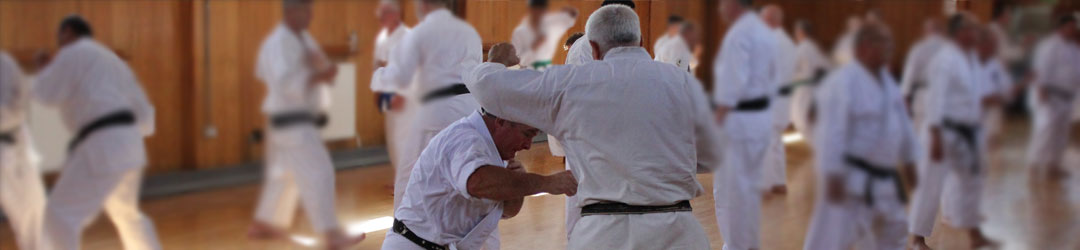
In Kihon Kumite, the defender often enters at the exact moment the attack begins. This simultaneous movement prevents the attacker from gaining momentum.
In kata, many techniques represent entering while the opponent begins to strike. The practitioner appears to move first, but the movement actually coincides with the opponent’s attack.
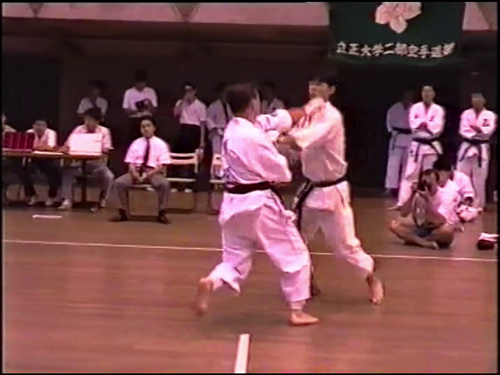
In kumite, Sen-no-sen becomes especially visible when an experienced practitioner intercepts an attack before it fully develops.
Sen-no-sen and the Mind
Executing Sen-no-sen requires a calm and attentive mental state.
If the mind becomes impatient, the practitioner may move too early and expose themselves.
If the mind hesitates, the opportunity disappears.
The ideal state allows perception without tension — often described in Wadō through concepts such as Mushin and Fudōshin.
Sen-no-sen Compared with Go-no-sen
Wadō strategy often describes three major timing concepts:
- Go-no-sen — responding after the opponent’s attack begins
- Sen-no-sen — entering at the exact moment the attack begins
- Sen-sen-no-sen — anticipating and acting before the attack begins
Among these, Sen-no-sen represents the balance point between patience and initiative.
In Simple Terms
Sen-no-sen means entering at the precise moment an opponent begins their attack.
Rather than waiting for the attack to develop or attempting to strike prematurely, the practitioner moves at exactly the same instant. Through timing, positioning, and awareness, the opponent’s attack is neutralised before it can become effective.