Sente (先手) — Initiative in Wadō-Ryū
· by Roger Vickerman Renshi (7th Dan) · Principles
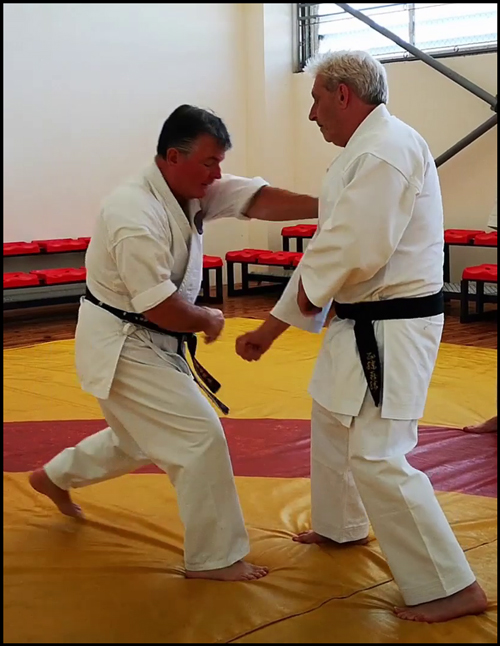
Sente (先手) can be translated as “initiative” or “taking the lead.” In martial arts strategy it describes the ability to control the exchange by acting at the correct moment.
In Wadō-Ryū Karate, the concept of initiative is central to effective technique. Rather than simply reacting to an opponent or attempting to overpower them with strength, the practitioner seeks to control timing, distance, and positioning.
This strategic control is expressed through a group of related timing principles traditionally described as sen.
Understanding Initiative in Budō
In Japanese martial traditions, the idea of initiative appears in many disciplines. The practitioner who controls timing effectively controls the encounter.
Initiative does not always mean attacking first. Instead, it means controlling the moment when action occurs.
This control can take several forms depending on the situation.
Three Expressions of Initiative
Traditional budō teaching often describes three ways in which initiative can appear during an encounter.
Go-no-sen — Initiative After the Attack
In Go-no-sen, the practitioner allows the opponent to begin their attack and responds at the moment of commitment.
Rather than rushing forward prematurely, the defender waits until the opponent’s movement creates an opening. The technique then develops from that moment.
Sen-no-sen — Initiative Within the Attack
In Sen-no-sen, the practitioner moves at the same moment the opponent begins to attack.
The attack is intercepted as it begins, preventing it from reaching full extension.
Sen-sen-no-sen — Initiative Before the Attack
In Sen-sen-no-sen, the practitioner perceives the opponent’s intention before the attack begins and moves immediately.
This anticipatory action prevents the opponent’s technique from developing at all.
Initiative and Wadō Strategy
Wadō-Ryū emphasises efficiency, positioning, and harmony with movement rather than direct collision.
Because of this, the practitioner constantly seeks to maintain initiative through timing and positioning rather than strength.
This may involve:
- controlling distance (ma-ai)
- entering at the correct moment
- moving slightly off the line of attack
- creating kuzushi (breaking balance)
When initiative is maintained, the opponent is forced into reaction.
Sente and the Mind
Maintaining initiative requires the correct mental state.
If the mind becomes impatient, the practitioner may attack too early.
If the mind hesitates, the opponent may seize initiative instead.
Traditional Wadō teaching emphasises mental qualities such as Mushin (clear mind) and Fudōshin (immovable spirit) as foundations for correct timing.
Why Initiative Matters
The practitioner who controls initiative controls the encounter.
Even when appearing to respond defensively, the Wadō practitioner seeks to guide the exchange through positioning, timing, and awareness.
Rather than simply reacting, the practitioner shapes the outcome of the encounter.
In Simple Terms
Sente means maintaining initiative through timing, awareness, and positioning.
The principles of Go-no-sen, Sen-no-sen, and Sen-sen-no-sen describe different ways in which this initiative can appear during an encounter.
Together they form a framework for understanding timing in Wadō-Ryū Karate.